
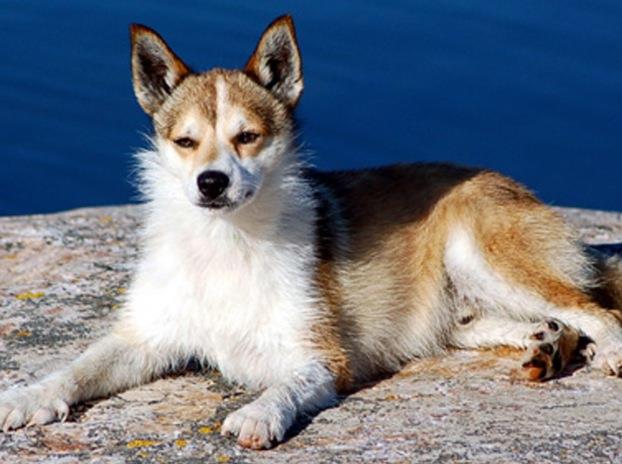
People usually search for the Norwegian Lundehund when they’ve stumbled across a rare “puffin dog” and want to know two things fast: what makes it so unusual, and whether it’s a sensible fit for life at home.
The answer is both simple and a bit prickly. The Lundehund is a small, athletic spitz with extraordinary feet and flexibility, but it also carries a serious, breed-linked risk of chronic gut disease. Below is a clear look at temperament, care needs, and the health checks that matter before you commit.
Norwegian Lundehund at a glance
- Size: Small
- Height: 35–38 cm (male), 32–35 cm (female)1
- Weight: About 7 kg (male), about 6 kg (female)1
- Coat: Double coat (dense, rough outer coat with a soft undercoat)1, 2
- Colours: Always combined with white; red to fawn (often with black tips), black, grey, or white with dark patches1, 2
- Temperament: Alert, energetic, lively; often independent-minded (varies by individual and training)2
- Lifespan: Commonly around 12–15 years (individuals vary; health issues can affect quality of life)2
History and origins
The Norwegian Lundehund developed along Norway’s coastal islands as a specialist bird-hunting dog. For centuries it was used to retrieve puffins from narrow burrows and rocky ledges where people couldn’t easily reach, working in steep terrain and tight spaces that would stop most breeds cold.3, 4
The breed’s numbers collapsed in the twentieth century after distemper outbreaks and the broader decline of traditional puffin hunting. By the 1960s only a handful of dogs remained, and the modern population descends from a very small gene pool—one reason inherited health problems are still such a defining part of the story.3
Physical characteristics and the traits that make this breed famous
The Lundehund looks like a neat little spitz, but its body reads like a set of climbing tools.
- Extra toes: Each foot has at least six toes, with multiple toes bearing weight on flat ground. This improves purchase on rock and uneven surfaces.1, 2
- Remarkable flexibility: The breed standard describes unusual joint and body flexibility that supported its original work in burrows and on cliffs (often described as the ability to bend and twist in ways most dogs can’t).2
- Mobile ears: Ears are erect and can close by folding, helping protect the ear canal when pushing through tight spaces.2
These are real anatomical features, not party tricks. They’re also why this breed needs careful handling: extreme flexibility doesn’t mean invincibility, and rough play on slippery floors can still end in strains.
Temperament: what living with a Lundehund is like
Most Lundehunds are bright, busy little dogs that notice everything. They tend to be quick learners, but not always automatic people-pleasers. Expect curiosity, selective hearing at times, and a strong urge to explore if given the chance.2
In a calm home with steady routines, they often settle well. In a chaotic home with inconsistent rules, they can become noisy, slippery around boundaries, and hard to recall off-lead.
Training and socialisation
Start early. Keep sessions short. Reward the behaviour you want, then stop before the dog gets bored and goes looking for its own project.
- Focus on recall and loose-lead walking before you worry about fancy tricks. This is a breed that can find gaps, climb, and disappear.
- Use positive reinforcement and make the “right” choice easy. Harsh corrections often create avoidance or stubborn resistance rather than reliable obedience.
- Socialise steadily with people, dogs, surfaces, and handling (feet, ears, mouth). Those extra toes and flexible joints mean regular paw checks and gentle handling should feel normal from puppyhood.
Health concerns (the part you should not skim)
The headline risk in this breed is a digestive disorder commonly referred to as Lundehund syndrome, strongly associated with intestinal lymphangiectasia and protein-losing enteropathy (PLE). In plain language: the gut can struggle to absorb nutrients and protein properly, leading to chronic or episodic diarrhoea, weight loss, vomiting, fluid build-up, and a dog that can become unwell despite eating.3, 5, 6
Management is often possible but can be lifelong and expensive. Treatment commonly involves diet changes (often low fat, highly digestible) and, in some cases, medications prescribed by a veterinarian.5
Other issues can occur in any breed (ears, joints, eyes), but the gut disease is the one that should shape your choice of breeder, your budget, and your expectations.
Practical health questions to ask a breeder or rescue
- Have any dogs in this line had chronic diarrhoea, unexplained weight loss, low albumin/protein, or diagnosed intestinal lymphangiectasia/PLE?
- What is the plan if symptoms appear (diet history, veterinary support, written records)?
- Can you see veterinary documentation for the parents and close relatives?
Exercise and mental stimulation
This is an active small dog. Many do well with a couple of brisk walks a day plus short training games, sniffing work, and safe opportunities to climb over varied terrain. Thirty minutes daily can be enough for some individuals, but others need more—especially young dogs and those kept in smaller spaces.2
Mental work matters. A Lundehund with nothing to do will often invent something, and it’s rarely the thing you’d choose.
Grooming and maintenance
The coat is double and weatherproof. Most of the year, a weekly brush is usually fine, with more frequent brushing during heavy shedding periods. Pay close attention behind the ears, around the neck, and along the thighs where coat can pack down.7
Routine care is less about looking tidy and more about quiet prevention:
- Nails: Keep them short enough that they don’t curl into pads; active dogs may wear them down naturally, but many still need trimming.8
- Ears: Check for smell, redness, or discharge, and seek veterinary advice if anything looks off.8
- Teeth: Regular home dental care helps avoid tartar build-up and gum disease.8
- Paws: Because of the extra toes, get used to inspecting feet after walks for grass seeds, cracks, and foreign material.
Sport and activities
Lundehunds can enjoy agility, obedience, and scent games, particularly when training is kept upbeat and varied. Their small size and nimble movement can suit obstacle work, but build conditioning gradually and avoid repetitive impact while the dog is still growing.
Finding a responsible breeder (or adopting)
With a rare breed, it’s tempting to take the first puppy offered. Resist that urge. The health landscape means you’re not just buying a dog—you’re inheriting a genetic history.
- Prioritise transparency over prestige: you want open discussion of digestive disease in the line, not minimising or “never heard of it”.3, 5
- Ask for records (vet reports, diet notes, any GI work-ups) and take time to read them.
- Meet adult dogs if possible to get a sense of temperament, noise levels, and how the dogs live day to day.
If adopting, ask the rescue about any history of chronic gastrointestinal signs and whether the dog is currently on a prescription diet or long-term medication.
Final thoughts
The Norwegian Lundehund is one of those breeds that looks almost mythical on paper: extra toes, flexible joints, and a working history shaped by cliffs and narrow burrows. In a home that enjoys training, daily activity, and careful management, it can be a fascinating, steady companion. The deciding factor, again and again, is health—particularly the risk of serious gastrointestinal disease—so it pays to choose slowly and ask the uncomfortable questions early.3, 5, 6
References
- FCI Standard No. 265: Norwegian Lundehund (English)
- United Kennel Club (UKC): Lundehund Breed Standard
- American Kennel Club: Norwegian Lundehund history (brink of extinction, genetic bottleneck, digestive disorder)
- Norwegian Lundehund overview (history notes and health summary)
- Merck Veterinary Manual: Intestinal lymphangiectasia and protein-losing enteropathy (breed risk, treatment principles)
- PubMed: Intestinal lymphangiectasia in the Lundehund (case-based pathology description)
- Wahl Pet: Norwegian Lundehund grooming notes (coat shedding and brushing frequency)
- Dogs Australia: Essential guide to canine care (nails, ears, teeth—when to seek help)

Veterinary Advisor, Veterinarian London Area, United Kingdom