
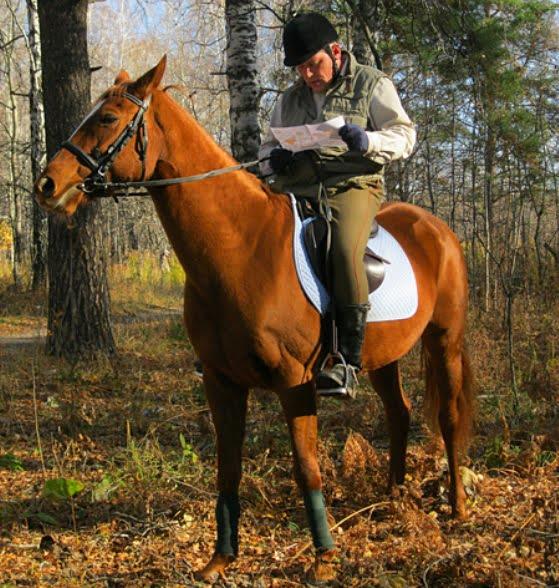
Mounted orienteering appeals to riders who want something more purposeful than a trail ride: a way to move through bush and farmland with a map in hand, making calm decisions at speed while keeping a horse safe and settled.
It is also a sport where the details matter. “Mounted orienteering” can mean different formats in different clubs, and the rules that apply to helmets, navigation tools, riding in groups, and even how checkpoints are recorded can change from event to event. The notes below focus on what stays consistent across reputable navigation sports, and what to check with the organiser before you enter.
What is mounted orienteering?
Mounted orienteering is navigation on horseback: you ride a course using a map (and usually a compass) to find your way between marked locations. Depending on the club, the aim might be:
- Accuracy and time (finding the right route and arriving within a set time window), or
- Speed and correctness (visiting all controls in order, without missing or mis-punching).
Many Australian riders meet the idea through orienteering-style phases within other sports (for example, the POR or orienteering phase in TREC), rather than through a single national “mounted orienteering” rulebook. In those formats, navigation is paired with pace judgement and steady horse management, not flat-out galloping. 1
How a typical event works
Most formats share a familiar spine: a start, a route or sequence to follow, and checkpoints used to confirm you were where you should have been.
Maps, route choices, and checkpoints
In classic foot orienteering, competitors visit control points marked on the map and on the ground, then record their visit using a punching system. 2
On horseback, organisers often adapt the same idea for safety and practicality. In TREC’s orienteering phase (POR), riders follow a mapped route, while checkpoints may be placed along the way to test both direction and timing. Checkpoints are not necessarily shown on the map. 1
Navigation tools (and what’s usually not allowed)
Most navigation sports assume you are navigating with the event map and your own skills. In TREC POR rules and guidance, the permitted tools commonly include map, compass, and a watch, with GPS excluded for competition navigation. 1
Safety and welfare come first
A mounted navigation event is not only about the rider’s decisions. It is also about the horse’s footing, fitness, and confidence in unfamiliar places. Choose an event level that suits the least experienced partner in the pair.
Helmet standards in Australia
If you are riding under Equestrian Australia (EA) rules, approved protective headgear must meet listed safety standards (such as AS/NZS 3838 and other specified international standards) and be worn with the chin strap fastened, except where sport rules allow otherwise. 3
Even when an event is not EA-affiliated, many clubs adopt similar requirements. If the organiser cannot tell you what helmet standards apply, treat that as a red flag.
Horse condition and sensible pacing
In navigation phases like TREC POR, the task is built around controlled, time-accurate travel rather than speed for its own sake. The best rides look quiet: a horse moving freely, a rider reading ahead, and fewer sudden changes of pace. 1
Equipment you actually need (and what tends to be optional)
Gear lists vary between clubs and formats, so use this as a baseline, then match it to the organiser’s requirements.
Core kit
- Approved riding helmet that meets the event’s standard. 3
- Comfortable, correctly fitted saddle and bridle suitable for hours outside an arena.
- Map and a simple compass (plus a watch if timekeeping matters in your format). 1
- Boots and gloves you can ride in for a long day without hot spots.
- Water and basic first aid (what you carry will depend on the organiser’s rules and the remoteness of the course).
Often required in TREC-style orienteering phases
Some formats specify safety and horse-care equipment carried on course (for example, halter and lead, basic first aid, and other items checked at any time). If you are entering a TREC POR, expect an equipment list and penalties for missing items. 1
Training and preparation
Training for mounted orienteering is mostly quiet repetition. The aim is to make navigation and horse control feel ordinary, even when the terrain is not.
Build navigation habits off the horse first
Practise orientating the map, matching map features to the ground, and planning route choices in small, low-stakes sessions. Those habits are the same whether you are on foot or mounted. 4
Then add the horse, gently
Start in open, familiar areas. Teach the horse to accept:
- stopping and standing while you read,
- turning from light aids (without rushing),
- uneven footing, shallow water, and narrow tracks at a steady pace.
Fitness matters, but so does mental steadiness. A horse that stays relaxed will travel more efficiently than one that spends the day bracing and spooking.
Rules and regulations: what to check before you enter
Because “mounted orienteering” is not always a single standardised discipline in Australia, the safest approach is to confirm the event’s rule set in writing before you pay an entry fee.
- Which format is it? Route-following with timing (TREC POR style), or control-to-control navigation with punching?
- Are GPS devices prohibited? Many navigation competitions restrict GPS for fairness. 1
- How are checkpoints recorded? Punch, electronic timing, signature, codeword, or stewarded checkpoints?
- What are the helmet requirements? EA-affiliated events have a published list of approved standards. 3
- Can you ride in a pair or group? Some formats allow pairs at certain levels, while others start riders individually.
- What are the welfare rules? Minimum age classes, maximum speeds, compulsory rest, elimination criteria, and what happens if a horse is lame.
Benefits of taking part
The gains are quietly practical.
- Better horsemanship outside the arena: steady pace control, obstacle judgement, and riding with attention on the environment.
- Improved navigation under pressure: making small decisions repeatedly, then living with them.
- A calmer partnership: the horse learns that stopping, waiting, and changing direction are normal parts of the day.
Competitions and “famous winners”: a note of caution
Be wary of grand titles and winner lists that do not match a recognised governing body. The earlier draft mentioned a “World Cup of Mounted Orienteering” and specific winners and locations, but credible, verifiable competition records for those claims are not clearly established in widely recognised sources.
If you are looking for a reliable pathway, start with established navigation sports and their governing bodies, then look for mounted formats offered by reputable equestrian organisations (for example, TREC clubs and affiliates) and ask which rulebook the event is run under. 5
Tips for success (the kind that holds up on the day)
- Ride the line you can explain. If you cannot describe why you are taking a track, stop and re-check before you drift further off course.
- Keep your map readable. Fold it to the next decision point. Mark the start time and any required speeds if the format uses them.
- Let the horse travel. Choose paces that keep the horse balanced and looking where it is going.
- Don’t rely on following others. Good navigation etiquette expects you to run (or ride) your own course, without taking advantage of other competitors’ decisions. 6
- Finish with a safety margin. Allow time for an incorrect turn, a closed gate, or a creek crossing that takes longer than expected.
Final thoughts
Mounted orienteering is one of the clearest ways to see how a horse and rider move through country together: attention, footfalls, small choices, and a steady line of travel. Start with an easier level, learn the organiser’s rules before you arrive, and build skills that leave both of you more capable the next time you head out.
References
- Sport of TREC (International): Ridden TREC Orienteering (POR phase overview, tools, checkpoints, equipment)
- International Orienteering Federation (IOF): Competition Rules (overview and official rules access)
- Equestrian Australia: Current approved safety standards for helmets
- Orienteering Australia: Getting started (essential navigation skills)
- TREC USA: Orienteering phase (format objectives and level structure)
- Learn Orienteering: Basics and ethical considerations (general competition etiquette)
- International Orienteering Federation: Rules hub (rule sets and control descriptions access)
- Equestrian Australia: Helmet regulations updated (context and history of EA helmet standards)
- Horse Safety Australia: Helmet standards guidance (fit, replacement, and standards context)

Veterinary Advisor, Veterinarian London Area, United Kingdom