
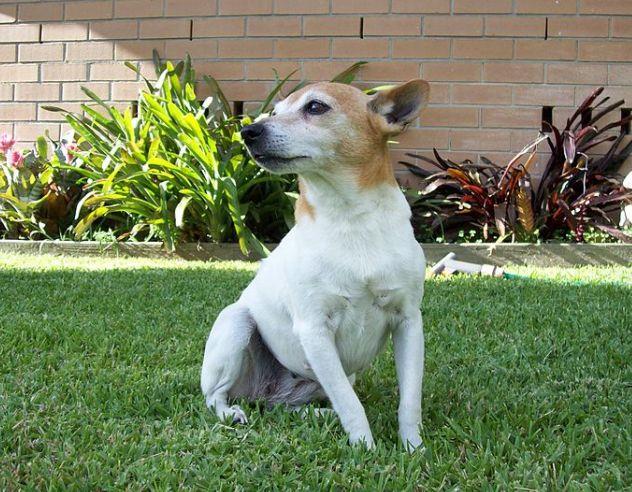
People usually start looking up “Miniature Fox Terrier” or “Foxie” when they’re weighing up a small dog that can live comfortably in a house or unit, but still has the spark and stamina of a working terrier. The decision matters: these dogs can be wonderfully steady companions in the right home, and surprisingly demanding in the wrong one.
Below is the straight, practical picture—what a Foxie-type dog looks like, how they tend to behave, what health issues to watch for, and how the Australian “Mini Foxie” story overlaps with the formally recognised Tenterfield Terrier.
At a glance: Mini Foxie / “Foxie” basics
- Size: Small. Many dogs sit in the 25–30.5 cm height range, with weight best thought of as “in proportion” rather than a fixed number.1, 2, 3
- Coat: Short, smooth, single coat (easy-care, but still benefits from brushing).2, 3
- Colours: Predominantly white with black, tan, blue or liver markings; tri-colour is common (full-colour coats are not accepted in the ANKC standard for the related Tenterfield Terrier).2, 3
- Temperament: Alert, quick, people-focused, with strong chase-and-hunt instincts typical of small working terriers.1
- Exercise needs: Often high for their size—daily walks plus short training/play sessions suit them best.
- Common health issues seen in small breeds: Knee problems (patellar luxation) and, less commonly, hip disorders such as Legg-Calvé-Perthes.4, 5
- Tail docking: Routine/cosmetic tail docking is banned across Australia; docking is generally only lawful when performed by a vet for the dog’s welfare (therapeutic reasons).6, 7
What “Miniature Fox Terrier” means in Australia (and where the Tenterfield Terrier fits)
In Australia, “Mini Foxie” and “Miniature Fox Terrier” are often used as everyday names for small, smooth-coated terrier dogs that were valued for controlling vermin and for their handy, confident nature around farms and towns.1
There’s also a closely related, formally recognised breed: the Tenterfield Terrier, which is recognised by Dogs Australia (ANKC). Its published breed standard describes a small, active dog with a short smooth coat, predominantly white colouring, and an ideal height around 28 cm (with an accepted range of 25.5–30.5 cm).2, 3
In practice, many families searching for a “Foxie” are really deciding between:
- a dog sold as a Mini Foxie/Miniature Fox Terrier (which may be from different registries or lines), or
- a pedigree Tenterfield Terrier bred to the ANKC standard.2, 3
Appearance and everyday characteristics
A good Foxie-type dog is compact and athletic rather than fragile. The coat is short and close, built for quick movement through grass, sheds, and the edges of yards where small animals shelter. The head tends to be fine and expressive, ears often carried upright or semi-upright, and the body is designed for speed and tight turns.
Because these dogs are light on their feet and naturally vigilant, they notice changes quickly—footsteps at a gate, a bird landing on the fence, a possum moving across a roof at night. That watchfulness can be a gift, and it can also become noisy if it isn’t guided.
Temperament: lively, bright, and not always subtle
Foxies are terriers: alert, persistent, and inclined to chase. Many are affectionate with their people and keen to be involved in daily life, but they’re not ornamental. They tend to do best with clear routines, gentle boundaries, and regular outlets for that busy mind.1
Common patterns owners report (and should plan for):
- Fast learning—especially when training is short and rewarding.
- Independent streak—they may test rules if training is inconsistent.
- Prey drive—extra care with pocket pets, poultry, wildlife, and off-lead reliability.
- Vocal guarding—barking can escalate without early training and calm management.
Training and exercise: what keeps a Foxie settled
A Foxie usually needs more than a quick lap of the block. Aim for daily movement plus small doses of thinking work—five minutes here and there, folded into normal life. Terriers thrive on jobs that feel real: finding treats in grass, learning a tidy recall, hopping onto a mat when the doorbell goes, or weaving around cones in the park.
Good foundations to prioritise:
- Recall and lead manners, practised away from distractions before you rely on them.
- Quiet behaviour at windows and fences (reward calm watching; manage rehearsal of barking).
- Comfort with handling (paws, mouth, ears) so grooming and vet visits stay routine.
- Social exposure—steady, controlled introductions rather than chaotic dog-park lessons.
Grooming and care: simple coat, important teeth
The short coat is generally straightforward—occasional brushing to lift loose hair, plus baths as needed. Nails often need trimming regularly, especially for dogs living mostly on soft surfaces.
Dental care matters more than many people expect with small dogs. Plaque can build quickly, and small mouths can crowd teeth, so home tooth brushing (as your vet advises) is a worthwhile habit to build early.8
Health concerns to know about
No breed is immune to problems, but there are patterns that appear often enough in small dogs that they’re worth checking for up front.
Patellar luxation (kneecap slipping)
Patellar luxation is a developmental orthopaedic condition where the kneecap shifts out of its groove. In small dogs, it may show up as an intermittent “skipping” step, hind-leg lameness, or a reluctance to jump.4
Mild cases may be managed conservatively, while moderate to severe cases often need surgical correction—so it’s sensible to ask breeders what screening they do and what they’ve seen in their lines.4
Legg-Calvé-Perthes disease (hip joint disorder)
Legg-Calvé-Perthes disease is a condition seen mainly in small breeds, involving degeneration of the femoral head (the “ball” of the hip). It typically affects young dogs and can cause hip pain and limping; treatment may include surgery in more serious cases.5
Ears and skin
Foxies aren’t inherently “floppy-eared” dogs, but any dog can develop ear irritation or infection depending on anatomy, allergies, moisture, and grooming habits. If you notice odour, redness, head shaking, or sensitivity, a vet check is the safest next step.
Miniature Fox Terrier vs Toy Fox Terrier: don’t mix them up
The Toy Fox Terrier is a separate breed developed in the United States from Smooth Fox Terrier stock, and recognised by major US kennel bodies. It’s not the same as the Australian “Mini Foxie” tradition or the ANKC-recognised Tenterfield Terrier, even if the names sound similar on a screen.9
Finding and choosing a Foxie-type dog
The best predictor of a good fit is not a cute photo—it’s whether the dog’s everyday needs match your household. Before you commit, consider where the dog will run, how you’ll handle barking, and who will provide training and supervision.
Quick checks for a responsible source
- You can meet the puppy’s mother (and ideally see where the dogs live day to day).10
- The breeder answers detailed questions and asks you plenty too—sleep, fencing, work hours, other animals.10
- They talk plainly about health risks in their lines (not “none”), and can show relevant vet records.
- Puppies are comfortable being handled and aren’t raised in isolation.
Final thoughts
A Mini Foxie—whether you call it a Miniature Fox Terrier, a Foxie, or you’re looking at the closely related pedigree Tenterfield Terrier—is small, quick, and intensely alive to its surroundings. In a home that enjoys daily walks, short training, and a dog that likes to be part of the action, they tend to settle into a bright, loyal rhythm. In a quiet home expecting an easy lap dog, the same traits can become friction.
References
- Miniature Fox Terrier (overview, history and general characteristics) — Wikipedia
- Tenterfield Terrier breed standard — Dogs Australia (ANKC)
- Tenterfield Terrier breed standard — Dogs NSW
- Patellar luxation in dogs and cats — Merck Veterinary Manual (Professional Version)
- Legg-Calvé-Perthes disease — Merck Veterinary Manual (Professional Version)
- Tail docking of dogs in NSW — NSW Department of Primary Industries
- Queensland’s ban on docking dogs’ tails — Business Queensland
- Veterinary Oral Health Council (VOHC) — accepted dental products for dogs
- Toy Fox Terrier (separate breed history and recognition) — Wikipedia
- How to tell if a puppy is from a reputable breeder — ABC News (Australia)

Veterinary Advisor, Veterinarian London Area, United Kingdom