
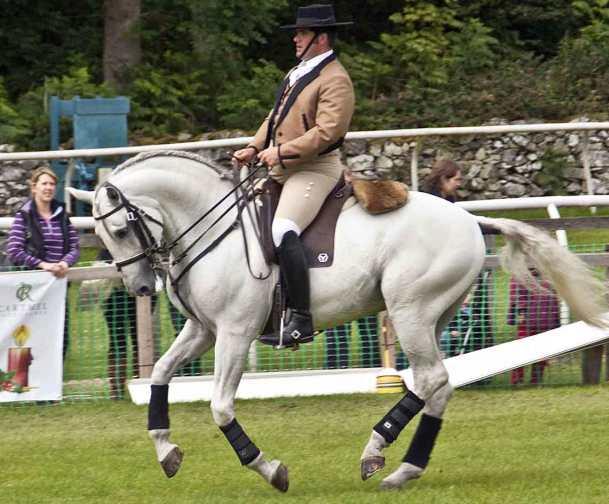
Most people arrive here when they’re trying to work out what dressage training really involves — how to start without drilling a horse into stiffness, how to read the basics (rhythm, contact, straightness), or how competition scoring actually works.
Get it right and the work builds a horse that moves freely, carries itself with less strain, and stays sounder for longer. Get it wrong and the same movements can quietly load joints, backs and tendons in ways that don’t show up until later.
What dressage is (and what it isn’t)
Dressage is the systematic training of a horse so it becomes more balanced, supple and responsive, using light, consistent aids. In the arena it looks like calm precision: regular steps, clean lines, and transitions that arrive on time without visible wrestling.
It isn’t a set of “tricks” bolted onto a horse. The better the training, the more ordinary the riding appears — because the work is happening through posture, tempo, straightness and honest forward energy rather than force.
Where dressage came from
Dressage sits inside a long tradition of classical horsemanship. Early written guidance is often traced to Xenophon’s work on horsemanship, which described careful, observant training rather than brutality, and still echoes through modern principles of tact and balance.1
In the modern era, dressage became a formal international sport through the growth of organised equestrian competition. Dressage was included in the Olympic programme in 1912, in an early form that still carried elements of military “prize riding”.2, 3
The dressage training scale (a practical way to stay honest)
Most dressage schools follow a training scale that builds the horse in layers: rhythm, suppleness, contact, impulsion, straightness, then collection.4
Think of it as a field guide. If something feels stuck — the neck shortens, the back tightens, the horse falls through a shoulder — you don’t “fix” it by hauling the head in. You step back to the layer that has slipped.
Rhythm
Rhythm is the regular pattern and tempo of the gait. It’s the quiet metronome underneath everything: the walk stays four-beat, the trot stays two-beat, the canter stays three-beat, without rushing or dragging.
Suppleness
Suppleness is the horse’s ability to bend and swing through the body without resistance. You’ll feel it as a softer ribcage, a back that starts to carry the saddle, and turns that don’t collapse inward.
Contact
Contact is a steady, elastic connection from hindquarters through the back into the rein — not a heavy pull, and not an empty rein. Good contact feels “alive”, as if you could quietly change the outline without losing the rhythm.
Impulsion
Impulsion is the controlled energy created behind and carried forward. It doesn’t mean speed. It means the horse is truly in front of the leg, with a step that has lift and intent.
Straightness
Straightness is the horse travelling evenly on both sides, with the hind feet tracking into the forefeet’s line, rather than drifting or falling out through a shoulder. Straightness is what allows the horse to carry weight without twisting.
Collection
Collection is the gradual development of carrying power. The strides become shorter and more elevated, while the horse stays forward and light — weight shifts back, the forehand frees up, and the rider can place each step with more accuracy.
Training techniques that actually help (beginner to experienced)
Start with geometry and timing
For most riders, the quickest improvements come from simple shapes ridden accurately and repeated calmly.
- 20-metre circles: keep the rhythm identical all the way around; don’t let the shoulders fall out.
- Serpentines: change bend smoothly, without changing tempo.
- Transitions (walk–trot, trot–walk, trot–halt): aim for prompt responses without tension in the jaw or back.
- Ride the corners: treat each corner like a quarter of a small circle, not a place to cut.
Introduce lateral work once the basics hold
Movements like shoulder-in and leg-yield are not “advanced decorations”. They are gymnastic tools: they help straighten the horse, mobilise the shoulders, and teach the rider to influence each side of the body separately.
Once those foundations are stable, more demanding work follows: half-pass, flying changes, and at the highest levels the collected school movements such as piaffe and passage.
Aids: quieter is clearer
Dressage uses the rider’s seat, legs and hands as a single conversation. The goal is not invisibility for its own sake, but clarity: the aid is brief, the response is immediate, and then the rider goes quiet again.
If you’re needing constant kicking or holding, treat it as information. Something earlier in the scale is missing — often rhythm, suppleness, or honest forwardness.
How scoring works in competition (and how to read a test sheet)
In most dressage tests, each movement is marked out of 10, and the final result is calculated as a percentage. The collective marks (for gaits, impulsion, submission, rider position and effectiveness) reward the overall picture, not just isolated moments.5
Don’t chase a “fancy” outline to win points. Judges are meant to reward correct basics: regular rhythm, willing contact, accurate figures, and transitions that don’t disturb the gait.
Equipment and turnout: keep it simple, safe, and allowed
Dressage tack and attire depend on your level and the rules of your sport’s governing body. In Australia, start by checking the current Equestrian Australia dressage rules for what is permitted at your level (bits, nosebands, saddlery and rider dress).6
Whatever you use, fit matters more than fashion. Poorly fitted saddles and bridles can make a willing horse look “naughty”, when it’s simply guarding its back or mouth.
Basic care that protects your tack (and your horse)
- Clean and condition leather regularly, and check stitching, billets and buckles for wear.
- Wash saddle pads often to reduce grit and skin irritation.
- Re-check fit as the horse changes shape with training and seasons.
Common training problems (and calm ways through them)
“He’s behind the leg”
Often it’s not laziness. It can be confusion, discomfort, or riding that never truly allows forward. Ask once, clearly. If there’s no response, reinforce the aid, then soften immediately when the horse goes forward.
“She’s heavy in the hand”
Heaviness is frequently a balance issue. Improve it by riding from the hindquarters into an elastic contact: more forward energy, better half-halts, and correct straightness — not by pulling the head in.
Plateaus
Progress in dressage tends to arrive in quiet steps. When things stall, shorten the task and protect the basics. A few correct transitions and a supple circle are often more useful than battling through a movement the horse can’t yet organise.
Health and wellbeing of the dressage horse
Dressage horses are athletes. The repetitive nature of schooling, plus collected work, can load tendons, joints and backs if the horse is tight, fatigued, or being held in a fixed frame.
Keep the essentials boring and consistent: regular farriery, teeth checks, appropriate conditioning, and a diet built around forage and clean water as the foundation.7, 8
If you’re travelling and competing in parts of Australia where biosecurity risks matter, talk with your vet about vaccination and hygiene. Hendra virus vaccination, for example, is widely recommended as part of risk management in Australia, alongside sensible measures to reduce horse contact with flying-fox contamination.9, 10
Final thoughts
Dressage rewards patient observation. The horse tells you, day by day, what is ready to be shaped and what needs more time: a stride that stays regular under pressure, a back that begins to swing, a transition that arrives without bracing. Train what you can keep soft. Let the rest wait.
References
- Wikipedia: Classical dressage (overview of classical roots and major historical authors, including Xenophon)
- FEI: History (timeline noting Olympic inclusion and FEI formation)
- Olympedia: Equestrian Dressage at the 1912 Summer Olympics (context on early “prize riding” format)
- FEI: The Training Scale (rhythm, suppleness, contact, impulsion, straightness, collection)
- FEI: Dressage Scoring — The Basics (marks out of 10 and percentage results)
- Equestrian Australia: Dressage Rules & Tests (current national rules)
- RSPCA Australia Knowledgebase: What should I feed my horse?
- Australian Veterinary Association: Equine dental procedures (policy and welfare considerations)
- Australian Government (DAFF): Hendra virus (vaccination and prevention guidance)
- Queensland Government (Business Queensland): Hendra virus vaccine for horses

Veterinary Advisor, Veterinarian London Area, United Kingdom