
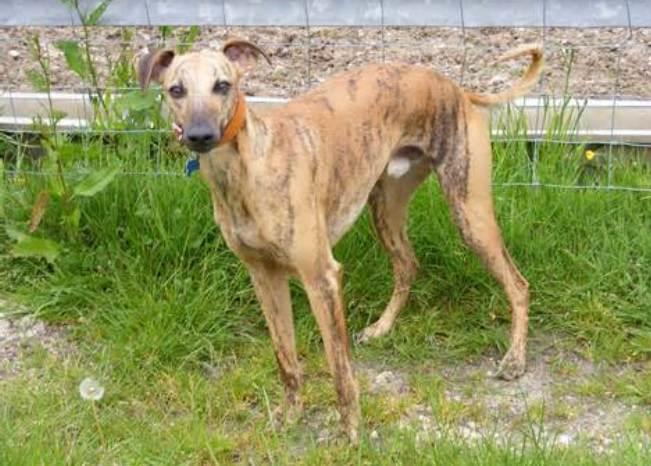
People usually start looking up Lurchers when a dog with a long, lean build and a sudden taste for chasing has entered the house—often a rescue, sometimes a pup—and daily life needs a reset: exercise, recall, feeding, and safe handling around wildlife and smaller pets.
A Lurcher can be calm indoors and startlingly fast outdoors. That contrast is where most of the practical decisions sit. What follows is a grounded guide to what a Lurcher is (and isn’t), how their bodies and instincts shape care, and the health risks worth taking seriously.
What is a Lurcher?
A Lurcher isn’t a single, standardised breed. It’s a type: a cross between a sighthound (such as a Greyhound or Whippet) and another breed chosen for working ability, stamina, or temperament. Because the mix varies, so do size, coat type, and energy levels.
Most Lurchers share a similar outline—deep chest, long legs, narrow waist—and the same basic operating system: quick acceleration, keen eyesight, and a strong instinct to chase moving animals. That instinct can override training in the wrong moment, so management matters as much as obedience work.1
History and origin
Lurchers developed in the British Isles as practical hunting and farm dogs rather than show dogs. The aim was a dog that could spot and catch game like a sighthound, while also handling rougher ground, longer days, or different tasks depending on the local needs.
That working background still shows up today in two ways: many Lurchers are happiest with a job to do (even a small one), and many are wired for sudden, intense bursts of movement rather than steady, all-day activity.
Physical characteristics (what you can expect, and what can vary)
Because “Lurcher” describes a cross, the safest way to think about size and coat is as a range rather than a fixed template. Many adult Lurchers sit in the medium-to-large bracket, but you’ll see smaller Whippet-type mixes and larger Deerhound-type mixes too.
- Body shape: typically lean, deep-chested, long-legged, built for speed.
- Coat: can be short and smooth, broken/rough, or occasionally longer, depending on the non-sighthound parentage.
- Colour: almost anything—black, brindle, fawn, white and mixed patterns are all common.
That deep chest is part of what makes them such capable runners. It also means you should be alert to bloat/GDV risk signs, especially in larger individuals.3, 4
Temperament: quiet at home, switched on outside
A well-settled Lurcher often looks like a professional lounger indoors. Outside, especially when something darts, the same dog can become intensely focused and fast. This isn’t stubbornness or “being naughty”; it’s a long-rehearsed chase response.
Common traits owners notice include:
- Gentle companionship: many are affectionate and enjoy close contact once they feel safe.
- Sensitivity: harsh handling can shut them down or make them wary; calm consistency works better.
- Chase drive: moving triggers (cats, rabbits, birds, bikes) can punch through recall.
Some Lurchers live peacefully with cats; others never become reliable around small animals. Early, careful management is the difference between “possible” and “constant risk”.1
Exercise needs: sprinting, not endurance
Lurchers are built for speed. Many do best with a daily walk plus short opportunities to run hard in a safe, enclosed area, rather than long-distance jogging every day. The exact amount depends on the individual dog’s mix, age, and fitness.
A useful rule of thumb: plan for regular exercise every day, and make room for occasional fast running—done safely.
- Use securely fenced areas for off-lead running.
- Expect recall to be unreliable around prey unless you have controlled the environment.
- Balance physical exercise with mental enrichment so they can settle afterwards.2
Training and socialisation: build safety first
With Lurchers, training is less about dominance and more about habit, environment, and predictability. A calm dog with a rehearsed routine makes better choices.
Recall and prey drive (the realistic approach)
For many Lurchers, recall is easiest to maintain when it’s treated as a safety system, not a party trick. That often means:
- using a long line in open spaces
- saving off-lead time for fully secure areas
- training a reliable “stop/leave” and rewarding heavily
Even with good training, a sight-triggered chase can happen faster than a human can react, so management is part of responsible ownership.1
Socialisation (especially for puppies)
Early socialisation shapes how a Lurcher copes with the modern world—footpaths, noisy trucks, vets, visitors, other dogs. In Australia, reputable puppy preschool and carefully managed exposure can be helpful when done safely and hygienically, and sessions should stay short and positive.5, 6
Feeding: steady fuel, sensible routines
Choose a diet that is complete and balanced for your dog’s life stage, then adjust portions based on body condition and activity rather than label promises. The ingredient list alone doesn’t tell you whether a food is nutritionally sound; you want evidence of formulation and quality control behind it.7
Practical feeding habits that suit many Lurchers include:
- two or more smaller meals rather than one large meal
- slow-feeding strategies if your dog gulps food
- rest after meals before hard running or rough play3, 4
Health concerns to know about
Because Lurchers are crossbred, their risks depend on their parent breeds and individual build. Many are robust, but a few issues come up often enough to plan around.
Hip dysplasia
Hip dysplasia is a developmental condition of the hip joint that can lead to pain and arthritis over time. Severity varies widely; some dogs show few outward signs even with significant joint changes. Weight management, appropriate exercise, and veterinary guidance make a real difference to comfort and mobility.8
Bloat (gastric dilatation-volvulus / GDV)
GDV is a fast-moving emergency where the stomach distends and can twist, cutting off blood supply and causing shock. Large, deep-chested dogs are at higher risk. If you see repeated retching with little produced, a swollen abdomen, drooling, restlessness, weakness, or collapse, treat it as urgent and go straight to an emergency vet.3, 4
Lurchers as working and hunting companions
Historically, Lurchers were shaped by work—spotting, chasing, and catching game; moving across farmland; fitting into the rhythms of rural life. In modern homes, “work” can mean structured exercise, training games, scent work, and enrichment that gives the dog a clear outlet.
Without an outlet, the same instincts can spill into chasing neighbourhood cats, lunging at wildlife, or disappearing over the horizon with the kind of speed that makes panic feel slow.
Final thoughts
A Lurcher is often at their best when the basics are steady: secure exercise options, calm training, sensible feeding routines, and a home that respects the chase instinct rather than trying to shame it out of existence. Get those foundations right and many Lurchers become quietly devoted companions—soft in the house, electric in the open, and easier to live with each week.
References
- Dogs Trust – Lurcher
- RSPCA Australia – The importance of enrichment for dogs
- American College of Veterinary Surgeons (ACVS) – Gastric Dilatation-Volvulus (GDV) and gastropexy
- Cornell University College of Veterinary Medicine – Gastric dilatation-volvulus (GDV) or “bloat”
- RSPCA Knowledgebase – How can I socialise my puppy?
- RSPCA Australia – Socialising your puppy
- WSAVA – Global Nutrition Guidelines
- Orthopedic Foundation for Animals (OFA) – Canine Hip Dysplasia

Veterinary Advisor, Veterinarian London Area, United Kingdom