
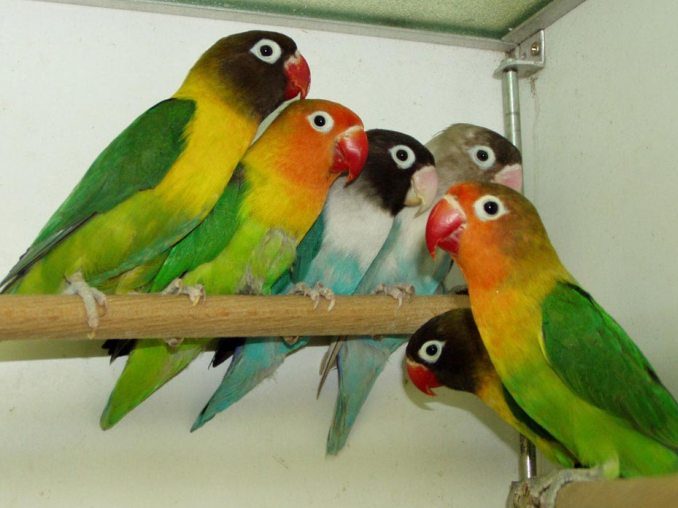
People usually start looking up lovebirds when they’re weighing up a first bird, trying to decode sudden nipping or screaming, or checking whether a seed-heavy diet is quietly doing harm. These parrots are small enough to feel manageable, but they can unravel fast if their social and feeding needs are guessed at instead of met.
Below is the plain picture: what lovebirds are, what they’re like to live with day to day, and the care points that most often decide whether a bird thrives or merely copes.
Lovebirds at a glance
Scientific name: Agapornis (nine species)
Adult size: roughly 10–16 cm long (most pet types sit around the middle of that range)1
Typical weight: often around 40–60 g (varies by species and condition)
Colours: wild-type greens plus many captive-bred colour mutations
Typical lifespan in captivity: commonly 10–15+ years with consistent care
Noise level: sharp, bright calls; not usually “quiet” birds
Activity level: high—constant climbing, chewing, foraging, rearranging
What a lovebird is (and what the name really means)
Lovebirds are small parrots from Africa and Madagascar, best known for sitting close in pairs and maintaining strong pair bonds.1 The old story that a lovebird will “die of heartbreak” without a mate is not proven. What is true is simpler: they are social birds, and isolation with no enrichment can push them into chronic stress behaviours.
In the wild, lovebirds forage in flocks through scrub and woodland for seeds and other plant material.1 In a home, that same restless energy shows up as chewing, shredding, climbing, and a fierce interest in whatever your hands are doing.
Temperament: affectionate, intense, and sometimes sharp-edged
Lovebirds can be engaged companion birds, but “affectionate” needs a footnote. Many enjoy proximity and routine handling once they trust you, yet they can also be pugnacious—especially around cages, nesty corners, or a favoured person.1
Common, normal behaviours include:
- Nipping when overexcited, startled, or defending space.
- Territorial lunging at hands entering the cage (the cage is their core patch).
- Focused pair bonding that can reduce interest in humans if two birds become tightly bonded.
Are they good pets for beginners?
They can be, if you like daily interaction, can handle noise, and are prepared to manage hormones, chewing, and the occasional bite. They’re not a “look but don’t touch” bird, and they’re not a low-effort ornament.
Housing: small bird, big need for space
A lovebird’s cage should be sized for movement, not for sitting. They need room to climb, hop, flap, and get away from their own food and droppings. Horizontal bars (for climbing), multiple perches of different diameters, and a steady supply of safe chewable items matter more than decorative cage shapes.
Place the cage where the household naturally spends time, but away from constant draughts, cooking fumes, and direct blasting sun. Quiet, regular sleep helps keep behaviour steadier.
Social needs and daily enrichment
Lovebirds are built for contact. When that contact disappears, the bird often finds other outlets—screaming, repetitive pacing, feather damaging, or frantic chewing. Enrichment isn’t optional; it’s daily maintenance.
Enrichment that tends to work well
- Foraging: paper parcels, puzzle feeders, food hidden in safe shredded material.
- Destruction toys: untreated cardboard, paper, soft woods designed for birds.
- Routine training: short sessions that reward calm behaviour and “step up”.
Training style
Keep it gentle and consistent. Positive reinforcement (treats, favourite foods, calm praise) builds reliability without escalating fear or biting. Rapid forced handling usually backfires, especially with a bird that is already cage-defensive.
Diet: a seed-only menu is the common trap
Seed mixes are easy, familiar, and often overeaten. The problem is that many pet birds selectively eat the fattiest seeds and miss key nutrients over time. Most modern veterinary guidance recommends a diet built around formulated pellets, with vegetables and small amounts of fruit, and seeds used more as a smaller component or as training treats.2, 5
A practical feeding pattern
- Base diet: nutritionally complete pellets (chosen for small parrots).4
- Daily fresh food: vegetables first; fruit in smaller amounts.3, 4
- Seeds and nuts: best kept as measured portions or training rewards, not the main meal.2
Foods to avoid (important)
Some common household foods can be dangerous for parrots. Avocado is widely treated as toxic and should be avoided.4 Also avoid chocolate, caffeine, and alcohol.6
Changing diets safely
Diet changes should be gradual. Birds can refuse unfamiliar foods, and a fast switch can lead to weight loss. If you’re converting from seeds to pellets, monitor body weight closely and speak with an avian vet if weight drops or droppings become scant.2, 3
Health: what to watch, and when to act
Lovebirds tend to hide illness until they can’t. Subtle changes matter: sitting fluffed for long periods, reduced appetite, quieter-than-usual behaviour, tail bobbing with breathing, watery droppings, or a sudden drop in activity should be treated as a reason to call an avian vet.
A note on psittacosis (parrot fever)
Psittacosis (caused by Chlamydia psittaci) can infect parrots including lovebirds, and it can spread to people, usually by inhaling dust/aerosols from dried droppings, feathers, or secretions.7, 8 Good hygiene matters: wash hands after handling birds and be cautious when cleaning cages to reduce dust exposure.7, 9
Grooming and routine care
Most lovebirds keep themselves tidy, but they benefit from regular bathing opportunities. Offer a shallow dish or gentle misting and let the bird choose. Avoid forced baths.
Nails and beak usually stay in shape with appropriate perches and chew items. If overgrowth occurs, it’s safer to have an experienced avian vet or qualified bird groomer assess the cause and trim correctly.
Final thoughts
A lovebird is a small parrot with a strong, bright presence. Give it daily contact, a diet that doesn’t lean on seed mixes, and a cage set up for movement and chewing, and you’ll usually see the best version of the species: alert, busy, and deeply engaged with its world.
References
- Encyclopaedia Britannica — “Lovebird” (Agapornis overview, size range, behaviour notes)
- Merck Veterinary Manual — Management of Pet Birds (diet balance, pellets vs seeds, safe transition guidance)
- Animal Welfare League Queensland — Bird care (diet balance examples, pellet conversion and weight monitoring)
- RSPCA (UK) — What to feed your pet bird (pellets plus fresh produce; avocado warning)
- Piper Street Veterinary Clinic (Australia) — Feeding your pet bird (vegetables vs fruit emphasis; pellet-based diets)
- VCA Animal Hospitals — Cockatoos: Feeding (avoid chocolate, caffeine, alcohol; moderation notes)
- Queensland Government (Business Queensland) — Psittacosis (signs in birds, spread to humans, prevention)
- Agriculture Victoria — Parrot fever (psittacosis) (spread routes, signs in birds, management notes)
- Queensland Government — Preventing diseases in backyard poultry (hygiene measures relevant to aviary birds)

Veterinary Advisor, Veterinarian London Area, United Kingdom