
People usually look up Leonbergers when they’re weighing up a giant-breed dog for family life, or trying to make sense of health risks like bloat and joint disease before committing. With a dog this size, small decisions—training early, feeding routines, heat management, the right breeder—carry real consequences for safety and long-term comfort.
The Leonberger is a large, steady companion with a thick double coat, a black mask, and a calm presence that tends to fill a room. What follows is a practical, reality-based guide to size, temperament, exercise, grooming, nutrition, and the health checks worth taking seriously.
Leonberger at a glance
- Height (at withers): males 72–80 cm; females 65–75 cm1, 2
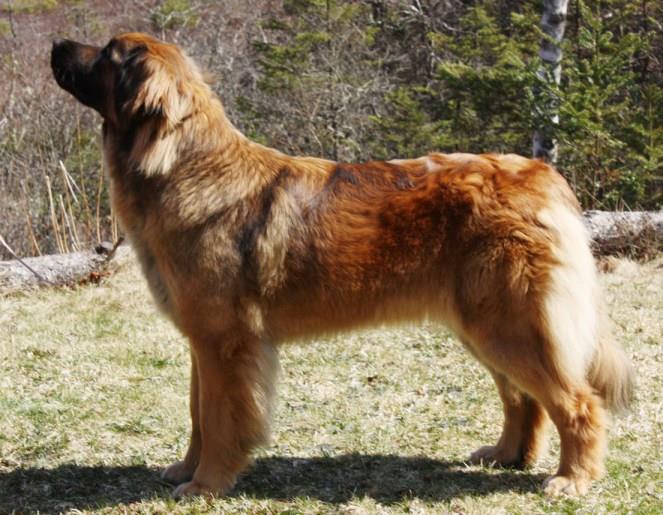
- Coat: double coat; fairly long; straight or slightly wavy; visible outline despite thick undercoat; mane on neck/chest (more pronounced in males)1, 2
- Colours: lion gold through red/reddish-brown and sandy (fawn/cream), always with a black mask; small white chest patch/toe hairs may be tolerated in some standards1, 2, 3
- Temperament (typical): sociable, steady, family-oriented; best when included in daily life rather than kept at arm’s length4
- Exercise needs: moderate, consistent exercise; many enjoy swimming and longer walks once mature4
- Common breed concerns: orthopaedic disease (including hip/elbow dysplasia), heart disease, and gastric dilatation-volvulus (GDV/bloat) risk in deep-chested dogs5, 6, 7
- Lifespan: often around 8–10 years (varies with genetics, body condition, and disease burden)
History and origin
The Leonberger originated in Leonberg, Germany, in the mid-1800s. Breed histories commonly link its development to Heinrich Essig and to deliberate selection for an imposing, lion-like outline—large frame, full coat, and dark facial mask—while keeping a workable, social temperament.
Over time, Leonbergers were kept as substantial all-rounders: family companions with enough strength for light draft work and a natural comfort around water. Modern breed organisations still describe them as versatile rather than narrowly specialised.4
Physical characteristics
Size and structure
Leonbergers are tall, heavy-boned dogs with a balanced outline. Breed standards set the height at 72–80 cm for males and 65–75 cm for females, measured at the withers.1, 2 Weight varies widely with height, sex, and build; a fitter Leonberger looks athletic under the coat rather than barrel-shaped.
Coat and weather tolerance
The coat is a true double coat: a dense undercoat with a longer outer coat that lies close to the body and is straight or slightly wavy. A neck-and-chest mane is typical, especially in males, with feathering on legs and “breeches” on the hindquarters.1, 2 This coat can cope well with cold and wet conditions, but it also means heat management matters in warmer weather.
Colour and markings
Recognised colours sit within a yellow-to-reddish-brown spectrum (lion gold to red/reddish brown and sandy). A black mask is a defining feature across standards; black tipping on guard hairs may occur, but black should not dominate the base colour.1, 2, 3
Temperament and day-to-day behaviour
A well-bred, well-raised Leonberger is usually calm in the house and quietly social with familiar people. Many are patient around children, but their sheer size changes the risk profile: a friendly lean, a clumsy pivot, or a startled scramble can flatten a small kid without any aggression involved.
They tend to do best when treated as a family dog with manners, not as a backyard ornament. Breed organisations repeatedly emphasise sociability and steadiness, alongside a preference for being included in everyday life.4
With children and other animals
Most Leonbergers can live smoothly with children and other pets when they’re carefully socialised and managed. Early exposure matters, but so does ongoing practice: calm greetings, structured play, and a predictable routine. Supervision is non-negotiable with any giant breed around toddlers.
Training and exercise needs
Early training isn’t optional
Leonbergers are intelligent, but the real issue is physics. A young dog that learns to jump up, pull on lead, or ignore recalls becomes difficult to handle fast. Start early with gentle, consistent training and plenty of low-pressure socialisation—different surfaces, friendly strangers, calm dogs, traffic noise—before habits set like concrete.
How to train a Leonberger
Positive reinforcement suits the breed well: food rewards, praise, and games. Keep sessions short and steady. Harsh corrections often backfire in sensitive, large dogs, creating avoidance or anxiety rather than reliable behaviour.
Exercise: moderate, steady, and joint-friendly
Most adult Leonbergers suit moderate daily exercise—walks, sniffing time, and play—with many enjoying swimming and longer hikes once they’re physically mature.4 For puppies and adolescents, avoid repetitive high-impact work (especially forced running and lots of jumping) while growth plates are still closing.
Health and lifespan
Orthopaedic disease (hips and elbows)
Hip and elbow dysplasia are well-recognised risks in large breeds. The practical lever you can pull is prevention and early detection: choose breeders who screen, keep your dog lean, build fitness gradually, and see your vet early if you notice stiffness, bunny-hopping, reluctance on stairs, or a shorter stride.
Heart disease
Large breeds can be prone to cardiac conditions, including dilated cardiomyopathy in some populations. A good breeding program and regular veterinary checks matter here, especially as your dog ages or if exercise tolerance changes.
GDV (bloat): the emergency to learn before you need it
Gastric dilatation-volvulus (GDV) is a life-threatening emergency seen most often in large, deep-chested dogs. Time is the difference between a hard night at the vet and a fatal outcome.5, 6, 7
Signs that need urgent veterinary care
- Repeated retching with little or no vomit
- Rapidly enlarging abdomen
- Restlessness, drooling, distress
- Weakness, collapse, pale gums
Reducing GDV risk (practical routines)
- Feed two or more smaller meals per day instead of one large meal.5, 6, 7
- Slow fast eaters (slow-feeder bowl or puzzle feeder).5, 7
- Avoid vigorous exercise around meals; allow a rest window after eating (commonly around two hours for at-risk dogs).5, 7
- Avoid raised feeding bowls unless your vet has advised one for a specific medical reason; raised bowls have been associated with increased risk in some guidance sources.5, 6
- Ask your vet about prophylactic gastropexy for deep-chested, high-risk dogs (often done at the time of desexing). It doesn’t stop gas build-up, but it can prevent the deadly “twist”.6, 8
Grooming and maintenance
Brushing that matches the coat
That dense undercoat doesn’t forgive neglect. Plan on thorough brushing at least weekly, and more often during heavy shedding. Focus on the mane, behind the ears, the feathering, and the “trouser” areas—places where loose undercoat compacts into felt.
Bathing and skin checks
Bathe when needed rather than on a strict schedule, and rinse thoroughly. Regular grooming is also your best chance to spot hot spots, parasites, and small lumps early, especially under a thick coat.
Diet and nutrition
Choose a complete diet, not an ingredient list
For a giant breed, “complete and balanced” matters more than marketing claims. The World Small Animal Veterinary Association (WSAVA) emphasises using reliable nutritional information and sensible label reading, rather than judging a food only by its ingredient list.9
Feeding routine
Many Leonbergers do well on two meals a day, which also aligns with common GDV risk-reduction advice for deep-chested dogs.5, 6 Portion size should be guided by body condition and your vet’s advice, not the dog’s appetite. A lean Leonberger usually moves more freely and loads their joints less.
Foods to avoid
Some human foods are genuinely dangerous for dogs. The usual culprits—chocolate, grapes/raisins, onions and garlic—are best treated as “never foods”, and uncertain items are worth checking with your vet before they reach the bowl.
Living conditions: what suits them best
Leonbergers can adapt to different homes, including larger apartments, if their daily needs are met: consistent exercise, training, and time with their people. Space helps, but it’s not the whole story. What they don’t handle well is isolation—being physically present but socially sidelined.
Because they’re large, plan for practicalities: non-slip flooring, a car setup that allows safe loading, and realistic grooming space. In hot weather, provide shade, ventilation, and cool water, and exercise during the cooler parts of the day.
Final thoughts
The Leonberger is at its best when it can move through family life like a quiet, powerful current—close by, watching, joining in when invited, settling when the house settles. Choose carefully, train early, keep them lean, and learn the emergencies that matter. The reward is a giant dog with a surprisingly gentle footprint.
References
- Dogs Victoria — Leonberger breed standard
- Dogs Australia — Leonberger breed standard
- The Kennel Club (UK) — Leonberger breed standard
- International Leonberger Union — The breed
- American Animal Hospital Association (AAHA) — Understanding canine bloat (GDV)
- Cornell University College of Veterinary Medicine — Gastric dilatation-volvulus (GDV) or “bloat”
- PetMD — Gastric dilatation-volvulus (GDV) in dogs
- American College of Veterinary Surgeons (ACVS) — Gastropexy / GDV information
- World Small Animal Veterinary Association (WSAVA) — Global Nutrition Guidelines

Veterinary Advisor, Veterinarian London Area, United Kingdom