
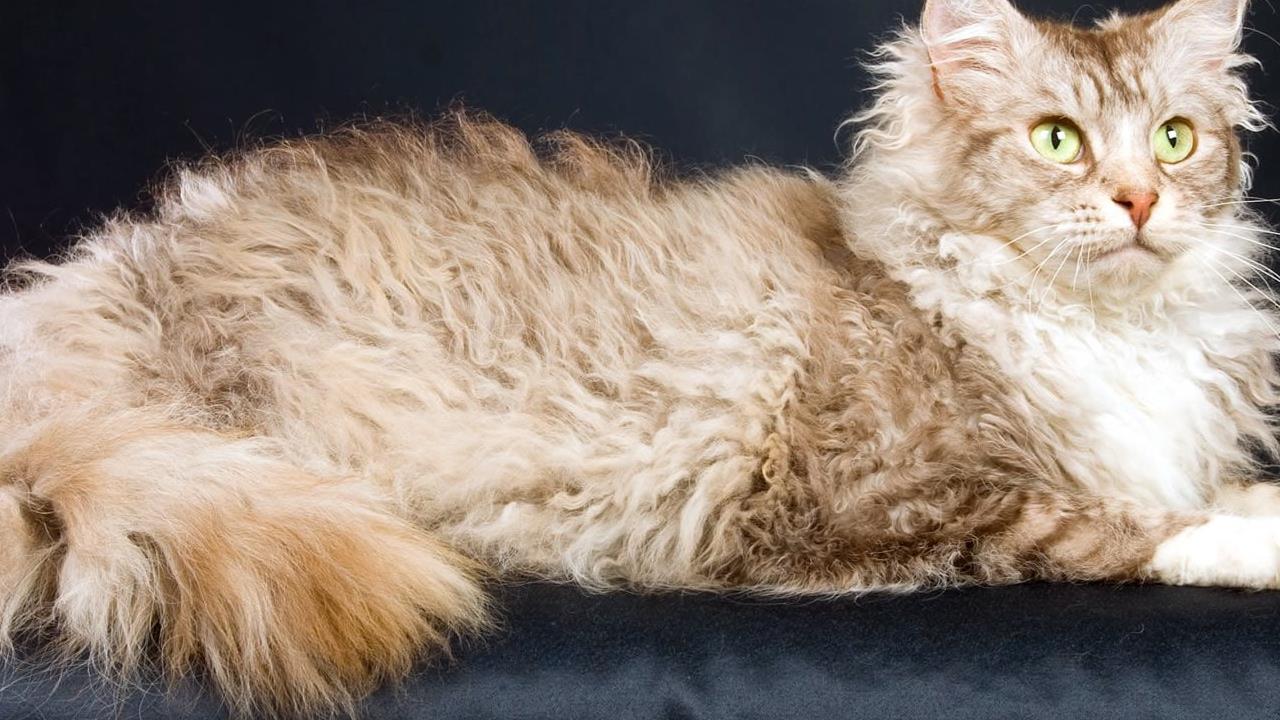
People usually start looking into the LaPerm when they’ve met one—soft curls, bright eyes, a cat that seems both alert and unusually gentle—and they want to know what living with that coat and temperament is really like. The stakes are practical: grooming, shedding, health risks, and whether a LaPerm will settle into an Australian home without surprises.
Below is a grounded overview of the breed’s origins, what the coat is (and isn’t), what day-to-day care tends to involve, and what to watch for when choosing a breeder or adopting.
LaPerm cat at a glance
- Origin: United States (first recognised in Oregon in 1982)1, 2
- Size/weight: small-to-medium; adult females commonly around 2.7–4.1 kg, adult males around 3.2–5.4 kg (individuals vary)3, 4
- Coat: naturally curly or wavy; longhair and shorthair varieties; many colours and patterns2, 3
- Temperament: typically affectionate, gentle, interactive, and active without being frantic1, 2
- Typical lifespan: commonly reported around 12–15 years (some live longer)3
- Grooming needs: usually light-to-moderate; regular combing helps prevent tangles, especially in longer coats1, 3
- Breed-specific health issues: no single condition is consistently recognised as “the” LaPerm problem, but routine preventive care still matters1, 3
Origins and history of the LaPerm
The LaPerm began with a single unusual kitten born on an Oregon farm in 1982. She was initially born hairless, then developed a curly coat as she grew, and later produced kittens with the same type of coat—evidence of a naturally occurring mutation rather than a deliberate cross.1, 3
From there, breeders set about stabilising type and coat, and the LaPerm gained recognition in major registries over time. In the Cat Fanciers’ Association (CFA), the breed was accepted for registration in 2000 and reached championship status in 2008.1
Physical characteristics and appearance
LaPerms are often described as medium in build, with a surprisingly solid feel for their size. The defining feature is the coat: loose, springy curls or waves that stand away from the body rather than lying flat.3, 4
They can be longhair or shorthair, and coat length and fullness can shift with season and maturity. Many also have curly whiskers and furnishings around the ears, which adds to the “just stepped out of a breeze” look.1, 3
Colours and patterns are wide-ranging, which means coat texture tends to be a more reliable identifier than colour.2, 3
Temperament and behaviour
A LaPerm is typically people-oriented: the sort of cat that follows the household flow, curious about what’s happening, then happy to settle nearby. Many are active and playful, yet also keen on contact—lap time often features strongly.1, 3
As with any breed, individuals vary. Early handling, a stable routine, and a home that offers safe climbing and hiding spots usually do more for a cat’s confidence than breed label alone.
Grooming and coat care
The LaPerm’s curls often shed less noticeably than straight-coated cats, and many coats don’t mat easily—but “minimal grooming required” is an overstatement. Most LaPerms benefit from regular, gentle combing to remove loose hair and prevent tangles, particularly in longer coats or during seasonal changes.1, 3
What grooming usually looks like
- Comb, don’t over-brush: A metal comb (often with rolling teeth) is commonly recommended to avoid pulling healthy hair while removing hair that’s ready to come out.1, 3
- Check “friction zones”: Behind ears, under the collar area, armpits, and the base of the tail are where knots can start.
- Bathing only when needed: Some coats can get a bit oily and may benefit from an occasional bath; use cat-appropriate products and follow breeder or vet guidance (human shampoo isn’t suitable).1
Health considerations
Major registries generally describe the LaPerm as a healthy breed with no consistent breed-specific disease profile. That said, “no health issues” is never a safe promise for any cat—good breeding, preventive care, and early attention to symptoms still matter.1, 3
One claim that often circulates is that LaPerms are commonly affected by amyloidosis. In reality, amyloidosis is a broader disease process seen across animals, with some hereditary risk noted in certain breeds such as Abyssinians; it is not widely established as a hallmark LaPerm condition in major breed references.5
Training, enrichment, and indoor living (Australian context)
LaPerms tend to be bright, engaged cats. They usually do best with daily play, climbing options, scratching surfaces, and food puzzles—small routines that give their curiosity somewhere to land.
In Australia, there’s also a strong welfare and wildlife reason to keep pet cats contained (indoors, or with access to a secure enclosure). Animal Welfare Victoria recommends confinement from dusk to dawn and preferably at all other times, noting reduced risk of injury, disease, and harm to wildlife when cats are kept on their owner’s property.6
If you’re shifting a cat to indoor-only life, allow an adjustment period and build the environment up first: vertical spaces, hiding spots, litter placement away from food, and daily interactive play.
Finding a breeder or adopting: what to look for
Because LaPerms are less common than many other breeds, it can take time to find one. Whether you’re buying or adopting, focus on health, handling, and transparency rather than coat curl alone.
- See how kittens are raised: Calm, clean environments; kittens that are handled gently and regularly; adults that look well cared for.
- Ask about health screening and veterinary care: Vaccination, parasite control, desexing plans, and what their lines are known for.
- Expect a paper trail: Registration details, written contract, and clear guidance on diet, grooming, and settling-in.
- Be cautious with “hypoallergenic” claims: Coat type can reduce visible shedding, but it doesn’t guarantee fewer allergies for people sensitive to cat allergens.3
Final thoughts
The LaPerm is defined less by rarity than by texture: a coat of loose curls and a cat that often sits close to the household’s centre of gravity. With light, regular grooming and a contained, enriched home, they tend to thrive as affectionate companions—curious, steady, and quietly present.
References
- Cat Fanciers’ Association (CFA) – LaPerm: breed history, personality, grooming, health notes
- The International Cat Association (TICA) – LaPerm: breed overview and characteristics
- TICA – LaPerm (Shorthair/Longhair): size/weight, coat and grooming guidance
- Dimensions.com – LaPerm cat size and weight ranges (general guide)
- Merck Veterinary Manual (Pet Owner Version) – Amyloidosis in cats
- Agriculture Victoria (Animal Welfare Victoria) – Keeping your cat safe at home (containment advice)

Veterinary Advisor, Veterinarian London Area, United Kingdom