
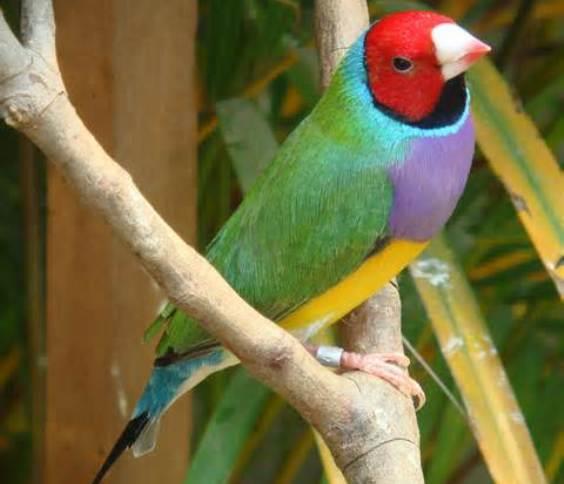
People usually start looking up Gouldian finches when they’re weighing up a first pair, setting up a cage, or trying to work out why a bird looks “quiet” one day and fluffed-up the next. These finches can thrive in captivity, but they’re small, fast-moving birds that hide problems well—so the basics (space, diet, warmth, hygiene, and low stress) matter more than most new owners expect.
Below is a practical guide to Gouldian finches as pets in Australia: what they’re like to live with, what to feed, how to house them, and the health issues that tend to appear when conditions drift off track. Where the original advice was vague or inconsistent, it’s tightened and corrected using reputable sources.
Quick facts (Gouldian finch)
- Common name: Gouldian finch (often called “Lady Gouldian finch” in aviculture)
- Scientific name: Erythrura gouldiae1, 2
- Adult size: about 12–14 cm long3
- Lifespan (captive, typical): around 5–8 years (with good care)3
- Temperament: social with other finches; usually not “hands-on” tame, and can be stress-prone if handled often5
- Noise: generally soft calls rather than loud screeching (but they still chatter, especially in groups)5
- Natural head colours: black-headed (most common), red-headed, and yellow-headed (rare)1, 3
What a Gouldian finch is like as a pet
In a room, Gouldians move like small, bright fish: quick turns between perches, short flights, and long pauses to watch. They’re best enjoyed as an aviary-style bird rather than a “cuddle” pet. Most settle well when they have a calm routine, plenty of space, and at least one compatible finch companion.
They are strongly social. Kept alone, many birds become withdrawn and less active. A steady pair (or a small group, in a correctly sized setup) is usually the more stable option.
Appearance and colour variations (what’s normal)
Gouldians have a green back, yellow underparts and a purple breast, with the head colour varying between black, red and yellow. Males are typically more vivid and sharply defined than females.1, 2
It’s common to see “yellow-headed” described as orange in aviculture. In the wild, yellow-headed birds are uncommon compared with black- and red-headed forms.1, 3
Housing: cage size, layout, and the indoor environment
Gouldians are built to fly. A tall cage looks impressive, but length matters more than height because they exercise in short, straight bursts. Choose the longest cage you can realistically fit, or an indoor aviary if you have the space.
Setup essentials
- Perches: use a mix of diameters and natural branches where possible. Place a few “flight lane” perches so birds can move across the cage without weaving through obstacles.
- Food and water: separate seed, fresh food, and water stations so timid birds can feed without being crowded.
- Bathing: offer a shallow bath dish regularly. Many finches bathe readily when the room is warm and still.
- Ventilation without drafts: stale air and damp litter invite respiratory trouble, but direct drafts can chill small birds quickly. Aim for steady, gentle airflow rather than a fan pointed at the cage.
Cleaning rhythm that works
- Replace water daily.
- Remove wet fresh foods after a few hours (so it doesn’t sour).
- Spot-clean droppings under favourite perches.
- Do a deeper clean on a regular schedule (often weekly), keeping disinfectants well-rinsed and fully dried before birds return.
Diet and nutrition: what to feed (and what to avoid)
In the wild, Gouldians feed mostly on grass seeds for much of the year, and they may take insects during breeding.1 In captivity, a good-quality finch seed mix can be the base, but it shouldn’t be the whole story.
Everyday feeding (practical baseline)
- Seed mix: a fresh, clean finch mix suited to small finches (avoid dusty, old seed).
- Fresh greens: small amounts of safe leafy greens can add variety (remove leftovers before they wilt and sour).
- Calcium: provide cuttlebone/mineral source, especially if you keep mixed-sex birds or intend to breed (calcium is part of egg-laying safety as well as bone health).4
- Clean water: always available, changed daily.
During breeding or moult
Protein needs rise when birds are breeding or growing new feathers. Many keepers use egg food and, where appropriate, some live food. Keep portions small and fresh, and remove quickly to prevent spoilage.4
A note on grit
Practices vary between keepers, but a separate mineral/calcium source is commonly recommended in aviculture. If you’re unsure what’s appropriate for your birds and setup, check with an avian vet—especially if you’ve had egg-binding, recurring soft shells, or birds losing condition.
Exercise and handling (what “tame” usually means)
Gouldians can learn your routine and become less flighty around you, but they’re rarely a hands-on species. Chasing a finch around a room to “bond” tends to do the opposite.
If you want out-of-cage time, do it only in a finch-safe space (closed doors and windows, covered mirrors, no ceiling fans, no other pets). Many households choose to meet their birds’ needs with a large flight cage/aviary instead.
Health concerns: what to watch for and when to act
Small finches often mask illness until they can’t. The early signs are subtle: a bird that hangs back, sits fluffed for long periods, or loses its usual quickness at the food dish.
Common red flags
- Fluffed feathers and lethargy that lasts more than a short rest
- Tail bobbing, open-mouth breathing, or audible clicking/wheezing (possible respiratory distress)
- Weight loss, sitting low, or reduced appetite
- Dirty vent, ongoing loose droppings, or sudden change in droppings
- Repeated scratching, poor feather condition, or visible mites
Respiratory disease and air quality
Respiratory signs in birds should be taken seriously. Poor ventilation, damp bedding, dusty seed, smoke, aerosols, and drafts can all tip a small bird into trouble. If you see tail-bobbing or open-mouth breathing, treat it as urgent and contact an avian vet.6
Mites (including air-sac mites)
External parasites can cause irritation and feather damage, but some mites affect the respiratory system and present as breathing problems. Because the correct treatment depends on the cause, avoid DIY “just in case” dosing and get veterinary advice when breathing is involved.6
Breeding Gouldian finches (best kept deliberate)
Gouldians can breed successfully in captivity, but breeding shouldn’t be accidental. It increases nutritional demands, intensifies territorial behaviour, and raises the stakes if anything is slightly off in temperature, hygiene, or diet.
If you do plan to breed, learn their natural preferences: in the wild they nest in tree hollows (and sometimes termite mounds), and they may breed in small colonies.1, 2 In captivity, purpose-made nest boxes are commonly used, with careful attention to warmth, calcium, and fresh food hygiene.4
Noise level: what to expect
Compared with parrots, Gouldians are generally quiet. Most of their sound is soft calling and light chatter, which carries less through walls than a shriek. That said, any flock has busy moments—especially at sunrise, during feeding, and when nesting behaviour is triggered.5
Ethics and context in Australia
Gouldian finches are native to northern Australia and are listed as Endangered in Australia. Captive birds sold through reputable channels are bred in aviaries, but it’s still worth choosing sellers who can clearly describe their breeding history and husbandry, and who prioritise healthy, settled stock.1, 7
References
- BirdLife Australia — Gouldian Finch (species profile)
- Australian Government (DCCEEW) — Gouldian finch (Erythrura gouldiae) species information (2008)
- Australian Geographic — Fact File: Gouldian finch (Erythrura gouldiae)
- National Finch & Softbill Society (NFSS) — Gouldian finch (husbandry notes)
- San Diego Zoo Wildlife Alliance — Gouldian finch (behaviour and general biology)
- Merck Veterinary Manual — Companion bird respiratory disease and parasitism (reference overview)
- Australian Government (SPRAT) — Species Profile and Threats Database: Gouldian Finch
- University of Sheffield — Research news on Gouldian finch head colour mechanisms (2019)

Veterinary Advisor, Veterinarian London Area, United Kingdom