
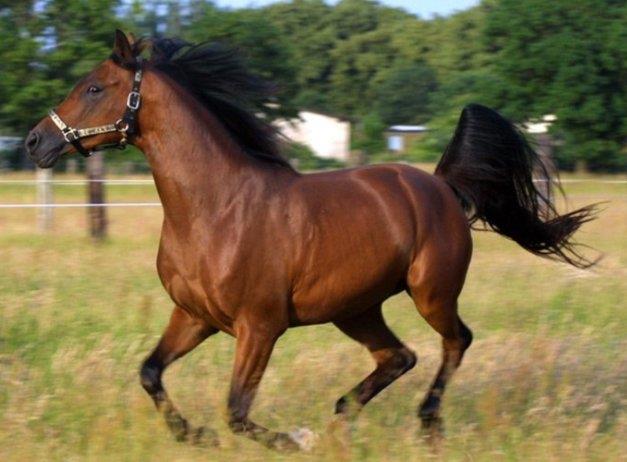
People usually search for the Karabakh horse when they’re trying to identify a breed, check its typical size and colouring, or work out whether it suits a particular kind of riding. With rare breeds, small details matter: a name on a sale ad, a claim about “pure” bloodlines, or a casual promise that the horse has “no health issues” can steer decisions that cost time, money, and animal wellbeing.
The Karabakh is a distinctive riding and racing horse from Azerbaijan’s Karabakh region, celebrated for speed and toughness on broken ground, and also for its place in local culture. It’s also a breed under pressure, with limited numbers and careful breeding efforts to protect what remains.1
Karabakh horse at a glance
- Type: Mountain-steppe riding and racing horse from the Karabakh region (Azerbaijan).1
- Typical height: Often reported around 14.1–15.2 hands (about 145–157 cm at the withers).1
- Common colours: Frequently chestnut and bay; sources also describe a characteristic golden-chestnut colouring in some lines.1
- Usual roles: Riding, racing, and traditional mounted games (notably chovqan).1, 2
Origins and history
The breed takes its name from Karabakh, a historic horse-breeding region in the South Caucasus. The Karabakh horse is commonly described as having formed and been refined through the 18th and 19th centuries, during the period when the Karabakh Khanate was a regional power and horse breeding was closely tied to local elite patronage.1, 3
Accounts of the Karabakh’s influences vary, but most credible summaries describe a blend of “Oriental” horse types, with links to breeds such as the Arabian and Turkoman-type horses, and a close relationship with the Akhal-Teke in regional horse history.1
Physical characteristics
The Karabakh is typically described as compact and athletic rather than heavy, suited to a landscape of foothills, plains, and stony tracks. You’ll often see mention of a strong topline, clean limbs, and a build that favours quick, efficient movement over brute pulling power.1
Height and build
Breed references commonly place the Karabakh in the mid-range for riding horses, around 14–15+ hands. Individual horses can be smaller or taller, especially where cross-breeding has occurred, but the classic type is not a tall, rangy warmblood.1
Coat colour
Chestnut and bay are widely reported, and some sources highlight a golden-chestnut look as part of the breed’s reputation in the region.1
Temperament and behaviour
Good breed descriptions tend to be cautious with personality claims, because handling and training shape behaviour as much as genetics. Still, the Karabakh is often characterised as manageable, forward, and quick under saddle—traits that fit its traditional use as a riding and racing horse.1
Uses: what the Karabakh horse is known for
Historically and today, Karabakh horses are most closely associated with riding work and speed-based performance rather than heavy farm draught. They appear in racing contexts and in traditional equestrian culture, where agility and stamina matter more than sheer size.1
Chovqan (a traditional mounted game)
Chovqan is a traditional horse-riding team game played on a grassy field, with riders using wooden mallets to drive a small ball towards goal. It is specifically associated with Karabakh horses, and UNESCO has recognised “Chovqan, a traditional Karabakh horse-riding game in the Republic of Azerbaijan” on the List of Intangible Cultural Heritage in Need of Urgent Safeguarding (inscribed in December 2013).2, 4
Health and care notes
No horse breed is free of health concerns, and it’s not accurate to claim “no major health issues” as a blanket statement. What can be said more safely is this: a breed shaped by hard country and working use is often described as hardy, but each horse still needs routine management—feet, teeth, vaccinations, parasite control, and a diet matched to workload and pasture quality.5
If you’re assessing a Karabakh (or a horse sold as Karabakh), a pre-purchase veterinary exam is the most reliable way to check soundness, conformation risks, and any red flags that might not show up in a yard inspection.6
Conservation and why the breed is considered at risk
Multiple breed summaries describe the Karabakh as having low numbers and being threatened, with conservation efforts focussed on maintaining a viable breeding population in Azerbaijan.1
This matters for buyers and breeders because rarity can attract casual cross-breeding and inflated claims. If “Karabakh” is being used as a selling point, ask for studbook documentation and clear breeding history, not just a resemblance in colour or type.1
Karabakh horses in Australia: a reality check
The breed is an Azerbaijani national symbol and is not widely found outside its home region. In Australia, genuinely documented Karabakh horses are likely to be uncommon; most local interest tends to be educational, cultural, or comparative (breed history, bloodlines, and type) rather than a large, established performance population.1
Common questions people ask
Is a Karabakh horse the same as an Arabian?
No. Some sources describe Arabian influence in the breed’s development, but the Karabakh is its own recognised breed type with a distinct regional history and use.1
How big is a Karabakh horse?
Many breed references place it around 14.1–15.2 hands, though individual height varies.1
Is chovqan basically polo?
It’s often described as a predecessor or close relative of polo. UNESCO’s descriptions emphasise its distinct local tradition, rules, and transmission within Azerbaijan, and note that it is played on Karabakh horses.2, 4
References
- Karabakh horse (overview, history, typical height, conservation notes) — Wikipedia
- Decision of the Intergovernmental Committee: 8.COM 7.A.1 (Chovqan inscription decision, 2013) — UNESCO Intangible Cultural Heritage
- Karabakh Khanate (historical timeframe and context) — Wikipedia
- Elements from Azerbaijan inscribed on the List of Intangible Cultural Heritage in Need of Urgent Safeguarding (Chovqan, 3 Dec 2013; updated 20 Apr 2023) — UNESCO
- What are the basic care requirements of horses? — RSPCA Australia Knowledgebase
- Prepurchase exam (what it covers and why it matters) — American Association of Equine Practitioners (AAEP)
- Equine health (general guidance and welfare focus) — Australian Veterinary Association
- Chovqan, a traditional Karabakh horse-riding game (UNESCO multimedia archive description) — UNESCO

Veterinary Advisor, Veterinarian London Area, United Kingdom