
People usually look up jereed because they’ve heard the name—often spelled “cirit”, “jerreed”, or “jerrid”—and want to confirm what it actually is, where it comes from, and whether it’s the same thing as an Aboriginal Australian game.
It isn’t. Jereed is a traditional Turkish equestrian sport: riders on horseback throw blunt wooden javelins at opposing riders in a marked field. Getting that point right matters, because the game is sometimes described online with mixed-up rules, mixed-up equipment, and the wrong cultural setting.
What is jereed (cirit)?
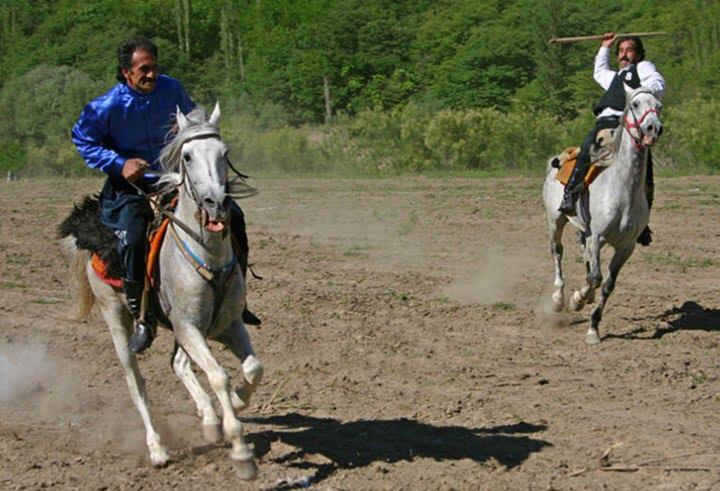
Jereed—known in Turkish as cirit—is a mounted team sport in which horsemen throw a short, blunt wooden javelin at opponents while riding at speed. It’s played for points, and it’s as much a test of horsemanship as it is of throwing accuracy.1, 2
The “jereed” itself is the stick: traditionally wood, shaped to reduce injury risk, and thrown during fast pursuits across a long, open field.2
Is jereed an Indigenous Australian game?
No reliable Australian cultural authority describes “jereed” as a traditional Aboriginal Australian sport. The term is strongly associated with the Turkish equestrian game (cirit) and related historical uses of the word for a light javelin, rather than an Indigenous Australian tradition.1, 4
If you’ve seen jereed described as “played in Australia for centuries”, treat that as a mix-up. It’s possible to see demonstrations or community events in Australia, but that’s different from being an Aboriginal game with deep time roots on this continent.1
Where jereed comes from
Jereed is linked to Turkic horse culture and was carried into Anatolia during the medieval period. It later became widely associated with Ottoman ceremonial life and regional festivals, and it persists today as a traditional sport in parts of Türkiye.1, 2
How the game works (in plain terms)
Rules and local customs vary, but the game usually follows a recognisable pattern:
- Two teams of mounted riders line up at opposite ends of a marked field (often 6, 8, or 12 riders per side).2
- A rider charges forward, calls out (challenges) an opponent, throws the jereed, then turns and rides back hard toward his own line.2
- The challenged opponent gives chase and throws in return. Points are generally tied to successful hits and skilled riding, with penalties for dangerous play.1, 4
From the sidelines it can look chaotic—two horses cutting across the same ground, bodies leaning away from a flying stick—but the better games have a steady rhythm: approach, throw, turn, chase, evade, and rejoin the line.2, 4
Equipment and safety: what’s actually used
The core equipment is simple, but shaped by hard lessons:
- Jereed (the stick): commonly around 70–100 cm long and roughly 2–3 cm in diameter, with ends rounded to reduce injury risk.1, 2
- Horses: riders typically use agile horses; some descriptions note that horses are preferably at least four years old for the demands of the game.1, 4
Older descriptions of jereed include serious injuries and occasional deaths, which is one reason equipment shifted over time toward lighter woods and safer shaping. Even so, it remains a contact-adjacent sport involving speed, thrown objects, and close riding, so modern events rely on local rules, refereeing, and careful horse handling.1, 2
Where it’s played today
Jereed is most strongly associated with Türkiye and is still played as a traditional sport in certain provinces, often tied to local festivals and clubs.1
Jereed in popular culture
Jereed is sometimes mentioned in travel writing and cultural coverage as a distinctive, visually striking tradition—regional costumes, formal introductions, and the sharp sound of hooves and sticks across an open field. It’s best understood first as a living folk sport, rather than a modern media franchise with a single standardised format.2, 4
If you want to see it or try it
If you’re hoping to watch (or participate in) jereed outside Türkiye, start by looking for Turkish cultural associations and equestrian groups that run demonstrations. If you do find a local event:
- Check whether it’s a demonstration (choreographed or controlled) or a competition (scored play).2, 4
- Ask what safety rules are in place for riders, horses, and spectators (distance, barriers, stick type, and referee control).2, 4
- Be cautious of listings that describe it as an “Aboriginal Australian stick-fighting game”; that wording is a strong sign the description has been copied and scrambled from unrelated sources.1, 4
Final thoughts
Jereed (cirit) is a Turkish equestrian javelin game—fast, formal, and grounded in horse culture—played by teams of riders who throw blunt wooden sticks at opponents while manoeuvring at speed.1, 2
What it isn’t: a traditional Aboriginal Australian sport. If your interest is Indigenous Australian games, you’ll get a clearer (and more respectful) result by searching using the specific nation/community name and checking sources from Australian cultural institutions and First Nations organisations, rather than relying on recycled summaries that attach “Indigenous Australian” to unrelated traditions.3
References
- Jereed (equestrian javelin) — overview, history and basic rules (Wikipedia)
- The Game of Jereed (Cirit) — Türkiye Ministry of Culture and Tourism
- AIATSIS Explore — Australian Institute of Aboriginal and Torres Strait Islander Studies (reference point for Indigenous Australian cultural information)
- Jereed — Encyclopaedia Britannica
- Convention for the Safeguarding of the Intangible Cultural Heritage (2003) — UNESCO
- 43 elements inscribed on UNESCO’s intangible cultural heritage lists — UNESCO (background on the ICH lists)
- Turkish horsemen compete in Jereed game — Anadolu Ajansı (video report)
- Turkish Jereed (Javelin) — All About Turkey (game description and terminology; use as secondary context)

Veterinary Advisor, Veterinarian London Area, United Kingdom