
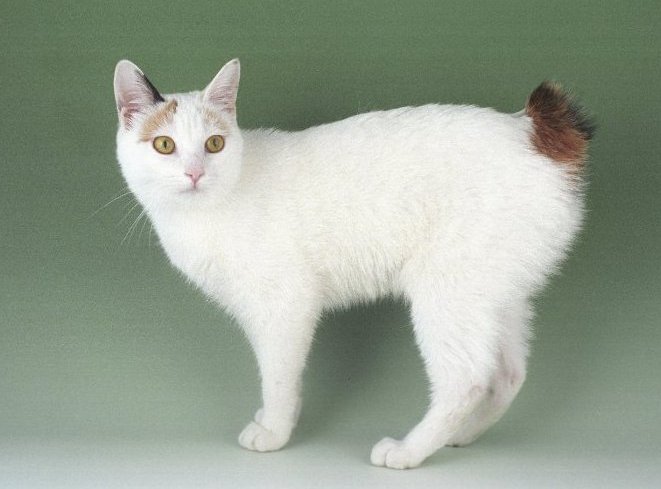
People usually end up reading about Japanese Bobtails for one of two reasons: they’ve met a cat with a little “pom‑pom” tail and want to know what it is, or they’re weighing up whether this breed’s busy, talkative nature will fit their home. A bobtail can look like a simple quirk, but it’s also a clue to breed type, grooming needs, and what sort of daily enrichment keeps the cat settled.
Below is a clear, grounded guide to what a Japanese Bobtail is (and isn’t), what their tail and coat are like in real life, and the practical care that matters most once the novelty wears off.1, 2
Japanese Bobtail at a glance
- Origin: Japan (a natural breed with a long documented history in Japanese art and writing)1, 2
- Size: Medium; typically around 2.3–4.5 kg (females usually lighter, males heavier)1
- Coat: Shorthair or longhair; soft, silky texture with little undercoat1, 2
- Colours: Many colours and patterns; the traditional tricolour “mi‑ke” is especially favoured in the breed1, 2
- Temperament: Active, intelligent, people-oriented; often described as “talkative” with a wide range of vocalisations1, 2
- Life expectancy: Commonly cited around 9–13+ years (individuals may live longer with good care)1
History and origins
The Japanese Bobtail is an old, established type in Japan, shown in artworks and written records for at least a thousand years. That long paper trail matters: it’s one of the reasons the breed is classed as “natural” rather than a recent designer cross.1, 2
Outside Japan, the breed’s modern cat‑fancy history is much more recent. Japanese Bobtails were brought to North America in the late 1960s, and then gained formal recognition in cat registries over the following decades.1, 2
Physical characteristics (especially the tail)
The defining feature is the bobbed tail: short, kinked and curled, often giving a rounded “pom‑pom” effect. No two tails are identical, and the tail bones can be fused or jointed, so it’s wise to handle the tail gently and not treat it like a normal cat’s tail for grabbing or restraint.1, 2
Overall, the breed is medium-sized with clean, athletic lines and noticeably powerful hindquarters built for jumping and quick changes of direction. In a home, that translates into cats that use vertical space—shelves, door tops, the highest point of the cat tree—because it’s simply what their bodies are made to do.1, 2
Temperament and everyday behaviour
Japanese Bobtails are typically alert, social and busy. Many are vocal, using a varied range of chirps and meows to keep track of people and household activity. Some enjoy brief lap time, but they’re often described as “not a lap cat” in the sense that they tend to get up and move on quickly, especially in a stimulating environment.1, 2
They often thrive in homes that offer interaction and changing scenery: windows to watch, climbing routes, toys that rotate, and short training sessions. With cats, “trainable” usually means they can learn routines—coming when called, targeting, sitting for a treat—rather than obedience in the dog sense.1
Grooming and routine care
Despite the elegant coat, grooming is usually straightforward because Japanese Bobtails tend to have little undercoat. A light brush or comb a couple of times a week keeps loose hair moving along, with more frequent grooming during seasonal shedding.1, 2
What matters more than “beauty grooming” is quiet, regular maintenance:
- Teeth: Aim for daily brushing if your cat will tolerate it, or at least a few times a week. Use cat-safe toothpaste only (never human toothpaste).3, 4
- Nails: Keep claws trimmed and provide a tall, stable scratching post to protect furniture and let the cat stretch properly.1
- Ears and eyes: Check weekly for discharge, redness or odour. Clean only as advised by your vet, especially if the cat is prone to wax build-up.5
Exercise and enrichment (how to keep a Bobtail settled)
This is an agile breed that tends to look for motion and height. The best “exercise plan” is a home set up for climbing and short bursts of play—chasing, pouncing, leaping—rather than long, forced sessions.1, 2
- Go vertical: Cat trees, shelves, and safe window perches help them use their natural jumping ability.1
- Rotate toys: Keep a small selection out and swap them weekly to maintain interest.
- Short training: A minute or two of target work or simple tricks can take the edge off an energetic cat without overstimulating them.1
- Water curiosity: Some individuals like to dab paws in water; a sturdy water bowl or fountain can suit them well (while still keeping things tidy).1
Health considerations
Most registry and breed overviews describe Japanese Bobtails as generally healthy, without a single signature inherited disease dominating the breed.1, 2
The original draft mentioned breathing problems from a “short muzzle” and a tendency to chronic kidney failure. Those claims don’t match typical breed descriptions (Japanese Bobtails aren’t a flat-faced breed), so it’s more accurate to treat these as individual medical issues rather than breed traits. Any cat can develop respiratory infections or kidney disease, and the right approach is the same: watch for early signs and keep regular vet checks.5
For dental health in particular, don’t wait for obvious pain. Dental disease is common in cats, and prevention at home plus professional care when needed is kinder (and often cheaper) than leaving it until teeth loosen or gums bleed.3, 5
Breeding and genetics (what the bobtail means)
The short, kinked tail is a natural mutation that’s become a defining breed feature. Importantly, this bobtail mutation is distinct from the Manx mutation, which is associated with serious spinal problems; the Japanese Bobtail’s tail type is generally not described as carrying the same skeletal-disorder risk as Manx cats.6
Even within the breed, tails vary in shape and flexibility. That variety is normal—more like a signature than a standard template—so judging health or “quality” by tail appearance alone is unreliable. What matters more is sound movement, good body condition, and a stable temperament.1, 2
Is a Japanese Bobtail a good fit?
A Japanese Bobtail tends to suit households that enjoy an interactive cat: one that follows the day, announces its opinions, and uses the home like a three-dimensional map. They can do well with respectful children and other pets when introduced thoughtfully, but they’re rarely a background presence.1, 2
If you’re choosing between breeds, try to meet adult Bobtails in a calm setting, not just kittens at full speed. The adult temperament—busy, social, often vocal—is usually the truest preview of what you’ll live with for years.1
References
- The International Cat Association (TICA) — Japanese Bobtail
- The International Cat Association (TICA) — Japanese Bobtail Longhair
- RSPCA Pet Insurance (Australia) — Guide to cat dental care
- Hill’s Pet Nutrition (Australia) — Brushing & cleaning your cat’s teeth
- RSPCA Knowledgebase — How should I take care of my cat or dog’s teeth?
- Wikipedia — Japanese Bobtail (overview of mutation; distinguishes from Manx)

Veterinary Advisor, Veterinarian London Area, United Kingdom