
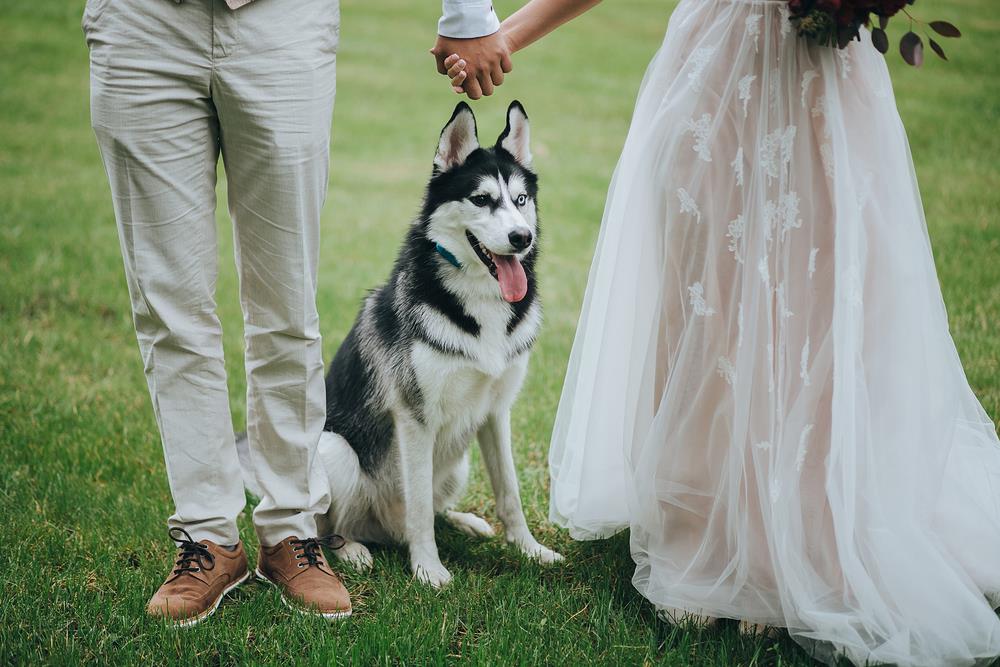
Most couples don’t find this page because they’re trying to make a statement. They find it because they’re quietly weighing up a practical question: can our pet be part of the wedding without turning a calm, beautiful day into something stressful or unsafe?
Done well, a pet’s cameo is gentle and memorable. Done badly, it can unravel quickly—overstimulation, escape risks, heat, food hazards, and venue rules you only discover too late. The aim is simple: choose roles your animal can genuinely cope with, plan the environment around them, and give them an easy exit when the noise builds.
Should your pet be there at all?
Some animals flourish in busy places. Others cope for five minutes, then vanish under a table. Before you picture aisle-walking, picture the day from your pet’s height: unfamiliar smells, sudden clapping, people leaning in, music that swells without warning, doors opening to carparks.
Common signs of anxiety or distress can include panting, trembling, pacing, yawning, lip/nose licking, excessive salivation, vocalising, freezing, toileting accidents, or trying to hide.6 If these show up during ordinary gatherings, your wedding is unlikely to be the place they “get used to it”.
A quick suitability check
- Best candidates: calm, well-socialised animals who travel well, settle on a mat, and recover quickly after excitement.
- Think twice: animals that startle easily, guard food/toys, react to strangers, or struggle with heat.
- Often a better plan: a short appearance for photos only, then home.
Venue rules: the bit that surprises people
Even if a venue says it’s “pet-friendly”, the rules can change depending on where food is served, which areas are public, and what local regulations apply. In NSW, for example, assistance animals must be allowed in customer areas, while pet dogs may be permitted in outdoor dining areas at the business’s discretion, and live animals are not allowed where food is handled.8
Ask early, and get the answer in writing. Clarify:
- Where your pet can and can’t go (ceremony space, reception, bar, dancefloor, kitchen-adjacent areas).
- Whether the venue requires the pet on lead, in a carrier, or under the control of a designated handler.
- How the venue wants toileting managed (and where bins are).
- What happens if guests complain or if another animal is present.
The single best decision: appoint a pet handler
On the day, you need one person whose job is the animal—nothing else. Not a bridesmaid juggling hairpins. Not a groomsman mid-speech. A dedicated handler keeps the day safe and keeps you out of last-minute negotiations with a restless dog and a photographer.
A good handler will:
- Arrive early with your pet and take them for a calm walk/toilet break.
- Keep water available and monitor signs of stress.
- Hold the lead/carrier, manage greetings, and step in before guests crowd the animal.
- Know the exit plan (car, quiet room, or straight home).
Transport and timing: keep the edges smooth
The most chaotic moments of weddings tend to be arrivals, departures, and transitions between spaces. For pets, those are also the moments most likely to involve open doors and distracted humans.
Plan transport with restraint and ventilation. RSPCA guidance recommends restraining dogs with an appropriate car restraint (such as a seatbelt harness) or using a secured crate, and transporting cats in a secure carrier. They also emphasise never leaving a dog unattended in a car due to heat risk, even in mild weather.1, 2
Timing options that work
- Photos-only cameo: bring your pet for 15–30 minutes, then take them home.
- Ceremony appearance: pet attends the aisle moment, then exits with the handler before congratulations and crowding.
- Outdoor reception hello: short visit early in the evening, then home before music gets loud and guests get looser.
Pet roles that are realistic (and kinder)
The simplest roles are usually the safest. Think of your pet as a brief, calm detail—like a wild bird passing through the edge of the frame—rather than a performer expected to hit marks on cue.
Gentle ceremony roles
- Walk-in with the handler: your pet arrives just before you, settles to the side, then leaves quietly.
- “Ring bearer” without the rings: use a decorative pouch or ribbon only. Keep the real rings with a human.
- Witness-from-the-wings: your pet is nearby for signing photos, then away again.
Reception roles that don’t invite trouble
- Meet-and-greet in a quiet outdoor corner (if venue rules allow), with clear boundaries.
- One planned photo set before meals are served, then home.
Attire and accessories: comfort first
Wedding outfits look sweet for a minute. For animals, they can feel strange, restrictive, or hot. Choose minimal pieces that don’t rub, restrict movement, or interfere with breathing.
- Prefer lightweight materials and simple fits (bow tie on collar, floral collar attachment, harness that fits properly).
- Avoid anything that can snag (long ribbons, dangling charms) or be chewed and swallowed.
- Do a trial run well before the wedding, then keep the “wedding look” brief on the day.
Safety and comfort: set up a quiet exit
Even confident pets can hit a limit. A wedding is full of sudden noises and unpredictable approaches. Build a retreat space the way you’d build shade on a hot day—quiet, reliable, and close enough to reach quickly.
Create a calm base
- A closed room or sheltered area away from speakers and foot traffic.
- Familiar bedding or a mat that already means “settle”.
- Water, a small meal if needed, and a few familiar treats/toys.
If loud bangs are likely (fireworks nearby, celebratory noise), plan conservatively. Animal welfare agencies recommend keeping pets indoors, providing a safe hiding place, closing curtains/blinds, and using background noise like TV or music to mask sound; they also warn against tethering a frightened dog, due to choking/strangulation risks if they panic and pull back.7, 9
Photography: getting the shot without pushing your luck
Good pet photos come from speed and calm. Build a small window into the run sheet and keep the scene simple—few people, quiet voices, low movement.
- Tell your photographer, in advance, what your pet can reliably do (sit, stay, settle, be held).
- Use the handler to stand just behind the camera with a treat or toy.
- Stop while it’s still going well. One strong frame beats twenty strained ones.
Legal and ethical considerations
A wedding is optional. Your pet’s welfare isn’t. If your animal shows persistent stress signals, the kindest call is to shorten their role or leave them at home with a trusted carer.
Also check identification and containment. Victorian guidance, for example, notes that microchipping is a legal requirement for dogs and cats and helps them be returned if they escape during frightening events like fireworks or storms.10
A simple welfare-first checklist
- Confirm venue rules (including food-service areas) and get them in writing.8
- Book a dedicated handler with a clear exit plan.
- Pack water, bowl, lead/harness, waste bags, treats, and a familiar mat.
- Use safe transport restraint/carrier and avoid leaving any animal unattended in a car.1, 2
- Keep the appearance short, and leave on the first signs of mounting stress.6
Final thoughts
Pets at weddings work best as a small, steady detail—brief, well-managed, and built around the animal’s limits rather than the couple’s schedule. When the planning is quiet and practical, the moment itself tends to be the same: a familiar presence, a few good photos, and then a clean departure before the day gets too loud.
References
- RSPCA Knowledgebase: Do I need to restrain my dog when travelling in my car?
- RSPCA NSW: Travelling with your companion animal
- RSPCA Pet Insurance: Pet travel guide
- RSPCA Queensland: Secure your mate (dogs on ute trays and transport safety)
- RSPCA Knowledgebase: How should I care for my pets during fireworks displays?
- American Animal Hospital Association (AAHA): Common signs of anxiety/distress (dogs and cats)
- RSPCA Australia: Caring for your pets during fireworks displays
- NSW Food Authority: Animals in food premises
- RSPCA NSW: Tips to help keep pets safe during firework displays
- Agriculture Victoria (Animal Welfare Victoria): Pets during fireworks and thunderstorms

Veterinary Advisor, Veterinarian London Area, United Kingdom