
People usually start looking into horse sports for one of three reasons: they’re choosing a discipline to try, they’re getting a horse ready to compete, or they’re checking what “safe and fair” looks like in a sport that asks a lot of both rider and horse.
The details matter. The right match between discipline, training and welfare standards can make the difference between steady progress and a season of avoidable injuries, stress, or rule breaches. Below is a clear map of the main horse sports, what they demand, and the basics of doing them well—with horse welfare kept in the centre of the frame.1, 2
What counts as a “horse sport”?
Horse sports are organised activities where horses and humans perform together under rules—sometimes judged (like dressage), sometimes timed (like showjumping), sometimes both (like eventing). Some are run under Olympic-style federation rules; others sit in community clubs, racing programs, or rodeo-style events with their own governing bodies and standards.
Across codes, the shared foundation is simple: the horse’s welfare is meant to be paramount, and competition shouldn’t be won by practices that compromise health, soundness, or humane handling.2
A short, accurate history (without the myths)
Humans have staged competitive horse events for thousands of years—especially racing and chariot-style contests in ancient societies, and mounted games and displays in later periods. Modern equestrian sport, though, is mostly a product of the last two centuries: formalised rules, standard arenas, and international federations that try to make performances comparable from one country to the next.
In Australia, racing and equestrian disciplines developed alongside settlement and agriculture, then matured into large, regulated sports. The Melbourne Cup has been run since 1861, and it remains one of the country’s best-known horse races.7
Common horse sports (and what they ask of horse and rider)
Dressage
Dressage is judged riding that rewards rhythm, balance, accuracy and the horse’s way of going. At its best, it looks quiet from a distance: small aids, clear responses, and a horse moving with ease through patterns that become more demanding as levels rise.
Showjumping
Showjumping is a timed jumping course over coloured fences. The job is precision under pressure: a steady approach, a clean jump, and quick decisions between obstacles. For horses, the strain concentrates through tendons, joints and back, especially when surfaces are deep, turns are tight, or the horse is pushed past its current strength.
Eventing
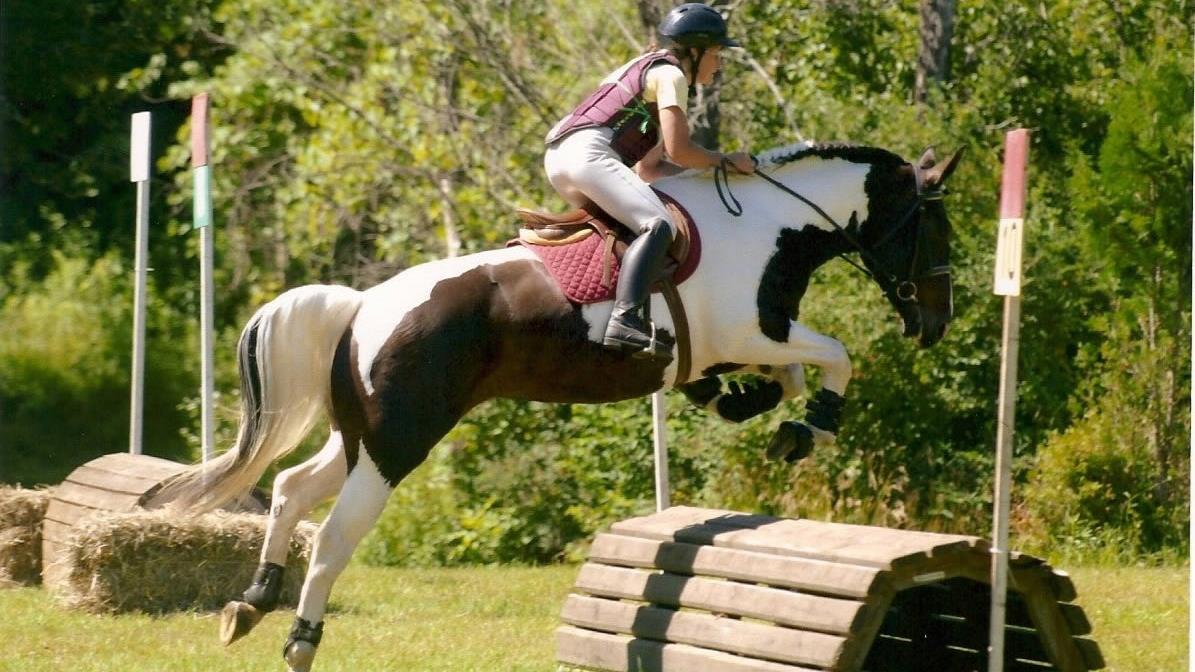
Eventing combines dressage, cross-country and showjumping. It’s often described as “the triathlon” of horse sport because it tests different types of fitness and focus across phases. In Australia, eventing runs under Equestrian Australia rules and regulations that are updated and published for competitors and officials.3
Endurance
Endurance rides cover long distances over varied ground, with vet checks used to assess whether a horse is fit to continue. Success depends less on speed alone and more on conditioning, pacing, hydration management, and the horse’s ability to recover between loops.
Polo and polocrosse
These are fast, turning-and-stopping team sports. The load is sharp and athletic—acceleration, lateral movement, and quick direction changes—so soundness, protective gear, and careful management between games matter.
Racing and other speed events
Thoroughbred and harness racing have their own rulebooks and welfare controls, commonly including veterinary attendance at meetings, stewards’ powers, and prohibited substance programs. The details vary by state, but the intent is consistent: prevent cruelty, manage risk, and intervene early when a horse appears unfit to compete.4, 8
Training: what “proper” looks like in real life
Good training is rarely dramatic. It’s repetitive, patient, and built on small, correctly timed requests. Horses learn through pressure and release, clarity, and consistency—so rushed escalation and confusing signals tend to create resistance, tension, or unsafe behaviour rather than reliable performance.
Across disciplines, a few principles stay steady:
- Progressive loading: fitness and skills are built over weeks and months, not squeezed into a few hard sessions.
- Soundness first: any change in stride, willingness, or recovery is treated as information, not disobedience.
- Appropriate gear: saddles, bits and protective equipment should fit and function without causing pain or restricting normal movement.
- Rest and variety: horses hold up better with breaks, turnout where possible, and a mix of work that doesn’t pound the same structures every day.
Where codes set minimum standards—like gear checks and veterinary inspections in some racing contexts—those standards are there because poorly fitted tack, fatigue and untreated injuries are predictable welfare risks, not rare accidents.5
The rider’s job: quiet skills that keep a horse safe
Riders influence almost everything the horse experiences in sport: balance, tempo, straightness, and how stress is handled when something changes. A skilled rider is not just “brave” or strong. They are observant. They notice when the horse’s back tightens, when breathing stays elevated too long, when a jump feels flat, or when a normally forward horse hesitates at the gate.
In most disciplines, riders also carry the responsibility to follow welfare rules—especially around unacceptable practices and performance enhancement. The FEI Code of Conduct, adopted and promoted through national bodies, is blunt about the principle: welfare comes before competition.2
Welfare in horse sports: the line you don’t cross
Modern animal welfare thinking increasingly uses frameworks such as the Five Domains, which looks beyond the absence of injury and considers nutrition, environment, health, behaviour, and the animal’s overall mental experience.9
In practical terms, that means a competition horse should have:
- adequate feed and water, and a management plan that matches workload
- training that develops fitness without masking pain or fear
- tack that fits, and handling that avoids unnecessary force
- early veterinary assessment when performance changes or lameness appears
Debates about whip use, equipment severity, and pressure to compete are part of the modern landscape. Australian veterinary bodies have publicly argued for clearer definitions and penalties around improper or excessive whip use in competitive equestrian events, reflecting broader expectations that equestrian sport continues to tighten welfare standards as evidence and public scrutiny evolve.10
Safety for riders: concussion is the one to take seriously, every time
Falls and head knocks are a known risk in horse sports. Concussion can occur even without a dramatic impact, and symptoms can be subtle. Australian sports medicine guidance emphasises recognition, removal from activity, and medical assessment—then a staged return only after symptoms resolve and a clinician clears the rider.6
In Australia, Equestrian Australia has aligned its concussion management requirements with the Australian Institute of Sport position statement, including updated stand-down periods and return-to-sport protocols introduced in 2024 and implemented within EA from 16 March 2024.1
Choosing a discipline: a quick, grounded way to decide
If you’re picking a starting point, match the sport to the horse you have, the facilities you can access, and the time you can genuinely commit to training and recovery.
- If you like precision and steady progress: dressage (and dressage-based training for any discipline).
- If you like short, technical challenges: showjumping.
- If you want variety and can commit to conditioning: eventing.
- If you enjoy distance and pacing: endurance.
- If you want a team game with speed and turning: polo or polocrosse (with a horse suited to it).
Final thoughts
Horse sport works best when it’s approached like careful fieldwork: observe, adjust, repeat. Strong results come from quiet fundamentals—fitness built gradually, tack that fits, rules that protect welfare, and riders who can stay calm enough to make good decisions when a plan unravels mid-round.
When those pieces are in place, the partnership is not a slogan. It’s visible in the small things: a steady eye, an even rhythm, a horse that finishes work still moving freely the next day.2
References
- Equestrian Australia — New Concussion Stand Down Periods (implements AIS Concussion and Brain Health Position Statement 2024 from 16 March 2024)
- Equestrian Australia — FEI Code of Conduct for the Welfare of the Horse
- Equestrian Australia — Eventing Rules & Regulations (current national rules effective 1 January 2026)
- Racing WA — Rules of Racing (animal welfare and cruelty provisions; veterinary care; steward powers)
- Agriculture Victoria — Code of Practice for the Welfare of Horses at Bush Race Meetings (minimum standards for veterinary attendance and gear)
- Australian Sports Commission — Concussion and brain health guidance for athletes (recognition and management)
- Wikipedia — 1861 Melbourne Cup (first running; date and distance)
- Racing WA — Horse Racing Standards (veterinary care, welfare policies, prohibited substance control)
- RSPCA NSW — Five Domains model (animal welfare assessment framework)
- The Guardian — Australian Veterinary Association policy position opposing whip use to influence outcomes (12 January 2023)

Veterinary Advisor, Veterinarian London Area, United Kingdom