
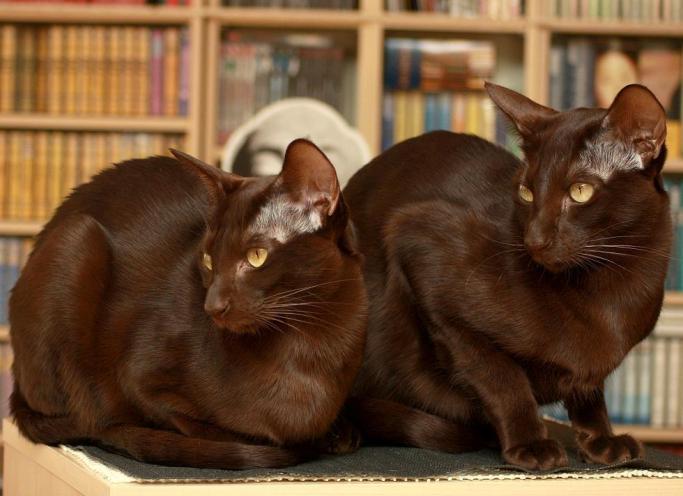
People usually start searching for Havana Brown cat facts when they’re trying to identify a chocolate-brown cat, compare breeds before choosing a kitten, or check whether a breeder’s claims match the real standard. With a rare breed, small details matter: coat colour, eye colour, and lineage can be the difference between a true Havana Brown and a lookalike.
Below is a grounded look at the Havana Brown—where it came from, what it looks like at close range, what daily life with one tends to feel like, and the practical care points that keep them healthy.
Havana Brown at a glance
- Size: Medium
- Typical weight: Often around 3–5.5 kg (males commonly heavier than females)4
- Coat: Short, smooth, glossy; warm mahogany/chocolate brown (breed standard emphasises an even, rich brown)1, 2
- Eyes: Oval; green is required in the CFA standard2
- Temperament: Curious, people-oriented, playful; often uses paws to investigate objects1, 6
- Grooming: Low-maintenance coat; simple brushing and occasional buffing keeps the shine2
History and breed recognition
The modern Havana Brown was developed in England in the early 1950s, built from carefully planned matings that included Siamese lines and solid black domestic shorthairs to produce a self-brown (solid brown) cat with a distinct type and coat colour.1, 7
In North America, the breed was accepted for Championship status by the Cat Fanciers’ Association (CFA) in 1964.3
One point that often trips people up: “Havana” can mean slightly different things depending on registry and region. In some contexts, “Havana” may be used for the breed name (including a lilac colour in some registries), while “Havana Brown” is commonly used in North America for the brown-coated breed most people are referring to when they search this term.1, 7
Physical characteristics (what to look for)
A Havana Brown is a medium-sized cat with a solid, athletic feel—often heavier in the hand than the silhouette suggests.1
Coat and colour
The coat is short to medium-short, smooth, and close-lying, designed to look glossy rather than fluffy. In the CFA standard, the colour is a warm, even brown, and the whiskers are also brown—an unusual requirement that makes the breed stand out in the show world.2
Head and expression
The breed is known for a distinctive muzzle and whisker pads, often described (in breed writing) with vivid comparisons because the shape is so recognisable. The overall effect is a face with presence: alert ears, prominent whisker pads, and an oval-eyed gaze.2
Eye colour
Green eyes are part of the breed’s hallmark, and the CFA standard disqualifies any eye colour other than green in the show ring.2
Personality and day-to-day behaviour
Havana Browns tend to stay close to household life. They’re often described as curious and people-focused, with a habit of reaching out with a paw to touch, test, and explore whatever has caught their attention.1, 6
Many are playful without being relentlessly busy—happy to investigate the home, then settle nearby when things go quiet. Like any cat, personality varies with breeding, early handling, and the rhythm of the household, but the breed’s reputation for sociability is consistent across major profiles.1, 6
Health: what’s real, what’s overstated
There aren’t widely accepted “signature diseases” unique to Havana Browns. They can still develop the same common problems seen across domestic cats, so routine preventative care matters more than hunting for rare breed-specific warnings.5
Dental disease
Dental and gum disease is extremely common in companion animals. The safest assumption is that any adult cat can develop it, and that early home care plus veterinary dental checks make a measurable difference over time.5, 8
Weight gain
Like many indoor cats, Havana Browns can put on weight if meals are generous and play is sporadic. Keeping a steady feeding routine and building daily movement into the home helps protect joints, comfort, and long-term metabolic health.5, 6
The earlier draft mentioned polycystic kidney disease (PKD) as a particular concern; that claim is not consistently supported in mainstream breed references for Havana Browns, so it should be treated as a discussion to have with your vet and breeder rather than a defining breed risk.5
Grooming and basic care
The Havana Brown’s coat usually needs very little help. A soft brush and a gentle buff now and then keeps the coat sleek and reduces loose hair around the house.2
- Coat: Brief brushing; bathing is rarely needed unless showing2
- Nails: Regular trims, especially for indoor cats
- Teeth: Ask your vet to show you safe toothbrushing technique and discuss dental check frequency8
- Enrichment: Rotate toys, add climbing and scratching options, and schedule small bursts of play to keep weight steady and minds busy6
Training and socialisation
Havana Browns are often described as bright and engaged, which makes them good candidates for gentle, reward-based training—simple cues, carrier comfort, harness acclimation, and cooperative handling for grooming and vet visits.1
Early, calm social exposure helps any kitten. Aim for a steady flow of normal household experiences—different rooms, ordinary noises, visitors—without forcing contact. The goal is familiarity, not performance.
Finding and choosing a Havana Brown
Because the breed is rare, patience is part of the process. A responsible breeder should be able to explain their registry, show you pedigree details, and talk plainly about temperament, health screening, and how kittens are raised in the home.
- Check the standard basics: solid warm brown coat, green eyes, and (in many standards) matching brown whiskers2
- Ask about early life: handling, social exposure, desexing plans, and what the kitten has been eating
- Health transparency: expect written vet records and a clear plan for ongoing care, not vague assurances
Final thoughts
The Havana Brown is a quietly striking cat: mahogany coat, green eyes, and a habit of inspecting the world with attentive paws. For the right home—one that enjoys an interactive, present companion and can keep routines steady—it’s a rare breed that feels less like a showpiece and more like a warm presence moving through the rooms.
References
- The International Cat Association (TICA) – Havana (breed information)
- Cat Fanciers’ Association (CFA) – Havana Brown (breed standard and overview)
- Cat Fanciers’ Association (CFA) – Havana Brown article (history and CFA recognition)
- Hill’s Pet Nutrition – Havana Brown cat breed profile (size/weight and general traits)
- WebMD – Havana Brown cats: health concerns overview
- VCA Animal Hospitals – Havana Brown (behaviour and care overview)
- Cat Fanciers’ Association (CFA) – Havana Brown article (history and development)
- WSAVA – Global Dental Guidelines (importance of dental disease prevention)

Veterinary Advisor, Veterinarian London Area, United Kingdom