
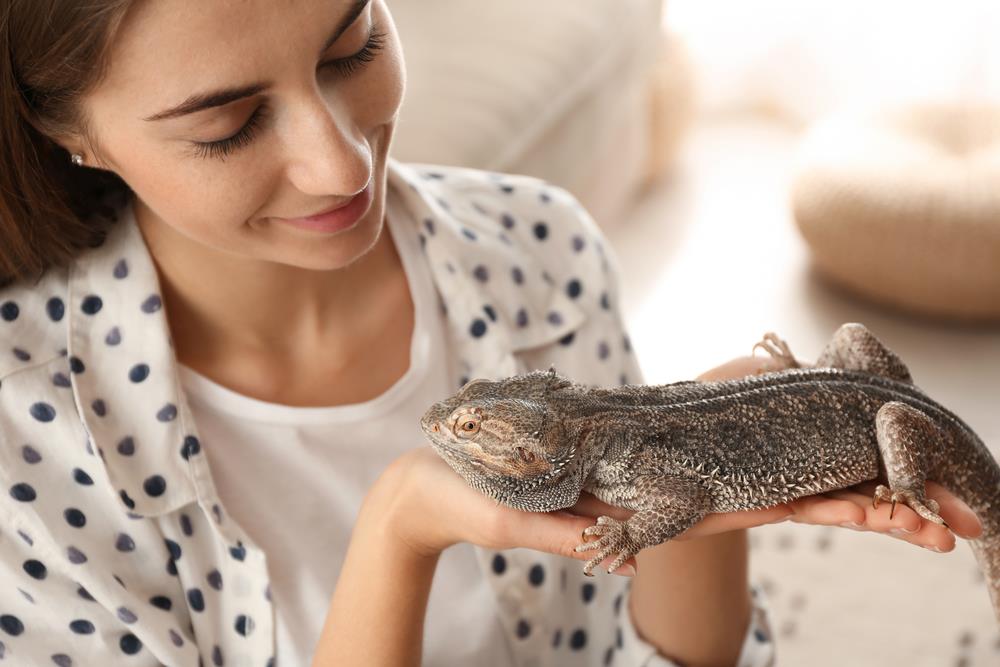
People usually start looking into “exotic pets” when a striking animal appears in a shop window or on social media, or when a child asks for something other than a dog or cat. The questions come quickly: is it legal here, will it cope in a lounge room, and what happens when it lives far longer than expected?
In Australia, the biggest surprises tend to be legal and practical. Many animals that seem common overseas can’t be imported at all, and keeping native wildlife often requires a state permit and proof the animal was bred in captivity. Getting this right protects local ecosystems, your household, and the animal itself.1, 2, 3
What “exotic pet” means in an Australian context
“Exotic” is used loosely. It can mean a non-traditional pet (a lizard rather than a Labrador), or it can mean a non-native species. In Australia, that distinction matters. Many non-native vertebrates are not approved for import as pets, and several states explicitly ban keeping “exotic” (non-native) reptiles privately.2, 3
What people often end up keeping—legally—is native wildlife bred in captivity (for example, some reptiles, birds, frogs, and a small number of mammals), under a state wildlife licence or under specific exemptions.3, 4, 5
Legalities: what you can keep, and what you can’t
Australia’s rules sit on two levels:
- Federal biosecurity and wildlife trade rules control what can be imported into Australia and under what conditions.
- State and territory wildlife laws control what you can keep at home, what licence you need, and where the animal must come from.
Importing “exotic” pets into Australia is highly restricted
If you’re looking online at animals “from overseas”, pause. The Australian Government advises that, as pets, only a narrow set of vertebrates are approved for import (for example, dogs, cats, rabbits, horses and selected birds under strict conditions). Reptiles are not permitted to be imported as pets, and amphibians and invertebrates are generally restricted to laboratory or zoological pathways, not private ownership.2, 6
State rules vary, but licensing is common
Even when an animal is native, it may still be protected wildlife. In New South Wales, for example, keeping a native reptile as a pet requires a biodiversity conservation licence, and it’s illegal to keep exotic (non-native) reptiles. NSW also directs owners to buy only captive-bred reptiles from licensed dealers or breeders.3, 4
Queensland uses a licensing system with different tiers, and its guidance is blunt about prohibited groups: mammals are not permitted to be kept under Queensland’s native animal keeping licences. In Victoria, most wildlife species require a licence, and only species listed in specific schedules can be held under the basic or advanced private wildlife licences.5, 7, 8
What happens if you get it wrong
Illegal ownership can mean seizure of the animal, substantial fines, and prosecution. Beyond the personal risk, illegal trade and unregulated keeping can harm animal welfare and create biosecurity problems that don’t stay neatly inside one home.2, 6
Assessing the commitment: time, space, and a very long horizon
Exotic pets tend to be quiet until they aren’t. A reptile can appear low-maintenance, yet still need daily checks of temperature gradients, UV lighting, humidity, water quality, and feeding routines that don’t forgive shortcuts.
Lifespan is another slow surprise. Many reptiles can live for decades with appropriate care. That’s not a weekend interest; it’s a long, steady obligation that may outlast rental agreements, relationships, and job changes.9
The financial side is lopsided
Purchase price is usually the smallest number. The real costs sit in:
- appropriate enclosure and heating/lighting equipment (with ongoing power use)
- thermostats, thermometers and UVB replacement schedules
- species-appropriate diet (including supplements where needed)
- access to a vet who actually treats that species (often limited outside major centres)9
Health and safety risks: mostly about hygiene, not drama
Many reptiles and amphibians can carry germs that make people sick even when the animal looks healthy. The most well-known example is Salmonella, which can spread through handling the animal, cleaning its enclosure, or contact with tank water and equipment. Handwashing, careful cleaning, and keeping enclosures away from food-prep areas make an outsized difference.9, 10
Some households should be especially cautious. Public health guidance commonly flags higher risk for young children, older adults, pregnant people, and anyone with a weakened immune system, because infections can hit harder and escalate faster.9, 10
Safety is also about the animal’s environment. When heat, light, hiding places, and handling practices don’t match the species, stress and defensive behaviour become more likely. It’s not malice—just a small animal with limited options.
Meeting the animal’s needs (and recognising when you can’t)
Habitat: a controlled pocket of weather
Many species rely on precise temperature zones rather than a single “warm tank”. Reptiles, in particular, need access to a proper basking area and cooler retreat, plus UVB (where appropriate) to support normal physiology. This is the hidden work of reptile keeping: the habitat is a life-support system, not décor.9
Diet: specific, repetitive, and easy to get subtly wrong
Diet problems rarely look dramatic at first. They show up as slow weight loss, weak sheds, poor feather or skin condition, and changes in appetite. Before you commit, learn what the animal eats across seasons and life stages, and whether you can reliably source it where you live.
Social and behavioural needs: enrichment without guesswork
Some birds and mammals need frequent interaction and complex enrichment. Some reptiles prefer minimal disturbance and predictable routines. Matching the species to your household rhythm matters more than novelty.
Choosing an animal that fits your life
A good match is usually boring on paper. It’s the species you can house correctly, feed consistently, and access veterinary care for—without gambling on future time or money.
- Renting? Check tenancy rules, body corporate by-laws, and whether the enclosure size and power use are realistic.
- Young kids in the home? Treat hygiene and handling guidance as non-negotiable, especially with reptiles and amphibians.9, 10
- Travel often? Line up a knowledgeable carer before you buy the animal, not after.
Ethical sourcing: where the decision actually begins
In Australia, ethical sourcing and legal sourcing usually overlap. For many groups, a legal pet should be captive-bred and obtained through the appropriate licensed pathways, with paperwork that shows where it came from and that it wasn’t taken from the wild.4, 8
Quick checks before you buy
- Ask for proof the animal is captive-bred and lawfully acquired (receipts, licence details, breeder/dealer information).8
- Confirm the species is allowed in your state/territory and whether you need a licence before purchase.3, 5, 7, 8
- Find an appropriate vet before the animal comes home, and ask what routine care looks like for that species.9
Conclusion
Exotic pets live at the intersection of law, biology, and daily routine. In Australia, the simplest path is usually a native species bred in captivity, obtained through licensed channels, housed with care that matches its natural history, and handled with quiet attention to hygiene.
If any part of that chain feels uncertain—species ID, legal status, husbandry, or veterinary access—treat it as a sign to pause. The animals don’t get a second choice once they’re in the enclosure.
References
- Department of Agriculture, Fisheries and Forestry (Australia) — Importing live animals and reproductive material
- Department of Agriculture, Fisheries and Forestry (Australia) — Unique or exotic pets
- NSW Environment and Heritage — Reptile keeper licences
- NSW Environment and Heritage — Buying and caring for native reptiles
- Queensland Government — Licences to keep, use or display native animals
- Australian Border Force — Importing animals
- Queensland Department of the Environment, Tourism, Science and Innovation — Native animal keeping licence
- Victorian Government (vic.gov.au) — Private wildlife licences
- US Centers for Disease Control and Prevention — Reptiles and Amphibians (Healthy Pets, Healthy People)
- US Food and Drug Administration — Salmonella, feeder rodents, and pet reptiles and amphibians: tips to prevent infection

Veterinary Advisor, Veterinarian London Area, United Kingdom