
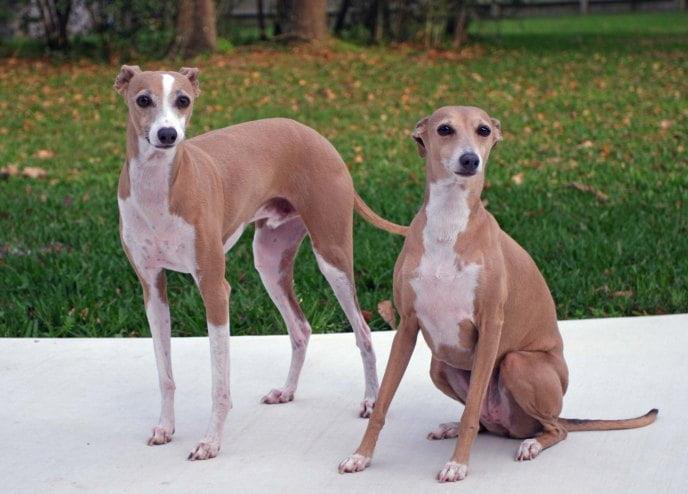
People usually start reading about greyhounds when they’re weighing up adoption, trying to understand the “racing dog” reputation, or checking whether the breed will suit their home, kids, and other pets. The wrong assumption here can be costly: a greyhound that’s under-exercised, allowed off-lead in the wrong place, or introduced to small animals too quickly can get into trouble fast.
Greyhounds are built like sprinters and live like quiet housemates. The key is learning what that combination really means day to day—how much exercise they actually need, how their prey drive shows up, what common health risks are worth watching, and what helps them settle in safely.
Greyhound snapshot
- Height: Dogs: 71–76 cm; bitches: 69–71 cm (breed standard ideal)1
- Weight: Commonly around 27–40 kg depending on sex and build (many adult pets sit around the high-20s to low-30s kg range)
- Coat: Fine, close, short coat; low grooming needs1
- Colours: Black, white, red, blue, fawn, brindle, and combinations broken with white (breed standard)1
- Typical temperament: Calm indoors, generally gentle, often reserved with strangers; usually sensitive to harsh handling1
- Life expectancy: Often around 10–14 years (varies with genetics and health care)
What a greyhound is actually like at home
In motion, a greyhound is pure efficiency—long legs, deep chest, a flexible spine, and a stride designed for speed. Indoors, many are quiet and still, choosing the softest spot in the room and staying there until it’s time for a walk.
This contrast is normal for sighthounds. They’re built for short, intense bursts rather than constant activity, and many adult greyhounds are content with daily walks and the occasional safe run, then long stretches of rest.
Temperament and behaviour
Gentle, often a little reserved
Many greyhounds are polite rather than pushy. Some greet visitors with a soft tail wag; others watch from a distance and decide later. A calm home and consistent routine tends to suit them.
Prey drive: the part people underestimate
Greyhounds are sighthounds. Movement can trigger a chase response, especially with small, fast animals. This isn’t “bad behaviour” and it isn’t the same thing as aggression—it’s a different pattern of behaviour with different risks.2, 3
- With cats and small dogs: Some greyhounds can live safely with them, but it depends on the individual dog and careful introductions. Formal assessments used by rehoming programs are designed to help identify higher-risk dogs before placement.2
- Out and about: Even a greyhound that’s settled with a family cat may still react to unfamiliar small animals in a different environment.2
Muzzles and public perception
In parts of Australia, greyhound muzzling rules have existed as breed-specific requirements. The RSPCA notes these rules are based on breed rather than individual behaviour, and that there’s no evidence greyhounds as a breed pose a greater public risk than other dogs.3
Whatever the legal requirement where you live, a muzzle can be a practical safety tool during early introductions and in unpredictable situations—used thoughtfully, fitted correctly, and paired with calm training.
Exercise needs: short bursts, steady routine
Greyhounds don’t usually need hours of running. Most do well with a dependable daily pattern: a couple of walks, a sniff around, and—when you can provide it safely—an occasional sprint in a fully enclosed area.
- Lead and recall reality: Many greyhounds have limited recall once they lock onto movement, so off-lead time should be reserved for secure, fully fenced spaces.
- Body care matters: Their lean build and fine coat mean they can feel cold more than you’d expect; warm bedding and a coat on winter walks often makes a difference.
Training and socialisation
Greyhounds tend to learn quickly, but many are sensitive to pressure. A calm voice, clear repetition, and rewards work better than corrections. Keep sessions short. End before they’ve had enough.
For newly adopted ex-racers, the basics can be surprisingly new: stairs, glass doors, slippery floors, household noises. Progress is often quiet and gradual—more like an animal learning a new landscape than a dog “being stubborn”.
Health: what’s common, what’s urgent
Gastric dilatation-volvulus (GDV, “bloat”)
Deep-chested breeds are overrepresented in GDV, a life-threatening emergency where the stomach fills with gas and can twist, cutting off blood supply and causing shock. It can become fatal within hours without urgent veterinary care.4
Risk reduction isn’t perfect, but these habits are widely recommended:
- Feed two (or more) smaller meals rather than one large meal.5
- Avoid vigorous exercise right before and after meals (many greyhound programs recommend a quiet window around feeding).5
- Slow down “gulpers” (slow-feeder bowls, calm feeding setup).6
- Know the early signs: unproductive retching, a tight/distended abdomen, restlessness, drooling, collapse—treat it as an emergency.4
Other issues worth discussing with your vet
Like many large breeds, greyhounds can develop age-related joint change. Dental disease is also common across dogs generally, so routine checks and home dental care are worth treating as normal maintenance rather than an optional extra.
Grooming and daily comfort
The coat is short and close, so grooming is simple: a quick brush once or twice a week and an occasional bath when needed. The bigger maintenance job is comfort.
- Soft bedding: Their bony build can lead to pressure points on hard floors.
- Temperature care: Many greyhounds need warmth in winter and shade in summer.
- Nails and paws: Keep nails trimmed—long nails can change gait and add strain.
Diet and feeding
A greyhound’s diet doesn’t need to be fancy, but it should be complete and balanced, and matched to their body condition. Many ex-racers arrive lean; some gain weight quickly once settled. Aim for a steady, athletic condition rather than a “filled out” look.
Most greyhound adoption programs recommend feeding twice daily and keeping exercise separated from meals to reduce GDV risk.5
If you change foods, do it gradually over several days to reduce gut upsets. If your dog bolts food, use a slow feeder and feed in a quiet spot away from other animals.
History, in brief
Greyhound-type dogs have a long human history, and the modern breed has been shaped by hunting and, later, organised racing. Those origins still show up in the body and the behaviour: eyes tuned to movement, a sudden acceleration, and then a long return to stillness.
Final thoughts
A pet greyhound is usually not a “high-energy” dog in the way people imagine. It’s more precise than that: a calm animal with a powerful chase instinct, happiest with routine, soft bedding, gentle handling, and safe opportunities to stretch into a run.
If you’re adopting, ask for a prey-drive assessment, be honest about other pets, and plan for lead walking and secure fencing. Give them time. The change from kennel life to home life often looks small from the outside—then, one day, they choose the lounge room as their place.
References
- The Kennel Club (UK) – Greyhound breed standard
- Greyhound Care & Standards (GRV) – Re-homing greyhounds with prey drive
- RSPCA Australia Knowledgebase – Should pet greyhounds have to wear muzzles?
- Belconnen Veterinary Centre – Gastric Dilation-Volvulus (GDV)
- Greyhounds As Pets (SA) – Feeding guide (includes bloat risk notes)
- VetZone (Australia/NZ) – Gastric Dilation and Volvulus (Bloat) in dogs

Veterinary Advisor, Veterinarian London Area, United Kingdom