
People usually search for the Greater Swiss Mountain Dog when they’re weighing up a big, powerful family companion: How much space do they really need, what does their coat care involve, and what health problems should you plan for in a deep-chested, heavy-set breed.
This is a working dog in a tidy, tricolour coat—steady at home, sturdy on its feet, and not particularly subtle about noticing what’s happening at the gate. The details matter, though: the breed standard coat is not long, some “common” health claims are overstated, and the biggest risks are the ones that turn urgent very quickly.1, 2
Greater Swiss Mountain Dog at a glance
- Height: males 65–72 cm at the withers; females 60–68 cm.1
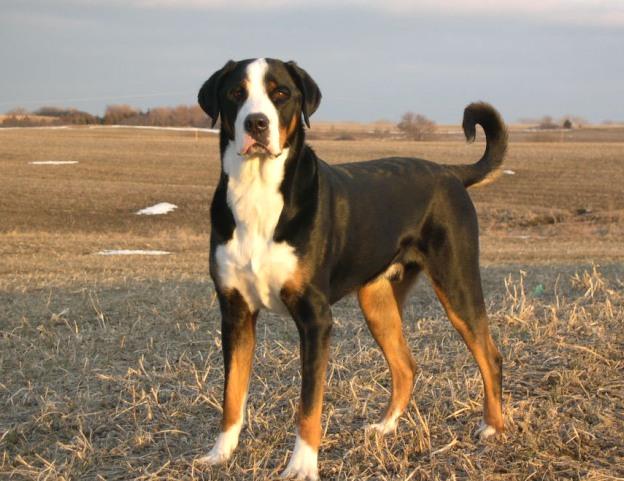
- Coat: dense, close-lying double coat; outer coat medium length (a shorter outer coat is acceptable if an undercoat is present). Tricolour: black with tan/rust and white markings.2, 3
- Life span: commonly around 8–11 years.4
- Temperament (typical): confident and alert; can be steady with family and reserved with strangers. Poor socialisation can show up as suspicion, barking, and heavy body-checking at doors.2
History and origin
The Greater Swiss Mountain Dog (often called a “Swissy”) comes from Switzerland, where large mountain dogs were used for practical work on farms—guarding, moving stock, and pulling carts. In modern breed standards, that history still shows: a robust frame, strong bone, and an alert, watchful way of moving through the world.2, 3
Physical characteristics and appearance
This is a big, deep-chested working dog, slightly longer than tall, built for traction rather than speed. The chest is broad and the frame is muscular without looking fine-boned or leggy.2
The hallmark look is tricolour: a black ground colour with symmetrical tan/rust points and clean white markings, including a blaze on the face and white on the chest, feet, and tail tip. The coat lies close and should not be long or silky; the undercoat matters because it’s part of how the breed handles weather and seasonal shedding.2, 3
Temperament and personality
A well-bred, well-raised Swissy is typically bold and vigilant without being sharp—noticeful, steady, and hard to hurry. Many are affectionate with their own people, and their size means even “friendly” greetings need to be taught early and kept polite.2
Socialisation is not about forcing friendliness; it’s about calm exposure while the dog is young—people of different ages, quiet dogs, odd surfaces, traffic noise—so the adult dog can stay composed when the world changes shape.2
Training and exercise needs
Swissies tend to learn quickly, but they can be slow to mature. Training works best when it’s matter-of-fact and consistent: short sessions, clear rules, and rewards that match the dog in front of you (food, toys, or access to sniff and explore).5
Exercise is less about endless running and more about steady, daily movement: brisk walks, hikes, structured play, and tasks that use the brain (simple scent games, retrieving, carrying a pack once fully grown). Their joints and growth plates benefit from sensible progression rather than sudden intensity.5
Health concerns to know about
No breed is “generally healthy” in a vacuum. In Swissies, the sensible approach is to assume a handful of predictable risks and plan around them from day one—especially the ones that become emergencies.
Gastric dilatation-volvulus (GDV, “bloat”)
Like many large, deep-chested breeds, Greater Swiss Mountain Dogs are at risk of GDV, where the stomach fills with gas and can twist, cutting off blood supply. It is an emergency that needs immediate veterinary care.6, 7
Red flags that justify an urgent vet visit: repeated unproductive retching, a rapidly enlarging abdomen, drooling, restlessness, and signs of pain or collapse.6, 7
Some owners discuss preventative gastropexy with their vet, particularly for high-risk dogs. Feeding routines (smaller meals, avoiding hard exercise around meals, discouraging rapid gulping) may help reduce risk, but they don’t make a dog “safe”.6, 7
Orthopaedic issues (hips and elbows)
Hip dysplasia and elbow dysplasia are recognised concerns in large breeds, including Swissies. Sound breeding (health screening) and steady weight management matter because extra kilos add pressure where the dog already carries a lot of mass.5
Eye and other breed-linked conditions
Breed clubs and veterinary references also note problems such as entropion (eyelids rolling inward) and epilepsy in the breed. If you’re buying a puppy, ask what the parents have been tested for, and request proof—not reassurance.5, 8
Grooming and coat care
The Swissy coat is often described as “wash-and-wear”: dense, close, and relatively low fuss compared with long-coated mountain dogs. Weekly brushing usually keeps the coat tidy, with heavier shedding during seasonal coat changes.5
Avoid over-bathing; it can dry the coat and skin. Keep nails short, check ears regularly, and pay attention to skin folds and damp areas after swimming or rain. These dogs are built for weather, but the undercoat can hold moisture if it’s neglected.5
Living with a Greater Swiss Mountain Dog
A Swissy takes up space—physically and in daily routine. A secure yard helps, but it doesn’t replace exercise or training. What matters most is a household that enjoys a big dog underfoot, can manage strength on lead, and won’t let manners slide because the dog looks calm.2
They can adapt to smaller homes if their needs are met, but they’re rarely a “set and forget” breed. They notice movement, they comment with a big bark, and they do best with clear boundaries from the start.2
Final thoughts
The Greater Swiss Mountain Dog is a capable, grounded working breed: steady company, impressive presence, and a strong instinct to watch what’s happening around home. If you can meet the size, training, and exercise realities—and you’re prepared for the health risks that come with a deep chest and heavy frame—the Swissy can be an excellent long-term companion.4, 5
References
- Dogs Australia (ANKC) — Great Swiss Mountain Dog breed standard (sizes)
- The Kennel Club (UK) — Great Swiss Mountain Dog breed standard (coat, colour, movement)
- United Kennel Club (UKC) — Greater Swiss Mountain Dog breed standard (coat, colour)
- PetMD — Greater Swiss Mountain Dog (life span and health overview)
- Greater Swiss Mountain Dog Club of America (GSMDCA) — Health concerns
- Greater Swiss Mountain Dog Club of America (GSMDCA) — GSMD health (GDV/bloat overview)
- VetZone (Australia) — Gastric dilatation-volvulus (bloat) in dogs
- WebMD — Greater Swiss Mountain Dog (coat and temperament overview)

Veterinary Advisor, Veterinarian London Area, United Kingdom