
A fish that was bright yesterday can look ragged overnight: a dusting of white spots, clamped fins, a swollen belly, or that slow hovering in the corner. In an aquarium, illness spreads the way smoke does—quietly, and then everywhere.
This guide focuses on practical diagnosis and calm, staged treatment: stabilise water first, isolate the sick fish, then treat the most likely cause (parasite, fungus, or bacterial infection) with products used safely and correctly. It also flags when it’s time to stop guessing and speak with a fish-savvy veterinarian.
First response: what to do when a fish looks unwell
Before adding any medication, give the tank the best chance to recover on its own. Poor water quality and stress don’t just make fish sick; they also make treatments harder on them.
- Check water quality (temperature, ammonia, nitrite, nitrate, pH) and correct any problems gently, not in one big swing.
- Increase aeration, especially if the fish is breathing fast or you plan to raise temperature or medicate.
- Do a partial water change and remove uneaten food and obvious waste. Steady, regular changes are often safer than a dramatic “reset”.1
- Isolate the affected fish in a simple hospital tank where possible. It reduces spread and lets you treat without dosing the whole display.
- Avoid mixing medications unless a vet advises it. Many products interact, and some combinations reduce oxygen or irritate gills.
Common aquarium fish diseases (and what they usually look like)
Most home-aquarium problems fall into three broad groups: parasites, fungi, and bacteria. They can overlap, and stress can make more than one problem appear at once.
White spot (“ich”)
Typical signs: small white grains on body and fins, flashing (rubbing), frayed fins, fast breathing.
Cause: the protozoan parasite Ichthyophthirius multifiliis. It spends part of its life off the fish, which is why treatment needs to continue beyond the first improvement.2
Fin rot and skin ulcers
Typical signs: ragged or eroding fins, pale edges, reddened bases of fins, sores that widen rather than heal.
Common drivers: chronic stress and poor water quality, with opportunistic bacteria taking advantage. (The bacteria involved can vary; a single “name-and-blame” organism is often an oversimplification.) Good water and isolation matter as much as medication.3
Fungal infections (often after injury)
Typical signs: cottony or fluffy white/grey growth on skin, fins, or eggs. Fungal growth is often secondary—appearing where skin is already damaged.3
External flukes and other parasites
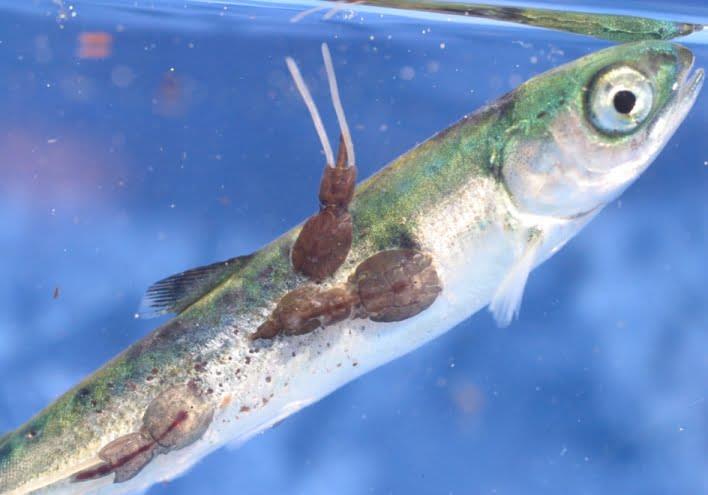
Typical signs: scratching, clamped fins, weight loss, excess mucus, and in gill cases, rapid breathing.
These are hard to diagnose by sight alone; effective treatment depends on the parasite type and the species you’re keeping.
Why fish get sick: the usual triggers
Disease organisms exist in most aquariums. Outbreaks tend to start when the environment tilts against the fish.
- Water quality issues (ammonia and nitrite are especially damaging; low oxygen makes everything worse).1
- Overcrowding and social stress, including mismatched species and relentless chasing.
- Temperature swings that strain the immune system and speed up parasite cycles.
- New arrivals (fish, plants, or even a shared net) bringing pathogens into an established tank.
How to spot illness early (before it becomes a tank-wide problem)
Most fish don’t “announce” illness. They simply become less precise: slower, duller, and easier to push around by currents or tankmates.
- Breathing changes: fast gill movement, hanging near filters or the surface.
- Swimming changes: flashing, listing, sinking, or isolating themselves.
- Body changes: spots, film, ulcers, fuzz, swelling, pineconing scales, frayed fins.
- Feeding changes: hesitating, spitting food, or not competing at all.
If you’re seeing sudden deaths, severe bloating, bulging eyes, loss of buoyancy control, ulcers, or rapid spread through multiple fish, treat it as urgent and seek veterinary help or advice through your state/territory channels.4
Treatment options that actually match the problem
Treatment is most effective when it’s specific. “Broad” dosing, especially with antibiotics, can miss the real cause and make future bacterial problems harder to treat.
Parasites (including ich)
For ich, treatments commonly used in aquaria include products containing formalin, malachite green, or copper, used exactly as directed and with attention to species sensitivity (some fish and invertebrates are intolerant of copper). Continue treatment for the full course to cover the parasite’s lifecycle, not just until the spots drop off.2
Temperature increases are sometimes used to speed the lifecycle, but only where the fish species can tolerate it, and only with strong aeration (warm water holds less oxygen).2
Fungal problems
True fungal infections respond best when you also address the underlying trigger: injury, bullying, poor water, or decaying organic matter. Isolate if needed and use an appropriate antifungal product as directed. If “fuzz” appears on an ulcer that is expanding, consider bacterial involvement and seek advice rather than repeatedly swapping products.
Bacterial disease
Antibiotics are sometimes appropriate, but they’re not a default first step for every fin issue. Where possible, use antibiotics under veterinary guidance, based on clinical evidence and (ideally) diagnostics. This reduces ineffective dosing and limits antimicrobial resistance pressures.5
Medication safety in Australian aquariums
Read labels closely, measure your water volume properly, and remove activated carbon during most treatments (it can absorb medications). If you’re keeping sensitive species (catfish, loaches, rays) or invertebrates, check product safety first.
Formalin, malachite green, and copper are effective in the right context but can be hazardous if misused. Strong aeration and careful dosing matter more than “stronger is better”.2
For imported ornamental fish under post-arrival quarantine, Australia restricts what treatments can be used in those facilities. At home, you still need to follow product directions and local rules, and avoid disposing of medicated water into waterways or stormwater drains.6
Natural remedies: what helps, what’s risky
“Natural” doesn’t automatically mean safe or effective in a closed aquatic system.
- Aquarium salt can be useful in some situations (and some species), but it’s not universal. Dose and tolerance vary widely, and it can harm scaleless fish and many plants/invertebrates.
- Garlic is sometimes used to encourage feeding, but it is not a reliable stand-alone treatment for parasites or bacterial infections.
- Vinegar added to the aquarium to “treat fungus” is risky. Sudden pH shifts can stress or kill fish and destabilise biofiltration. If pH needs adjusting, do it slowly and for a clear reason, not as a cure-all.
Quarantine: the quiet tool that prevents most disasters
A quarantine tank doesn’t need to be fancy—just cycled, heated (if needed), filtered, and easy to clean. Its job is to buy time: time for hidden disease to show itself, and time to treat without exposing the main tank.
A common home-aquarium quarantine window is around 2–4 weeks, longer if symptoms appear or if you’re dealing with slow-breeding parasites. The key is consistency: observe daily, feed lightly, and keep water stable.3
Quarantine also matters beyond your own tank. Australia treats aquatic animal health as a shared biosecurity issue, and responsible fishkeeping includes not letting diseases (or fish) escape into local waterways.4
Prevention that holds up over time
- Keep water quality steady with appropriate filtration, regular partial water changes, and substrate cleaning.1
- Don’t overstock, and match species for temperature, temperament, and diet.
- Quarantine new fish and avoid sharing nets, siphons, or buckets between tanks without drying/cleaning.
- Feed modestly; remove uneaten food before it turns into ammonia.
- Never release aquarium fish or water into drains, creeks, rivers, dams, or the sea. Rehome healthy fish, and dispose of water appropriately (down a household sink or suitable garden area where it can’t reach waterways).4, 7
When to get veterinary help (and when to report)
Seek veterinary advice promptly if you see repeated deaths, severe ulcers, major swelling/pineconing, neurological signs, or rapid spread across the tank despite improved water quality. A veterinarian can help distinguish look-alike conditions and guide safe, targeted treatments.
If you suspect a serious aquatic animal disease affecting wild or farmed aquatic animals, Australia encourages reporting unusual signs and deaths through the Emergency Animal Disease Hotline (1800 675 888).4
Final thoughts
Aquarium fish health is mostly routine ecology: clean water, enough space, stable temperature, and new arrivals kept aside long enough to be understood. Medications have their place, but they work best when the tank is calm and the cause is clear.
References
- RSPCA Australia Knowledgebase: How should I care for my tropical fish?
- VCA Animal Hospitals: Fish White Spot Disease (Ich) — symptoms and treatment
- Merck Veterinary Manual: Management of aquarium fish
- Australian Government DAFF: How you can protect Australia’s aquatic animal health
- American Veterinary Medical Association (AVMA): Judicious therapeutic use of antimicrobials in aquatic animal medicine
- Australian Government DAFF: Approved chemicals for ornamental fish (import post-arrival quarantine)
- Queensland Government: Prevent the spread of invasive freshwater animals (don’t dump aquarium animals)
- Queensland Government: Legal obligations for invasive freshwater animals (general biosecurity obligation)
- Outbreak.gov.au: White spot disease (crustaceans) — not the same as “ich” in aquarium fish

Veterinary Advisor, Veterinarian London Area, United Kingdom