
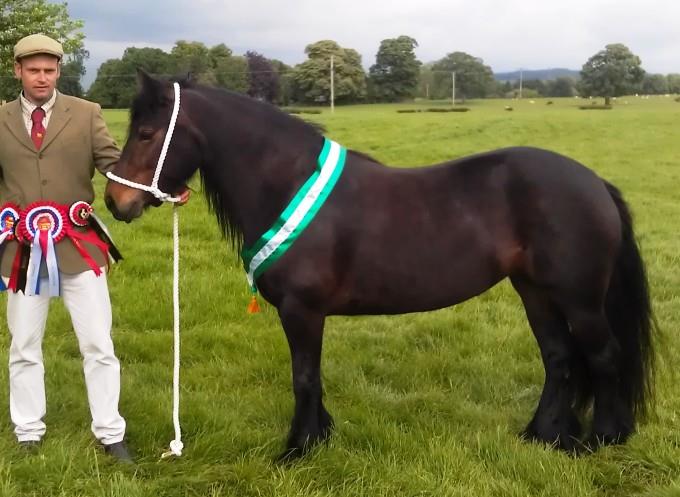
People usually end up comparing Fell and Dales ponies when they’re choosing a safe, capable riding or driving pony, or when they’re trying to tell the two breeds apart at a show or sales listing. They look similar at a glance—dark coats, plenty of mane and feather, and that ground-covering trot—but the details matter, especially if you’re thinking about height limits, markings, and what each type tends to suit.
Both are native British mountain and moorland ponies from northern England, shaped by hard country and working lives that once depended on steady feet and serious strength. What follows is a clear, breed-by-breed look at origins, traditional work, modern use, and the main points of conformation and colour that registries actually recognise.1, 3
At a glance: what they share (and what they don’t)
Fell and Dales ponies are close relatives from the Pennines and neighbouring regions, with long histories as working pack and harness animals in northern England.2, 3
- Shared look: compact bodies, dense bone, abundant mane and tail, and feathering at the heels (to varying degrees).1, 3
- Shared reputation: hardy, sure-footed types bred to travel and work in rough country.2, 3
- Key practical difference: Dales are generally taller and more “small draught” in build; Fell are capped at a lower height in the breed standard and often look slightly lighter and quicker.1, 3
Dales pony
Where the breed comes from
The Dales pony developed in the upper dales and eastern slopes of the Pennines in northern England. Its modern history is closely tied to lead mining, where ponies were expected to carry weight for long distances in cold, steep country.2
Traditional work and what that shaped
For generations, Dales ponies worked as pack animals and harness ponies in mining districts—moving lead ore from mines to smelters and carrying goods across country. That work selected for stamina, hard feet, strong bone, and a calm steadiness under load.2, 5
How Dales ponies are used today
Modern Dales ponies are commonly seen under saddle and in harness. They’re valued as family riding ponies, driving ponies, and all-rounders for long days out, where strength and a sensible temperament matter as much as movement.2, 5
Height, colour and markings (what the standard says)
Dales ponies are ideally 14.0 to 14.2 hands. Accepted colours include black, brown, grey, bay and roan.1
White markings are limited: a star and/or snip is permitted, and white is permitted to the hind fetlocks only. Ponies with more white than this may be recorded in a different stud book section depending on registry rules.1
Type and movement
The breed standard describes a strong, active pony with quality and dense, flat bone, plus “clean, high, straight and true” action. Well-formed feet and ample silky feather at the heels are emphasised as part of true Dales type.1
Fell pony
Where the breed comes from
The Fell pony is the native pony of Cumbria and the northern and western Pennines. Like the Dales, it belongs to the long-established working pony traditions of northern England, with breeding shaped by life on the fells and the need to travel.2, 3
Traditional work and what that shaped
Fell ponies were used for pack work well before modern transport—carrying wool and goods, then later moving metal ores such as lead, copper and iron to smelting works. In industrial areas they were also used in collieries, above ground and sometimes underground where seam height allowed. These jobs rewarded thriftiness, endurance, and a steady walk and trot over distance.6
How Fell ponies are used today
Fell ponies remain versatile: riding, driving and practical work in rough terrain. They’re often described as sure-footed and enduring, suited to long miles rather than flash, and able to carry a range of riders within their size and build.2, 3
Height, colour and markings (what the standard says)
The Fell Pony Society breed standard sets height as not exceeding 14 hands. Accepted colours are black, brown, bay and grey.3
White markings are treated differently from the older “no white” folklore: some white is acceptable, but an excess of white is discouraged and may affect how a pony is recorded in the Society’s registration sections.3
How to tell them apart in the paddock
- Check height first: a mature pony clearly over 14 hands can’t meet the Fell height limit; a Dales is typically in the 14.0–14.2 range.1, 3
- Look at the build: Dales often read as more powerfully built through the body and hindquarter; Fell often appears slightly lighter and more compact within a smaller frame.1, 3
- Look closely at markings rules: Dales standards are very specific about where white may appear; Fell standards allow some white but discourage excess, with registration sections reflecting that.1, 3
Are Fell and Dales ponies the same breed?
No. They are closely related native breeds from northern England, with overlapping history and similar type, but they have different breed societies and different breed standards—especially for height and markings.1, 3
Which is bigger: a Fell or a Dales?
In general, the Dales pony is bigger. The Dales standard prefers 14.0–14.2 hands, while the Fell standard sets a maximum of 14 hands.1, 3
Were they really used for lead mining?
Yes. Both breeds have documented links to carrying ores and working around mining and industrial districts in northern England, which is part of why their strength, feet and stamina are so strongly emphasised in breed descriptions today.2, 6
References
- Dales Pony Society — Breed Standard
- Dales Pony Society — About the Dales Pony
- The Fell Pony Society — About Fell Ponies (breed description, updated 2019)
- The Fell Pony Society — Official website
- The Livestock Conservancy — Dales Pony
- The Fell Pony Society — Fell ponies in pack work, mining and industry (history section)
- Rare Breeds Trust of Australia — Dales Pony
- Wikipedia — Dales Pony (overview and history)
- Wikipedia — Fell pony (overview and history)

Veterinary Advisor, Veterinarian London Area, United Kingdom