
People usually go looking for “famous dogs in history” when they’ve heard a name like Balto, Laika, Hachikō or Sergeant Stubby and want to know what’s true, what’s been embellished, and why the story still matters.
Some of these dogs worked in the blunt edge of human life—war, rescue, remote travel. Others became symbols, carried along by film, books, and public memory. The details are worth getting right, because the line between legend and record is where the real animal often disappears.
Dogs alongside people: a quick historical view
Long before dogs were “pets”, they moved through human settlements as hunters, guards, and working partners—animals shaped by domestication and by the practical needs of daily life. Archaeology suggests this relationship is ancient, stretching back many thousands of years, and it shows up across cultures in art, burial practices, and written sources.10
Dogs in ancient cultures
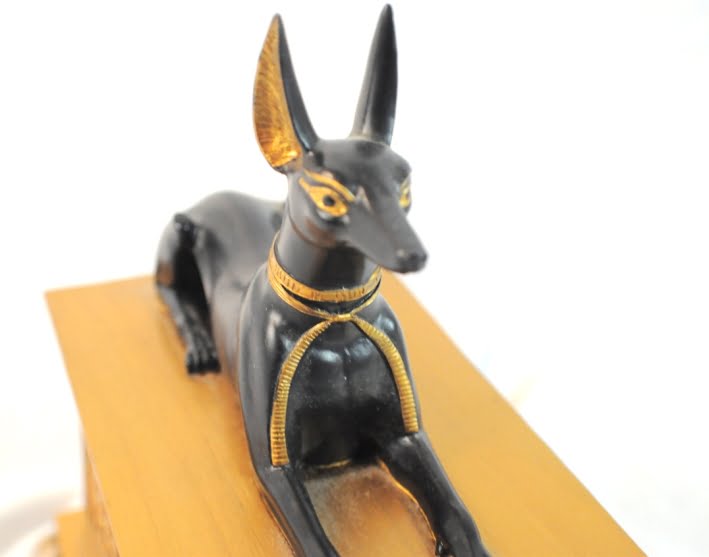
In ancient Egypt, dogs appear in tomb art and were sometimes mummified—evidence of both symbolic value and close household ties. In Greece and Rome, dogs are recorded as hunters and guardians, and in some contexts as part of military life. In imperial China, small companion breeds such as the Pekingese became closely associated with court culture and status, shaped by selective breeding and strict ownership customs.9
Dogs in war
Military dogs have served as sentries, messengers, scouts, and search animals. Their work is often described in heroic language, but the most grounded accounts focus on trained behaviours—alerting, tracking, holding position—done in frightening conditions alongside human handlers.
Sergeant Stubby (World War I)
Sergeant Stubby, the mascot of the 102nd Infantry Regiment (26th “Yankee” Division), became famous for actions described by contemporary and museum accounts: after being gassed early in service, he developed heightened sensitivity and helped warn troops during gas attacks by running through trenches and alerting sleeping soldiers. He also located wounded men in no-man’s-land and is credited with helping seize an enemy soldier near Allied trenches.1, 2
Chips (World War II)
Chips, a US Army dog who served during the invasion of Sicily in 1943, is often described as “single-handedly capturing” enemy soldiers. The clearer record is that he charged a machine-gun nest and helped force a surrender, and later that day helped take prisoners; his formal awards were complicated by military policy around commending animals, and later recognition included a posthumous PDSA Dickin Medal in 2018.3, 4
Nemo (Vietnam War)
During the Vietnam War, dogs were used for patrol and detection work, especially around night ambushes and perimeter security. Stories such as Nemo’s—injured while defending his handler—sit within that broader history of military working dogs, where a dog’s training and the handler–dog partnership could change the outcome of a sudden attack.8
Dogs in exploration
Exploration stories tend to spotlight the dramatic moment—the storm, the ice, the last kilometres. Dogs, particularly sled dogs, are part of the working machinery of these journeys: endurance, navigation across scent and sound, and the ability to keep going when people are cold, hungry, and making mistakes.
Balto and the 1925 serum run
Balto, a Siberian Husky, became the best-known dog linked to the 1925 relay that carried diphtheria antitoxin to Nome, Alaska. The broader event involved many teams and drivers, and Balto’s fame reflects how public memory tends to condense a relay into a single face at the finish line.5
Dogs in polar expeditions
In the Antarctic and Arctic, sled dogs provided haulage and, at times, a vital margin of safety. Their presence is documented in expedition records and histories, though their use is also bound up with hard ethical questions about animal welfare under extreme scarcity and risk.7
Dogs in science
Scientific history includes dogs in both celebrated and troubling roles. When the record is clear, it’s best to describe what happened plainly, without trying to soften the edges.
Laika (Sputnik 2, 1957)
Laika was the first dog to orbit Earth, launched aboard Sputnik 2 on 3 November 1957. The mission did not include a plan for recovery, and later accounts from the programme have stated she died within hours, likely due to overheating and stress.6
Snuppy (the first cloned dog, 2005)
Snuppy, an Afghan Hound cloned via somatic cell nuclear transfer at Seoul National University, is widely cited as the first dog clone to survive. Contemporary reporting notes the scale of the work—over a thousand reconstructed embryos and more than a hundred surrogates—underscoring both the technical difficulty and the ethical debate that followed.10
Dogs in rescue and service
Rescue and assistance dogs are often spoken about as if they’re “natural heroes”. In reality, what saves lives is a combination of selection, training, good handling, and a dog’s willingness to work in unstable environments.
Rescue dogs
In avalanches and disasters, search dogs use scenting ability and trained search patterns to locate people who are hidden from view. Their success depends on conditions—wind, snowpack, debris, temperature—and on coordinated human teams who can act fast once a dog indicates a find.8
Assistance dogs
Assistance dogs support people with disability by performing specific, trained tasks (not just offering comfort), such as retrieval, opening doors, alerting to sounds, or helping a handler maintain safe movement through the world. When the match is right, the effect is practical and profound: fewer barriers, more independence, and a steadier daily rhythm.8
Dogs in entertainment and literature
Screen dogs and book dogs are often asked to stand for an ideal—loyalty, bravery, steadiness under pressure. These characters can be moving, but they are also crafted: trained performances, edited scenes, and narratives built to fit human arcs.
On screen
From early film stars like Rin Tin Tin to long-running icons like Lassie, famous screen dogs have influenced what people think a dog “should” be—sometimes for the better (admiration for working intelligence), sometimes creating unrealistic expectations about behaviour and trainability.
On the page
In novels such as White Fang and The Call of the Wild, canine characters are used to explore domestication, survival, and the pull between human control and environmental pressure. These stories can sharpen our attention to animal behaviour, even when they lean into symbolism.
Dogs in politics and public life
Political dogs become part of the public stage: photographed near lecterns, travelling with staff, turning up in anecdotes that soften the hard outlines of office. The animal itself is doing ordinary dog things—following routines, responding to familiar people—while the surrounding culture supplies the meaning.
Fala (Franklin D. Roosevelt)
Fala, President Franklin D. Roosevelt’s Scottish Terrier, became a well-known presidential companion and a recurring presence in public imagery, to the point of being folded into speeches and political folklore of the period.9
Fun facts (kept honest)
- Hachikō became famous in Japan for repeatedly returning to Shibuya Station after his owner’s death, and statues and memorials later marked the story’s place in public life.9
- Pickles, a pet dog in England, is credited with finding the stolen Jules Rimet Trophy (the original World Cup trophy) in 1966—one of those moments where a dog’s nose meets human chaos.
Final thoughts
The most memorable dogs in history are not always the ones who did the most, but the ones whose lives were recorded clearly enough to survive retelling. When you strip away the varnish, what remains is often more interesting: trained behaviour, hard environments, human choices, and a dog moving through it all with attention fixed on the next cue, the next scent, the next familiar hand.
References
- National Museum of American History (Smithsonian) – “Stubby” (collection record)
- Encyclopaedia Britannica – “Sergeant Stubby”
- PDSA – “Top honour for WWII hero dog” (Chips receives PDSA Dickin Medal), 11 January 2018
- Wikipedia – “Chips (dog)” (overview of service and awards history)
- Encyclopaedia Britannica – “Balto”
- Encyclopaedia Britannica – “Laika”
- Encyclopaedia Britannica – “Ernest Shackleton” (context for Antarctic expeditions)
- Australian War Memorial – “Dogs” (military working dogs overview)
- Encyclopaedia Britannica – “Dog” (historical and cultural context)
- Nature – “Snuppy rewards dogged approach” (3 August 2005)

Veterinary Advisor, Veterinarian London Area, United Kingdom