
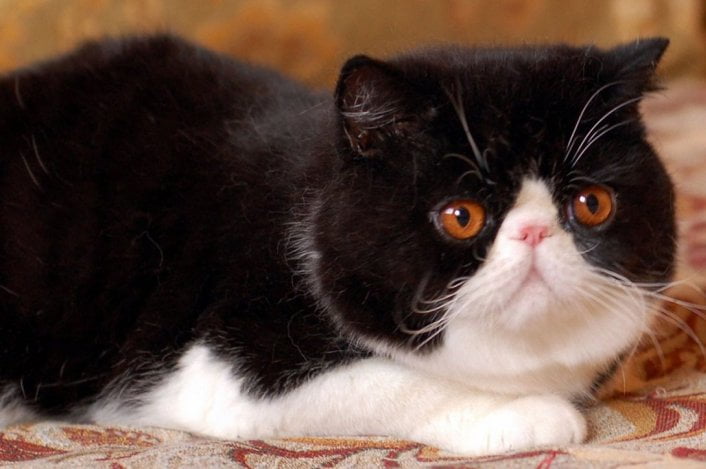
Most people end up searching “Exotic Shorthair” when they’re weighing up a kitten purchase, checking whether a flat-faced cat will cope in their home, or trying to make sense of watery eyes, noisy breathing, or stubborn weight gain. With this breed, the look is part of the story—but so are the everyday consequences of that shortened face and dense coat.
Below is a clear, practical guide to what an Exotic Shorthair is really like to live with: where they came from, what their body type means for health, what grooming actually involves (yes, even with a short coat), and the small routines that help them stay comfortable over the long haul.1, 6
Exotic Shorthair at a glance
- Build: Medium-sized, heavily boned, compact (“cobby”) body with a short, thick tail.1, 2
- Coat: Short, very dense and plush; sheds and can mat in friction spots.1, 2
- Head: Round head, small rounded ears set wide apart, large round eyes; distinctly short nose/flat face (brachycephalic type).1, 6
- Colours: Wide variety of colours and patterns, similar to Persians.1, 2
- Temperament: Generally quiet, affectionate, gentle; often playful in short bursts rather than high-energy marathons.1, 2
- Typical lifespan: Many live into their teens, but “average lifespan” figures vary widely across sources and are strongly influenced by breeding, body condition, and brachycephalic severity.1, 2, 6
History and origin
The Exotic Shorthair was developed in the United States during the mid-20th century, when breeders crossed Persians with American Shorthairs to produce a Persian-like cat in a short, plush coat. Cat registries then formalised the type and standards over subsequent decades.1, 4
Today, most cat associations place the Exotic alongside the Persian as essentially the same body type in a different coat length. That shared “Persian type” is what gives the breed its rounded look—and also explains many of the health and care considerations that matter most day to day.1, 2
Physical characteristics: what you’ll notice at home
In motion, an Exotic Shorthair tends to look like a solid little mammal built close to the ground: broad chest, thick legs, and a dense coat that makes them appear larger than they are. Their face is the headline feature—large eyes and a shortened muzzle—often paired with a quiet, watchful presence around the house.1, 2
That same head shape can come with trade-offs. Very flat faces can be linked with breathing difficulties, eye and skin issues, dental problems, and reduced tolerance for vigorous exercise, especially in warm conditions.6
Temperament and behaviour
Exotics are typically calm and people-oriented, often choosing to stay near their humans rather than patrol the yard. Many enjoy play, but it’s commonly expressed as short, curious bursts—stalking a wand toy, batting a ball, or watching water drip—then settling again.1, 2
Like any breed, personality varies by individual, early handling, and environment. A well-bred, well-socialised Exotic is usually gentle company, but still benefits from predictable routines and a home that respects their physical limits.2, 6
Health concerns to understand early
Exotic Shorthairs are a brachycephalic (flat-faced) breed. In Australia, the RSPCA highlights strong evidence that exaggerated physical features—including very flat faces—are associated with significant health and welfare problems across a cat’s lifetime. For brachycephalic cats, these can include difficulty breathing, eye and skin problems, dental issues, and trouble eating.6
Brachycephalic airway and heat sensitivity
Some Exotics have narrowed airways and work harder to breathe than longer-faced cats. You may notice snoring, noisy breathing, or exercise intolerance (tiring quickly). On hot days, cats with restricted airways can struggle to cool themselves efficiently, so a cool indoor environment becomes more than a comfort—it’s part of health management.6
Eyes, tear overflow, and skin folds
Large, prominent eyes and a shortened muzzle can contribute to watery eyes and tear staining. Moisture sitting in facial folds can also irritate skin if it isn’t kept clean and dry. For many owners, gentle daily face checks become as normal as topping up the water bowl.2, 6
Dental disease
Dental disease is common in cats in general, and brachycephalic head shape can add crowding and bite issues that complicate oral health. The RSPCA notes that dental plaque and tartar can lead to gingivitis and periodontal disease, and that consistent home care plus veterinary check-ups are key to prevention and early treatment.7, 8
Obesity (a quiet, creeping risk)
Because many Exotics are calm and relatively sedentary indoors, weight can creep up without much warning. The RSPCA links obesity in pets with serious health risks including diabetes, arthritis, increased surgical risk, and reduced quality of life—so keeping an Exotic lean is one of the most meaningful health decisions an owner makes.9
Grooming and daily care (short coat, real maintenance)
The Exotic’s coat is short, but it is extremely dense. Regular grooming helps remove loose hair, reduces knots in friction areas (armpits, behind the ears), and gives you a chance to notice skin irritation early.1, 2
A simple weekly routine
- Coat: Comb or brush a few times a week; increase during shedding periods.1, 2
- Face: Check eyes and facial folds daily; gently clean and dry as needed (your vet can recommend safe products).2, 6
- Nails: Trim every few weeks, depending on wear and scratching habits.
- Teeth: Aim for frequent tooth brushing; the RSPCA advises daily brushing as ideal for dental health, with regular veterinary dental checks.5, 8
Training, play, and exercise
Exotics usually respond best to gentle, low-pressure training: short sessions, consistent cues, and rewards that don’t overfeed them. For exercise, think in intervals—several brief play sessions a day rather than one long, intense workout.2, 6
Watch for signs they’re done: open-mouth breathing, noisy breathing that escalates, or quick fatigue. Stop, let them recover, and keep the environment cool.6
Living with an Exotic Shorthair in Australia
Many Exotics live contentedly as indoor cats, which also reduces risks from cars, fights, parasites, and heat exposure. Because flat-faced cats can have exercise intolerance and breathing constraints, a calm indoor setup—cool, well-ventilated, with soft resting spots and easy-access litter trays—often suits them better than an “always outdoors” lifestyle.6
Quick home set-up checks
- Keep fresh water available in more than one spot (some cats drink more readily this way).
- Use low-sided bowls if whisker sensitivity or face shape makes eating awkward.
- Provide steps or ramps to favourite perches if jumping seems uncomfortable.
- Prioritise temperature control in summer: shade, airflow, and cool rooms.6
Choosing a kitten or adult: what to ask before you commit
With Exotics, “cute” should never be the only selection criterion. The face can be bred to extremes, and those extremes are where welfare problems cluster. Ask to see the parents (or at least veterinary records), and look for cats that breathe quietly at rest and can play without distress.6
- Has the breeder screened for breed-relevant inherited issues, and can they explain what they test for?
- Do the kittens have persistent watery eyes, frequent sneezing, or noisy breathing at rest?
- What diet are they on, and what is the body condition of the parents?
- What grooming routine has the kitten been introduced to (face handling, brushing, tooth brushing)?
Final thoughts
The Exotic Shorthair is, in many homes, a quiet companion animal: plush-coated, round-eyed, and usually content to be nearby. The same features that make them distinctive can also bring practical responsibilities—especially around breathing comfort, eye and skin care, dental hygiene, and weight management.6, 8, 9
Kept cool, kept lean, and checked regularly, an Exotic can settle into the rhythm of a household with very little fuss—just the soft weight of a cat that prefers the calm parts of the day.1, 2
References
- The Cat Fanciers’ Association (CFA) – Exotic (breed profile)
- The International Cat Association (TICA) – Exotic Shorthair (breed information)
- Governing Council of the Cat Fancy (GCCF) – Exotic Shorthair (breed profile)
- The Cat Fanciers’ Association (CFA) – Exotic (breed article/history)
- RSPCA Pet Insurance – Guide to cat dental care
- RSPCA Knowledgebase – Health and welfare issues associated with exaggerated physical features in cats
- RSPCA Knowledgebase – How should I take care of my cat or dog’s teeth?
- RSPCA Knowledgebase – Gum and mouth inflammation (gingivostomatitis) in cats
- RSPCA Pet Insurance – Health concerns for dogs and cats (guide)

Veterinary Advisor, Veterinarian London Area, United Kingdom