
Most people look up pet first aid when something has just happened: a dog has grabbed a bone and is gagging, a cat has come home limping, or you’ve found chew marks on a packet of tablets. In those first minutes, the wrong move can turn a manageable problem into a dangerous one.
Pet first aid is about buying time—keeping your animal breathing, warm (or cool), and as stable as possible while you arrange veterinary care. The sections below focus on the situations owners most commonly face, what to do straight away, and the moments when the only safe next step is a vet.
Understanding pet first aid (and what it can’t do)
Pet first aid is the immediate care you provide before a veterinarian can take over. It can reduce blood loss, limit overheating, and prevent further injury, but it can’t diagnose internal damage or replace treatment such as pain relief, imaging, surgery, or antidotes.
A useful rule: first aid is for stabilising. Veterinary care is for treating the cause. If you’re in doubt, call a clinic and describe what you can see and measure (breathing effort, gum colour, alertness, temperature if you can take it safely).
Common pet emergencies and what they look like
Choking and breathing distress
A choking pet may gag, retch, paw at the mouth, cough repeatedly, or make high-effort attempts to breathe. Some animals simply become quiet and panicky-looking, with fast breathing and little air movement.
Breathing distress is an emergency even when you don’t know the cause. If your pet is struggling to draw breath, keeps collapsing, or has blue/grey gums, treat it as life-threatening and head to a vet immediately.
Poisoning
Poisoning can be obvious (you see your pet swallow something) or subtle, with signs that build over hours. Vomiting, diarrhoea, drooling, tremors, wobbliness, seizures, and sudden collapse all warrant urgent advice. Keep packaging, plant fragments, or a photo of the product—details matter when a professional is assessing risk.8
In Australia, you can also contact the Animal Poisons Helpline (24/7) for case-specific advice: 1300 869 738.6
Wounds, bleeding, and trauma
Bleeding can be dramatic without being life-threatening, and life-threatening without looking dramatic (for example, internal bleeding after a car impact). Heavy, ongoing bleeding; pale gums; collapse; or a swollen abdomen after trauma are reasons to go straight to emergency care.
Heat stress and heatstroke
Heatstroke can escalate quickly in Australian summers and during exercise. Watch for relentless panting, drooling, agitation, red or very pale gums, vomiting/diarrhoea, weakness, staggering, tremors, seizures, or collapse.1, 2
Heatstroke is an emergency even if your pet seems to “perk up” after cooling—organ damage can be delayed. Seek veterinary assessment.1
First aid priorities: what to do in the first minute
- Keep yourself safe. A frightened or painful pet may bite. If needed, use a towel for control and keep hands away from the mouth.
- Check breathing. Look for chest movement and listen/feel for airflow at the nose.
- Check colour. Healthy gums are usually pink. Very pale, blue/grey, or muddy gums suggest a serious problem.
- Stop major bleeding. Firm, direct pressure with a clean cloth is your best first step.
- Call ahead. Ring your vet or nearest emergency hospital while someone else helps you prepare to leave.
Basic first aid techniques
Managing wounds and bleeding
If your pet will allow it safely, gently clip or part the fur so you can see where the blood is coming from. Then:
- Apply firm direct pressure with a clean pad or cloth. Hold it in place—don’t keep lifting to “check”.
- Bandage only if you can do it without cutting circulation. Toes should stay warm and a normal colour. If swelling increases beyond the bandage, loosen it.
- Go to a vet if bleeding is heavy, doesn’t slow within minutes of pressure, the wound is deep, or it’s from a bite (infection risk is high).
Heatstroke first aid (while you arrange urgent vet care)
Move your pet into shade or an air-conditioned space. Apply cool/tepid water to the coat and skin and use airflow (a fan, or fanning) to increase heat loss. Avoid ice or ice-cold water, which can make things worse. Then travel to a vet without delay.1
Suspected poisoning: what to do before you drive
- Remove access to the substance and keep other animals away.
- Collect details: the product name, strength, estimated amount, time of exposure, your pet’s weight, and any signs you’re seeing.
- Call for advice immediately (your vet, emergency vet, or Animal Poisons Helpline 1300 869 738). Don’t wait for symptoms—some toxins have delayed effects and are harder to treat later.6, 7
Avoid home “antidotes” from the internet. Inducing vomiting is not safe in many cases and should only be done under professional instruction.7
Pet CPR: a realistic, safety-first overview
CPR is for a pet that is unresponsive and not breathing normally. If you are not sure, it’s still reasonable to start while someone else calls a vet—acting quickly matters.9
Place most dogs and cats on their side (lateral recumbency). Give chest compressions at 100–120 per minute, compressing the chest about 1/3 to 1/2 of its width, allowing full recoil between compressions.9
Training helps, because technique varies with body shape and size. Notably, the Australian Red Cross Pet First Aid course states it does not cover pet CPR and advises that pets needing CPR should be taken to a veterinarian immediately.4
Assembling a pet first aid kit
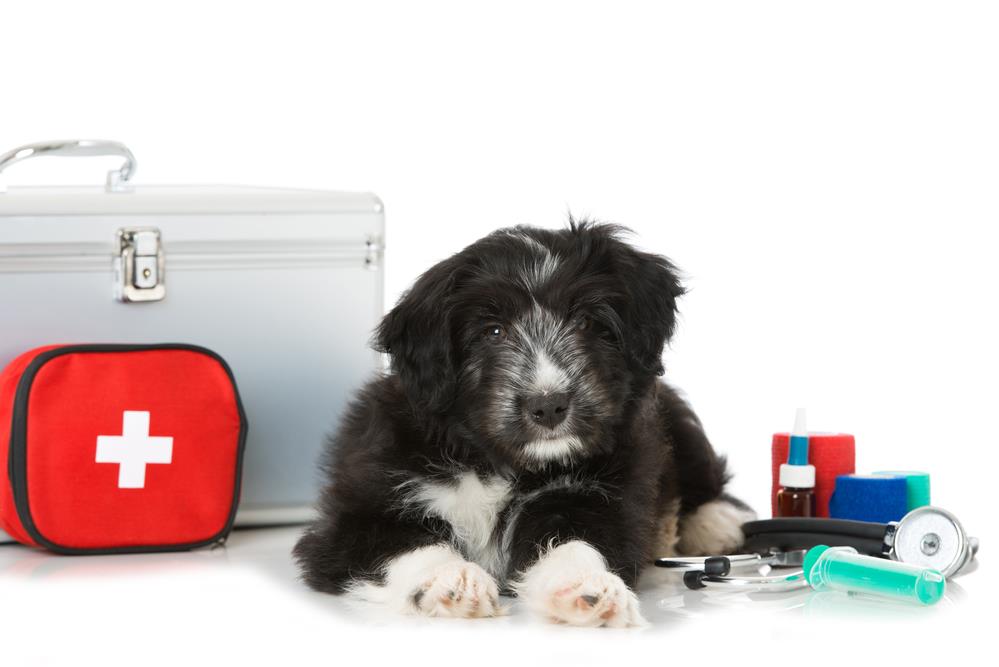
A good kit is small enough to grab in a hurry and boring enough that you’ll actually keep it stocked. Start with:
- Non-stick wound dressings and gauze pads
- Conforming bandage and adhesive tape
- Saline (wound and eye rinse)
- Blunt-nosed scissors and tweezers
- Disposable gloves
- A digital thermometer (plus lubricant)
- A towel and a lightweight blanket
- A basket-style muzzle for dogs (or a roll of bandage to improvise one)
- Contact list: your usual vet, nearest after-hours clinic, and Animal Poisons Helpline 1300 869 7386
Adjust for your animal and your region. For example, include tick removal tools where paralysis ticks are common, and a spare lead/harness for dogs that bolt when frightened.
When to seek veterinary help (don’t wait and see)
Go to a vet urgently if your pet has any of the following:
- Breathing difficulty, choking you can’t resolve quickly, or blue/grey gums
- Collapse, unresponsiveness, or suspected seizure activity
- Heavy bleeding, a deep wound, or a wound from a bite
- Heatstroke signs, especially weakness, vomiting/diarrhoea, tremors, or collapse1, 2
- Known or suspected poisoning (even if they seem normal at first)6, 7
- Major trauma (hit by a car, fall from height, animal attack)
How to transport an injured pet
Keep movement minimal. Use a towel or blanket as a stretcher for dogs; use a carrier or sturdy box for cats and small pets. Keep the environment quiet and cool, and secure the carrier so it doesn’t slide. If there’s bleeding, maintain steady pressure during the trip.
Preventing emergencies: quiet habits that make a difference
Most pet emergencies begin as ordinary moments: a door left ajar, a chewable bottle on a bedside table, a midday walk that ran too long.
- Store household chemicals and medications behind closed doors, not “up high”.
- Assume food and pest products are reachable. The RSPCA notes risks including rodenticides, antifreeze, and xylitol-containing products for dogs.3
- Plan for heat. Avoid hard exercise on hot days, provide shade and water, and watch closely for early heat stress signs.1, 2
- Keep regular vet checks. Preventative care won’t stop every accident, but it reduces the chance that a crisis finds an already-unwell animal.
Training and resources (Australia)
If you want structured, practical training, look for courses that match your pet types and include hands-on skills where possible.
- Australian Red Cross: Pet First Aid (online, veterinary-approved; note the course’s statement that it does not cover pet CPR).4
- St John Ambulance (Tasmania): Pet First Aid course information and availability (check dates, as schedules can change).5
Final thoughts
Good pet first aid is simple, steady work: reduce danger, support breathing, control bleeding, cool heatstroke safely, and get professional help early. Keep the key numbers saved in your phone, keep a kit where you can reach it, and practise the basics when nothing is happening. That’s when it sticks.
References
- RSPCA Pet Insurance: Heatstroke guide for cats and dogs
- RSPCA NSW: Heat stress
- RSPCA Australia: Household dangers to your pet
- Australian Red Cross: Pet First Aid course
- St John Ambulance Tasmania: Pet First Aid course
- Animal Poisons Helpline: Contact details (Australia 1300 869 738, 24/7)
- ASPCA: What to do if your pet is poisoned
- Animal Poisons Helpline: What information to have when you call
- AAHA: CPR basics and RECOVER guidance summary

Veterinary Advisor, Veterinarian London Area, United Kingdom