
People usually look up cat first aid after a scare: a paw bleeding on the kitchen tiles, a sudden bout of open-mouth breathing, a chewed plant, a strange wobble. In those first minutes, what you do (and what you avoid) can limit further harm while you get veterinary help lined up.
The aim here is simple: quick checks you can do at home, safe ways to handle an injured cat, and clear first-aid steps for the emergencies that turn up most often—bleeding, breathing trouble, poisoning, temperature extremes, seizures, shock—plus what belongs in a practical kit.
First things first: when it’s an emergency
If you suspect a life-threatening problem, call your vet or an emergency clinic straight away and follow their instructions. Calling ahead also helps the clinic prepare for your arrival.1
Examples that need urgent veterinary care include trouble breathing, severe or uncontrolled bleeding, poisoning, ongoing seizures, collapse/unconsciousness, major trauma, and suspected fractures.1
Do a fast “ABC” check
- Airway: Is anything lodged in the mouth/throat? Is the tongue swollen? Are they able to swallow?
- Breathing: Are they breathing easily, or open-mouth breathing/gasping?
- Circulation: Are the gums pale/grey? Is the cat weak, cold, or collapsing?
Breathing difficulty and shock can deteriorate quickly. Cats may crouch or sit upright, breathing fast and hard; pale gums and weak pulses can be signs of shock.2
Handling an injured cat (without making it worse)
Even gentle cats may scratch or bite when frightened or in pain. Keep your movements slow, keep faces away from the cat’s mouth, and use a towel to control limbs and reduce struggling.1
Towel wrap (“cat burrito”) for safer restraint
- Lay a towel flat and place the cat in the middle.
- Bring one side over the body and tuck it snugly along the cat’s side.
- Bring the other side over, leaving the nose clear and the chest able to move freely.
If you need to move an injured cat, support the whole body. For trauma or suspected spinal injury, use something flat and firm (a board, sturdy cardboard, or a folded blanket) to minimise bending and twisting.1
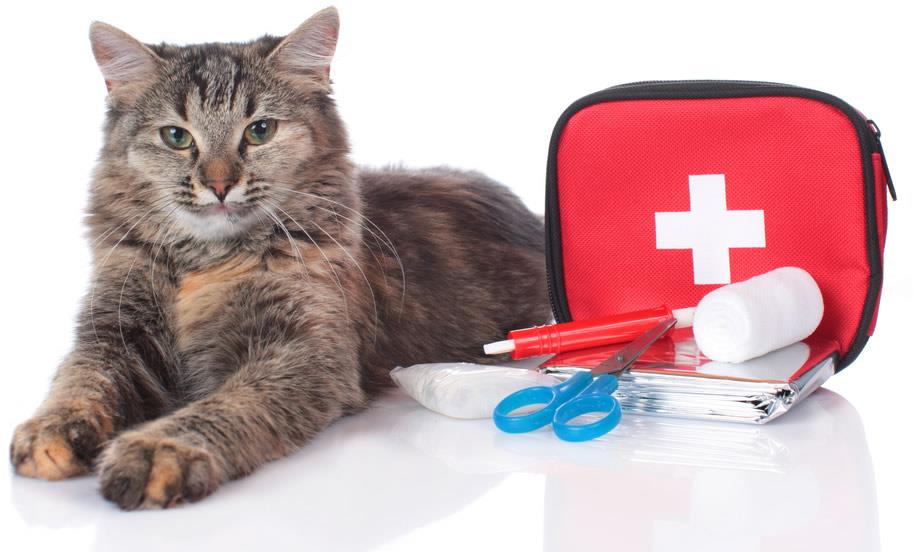
Basic first aid kit for cats
A good kit is small, boring, and complete. Store it somewhere you can reach with one hand, and check expiry dates every few months.
Useful essentials
- Sterile gauze pads and non-stick dressings
- Conforming bandage and adhesive tape (plus blunt-ended scissors)
- Saline (wound/eye flush)
- Disposable gloves
- Digital thermometer and water-based lubricant
- Tweezers
- Instant cold pack and a light blanket
- Phone numbers: your usual vet, nearest 24/7 emergency clinic, and a poisons advice line
Avoid adding medications “just in case”. Many human pain relievers are dangerous to cats—ask your vet what (if anything) is appropriate for your household.
Bleeding and wounds
For most bleeding, the immediate goal is simple: steady pressure, clean cover, and prompt veterinary assessment if it’s significant.
Minor cuts and abrasions
- Clip fur only if you can do it safely; don’t struggle with a painful cat.
- Rinse with saline (or clean running water if that’s all you have).
- Cover with a non-stick dressing if the area will get dirty or the cat keeps licking.
Active bleeding: what to do
- Apply firm, direct pressure with gauze or a clean cloth.
- Hold pressure steadily for several minutes before checking.
- If blood soaks through, add another layer on top—don’t peel the first layer off.
A pressure bandage can help control bleeding during transport, but it shouldn’t be left on for long without veterinary guidance.3
When bleeding is beyond home first aid
- Bleeding that won’t slow with pressure
- Deep wounds, bite wounds, or wounds near the eye
- Any sign of shock (pale/grey gums, weakness, cold ears/feet, collapse)2
Fractures and sprains
Suspected fractures aren’t a “set it yourself” situation. The safest first aid is restraint and careful transport.
Clues that suggest a fracture
- Sudden lameness or refusal to bear weight
- Swelling, an abnormal angle, or obvious pain when touched
What you can do while heading to the vet
- Keep the cat still in a carrier or closed box with ventilation holes.
- Use a towel to support the body and limit movement.
- Avoid attempting to straighten a limb.
If you must move the cat after trauma, support the head/neck/spine and use a flat, firm surface where possible.1
Choking and breathing problems
Cats can look as though they are choking when they are actually struggling to breathe due to respiratory disease. Either way, treat breathing difficulty as urgent.4
Signs that can fit choking
- Pawing at the mouth, gagging, coughing
- Loud breathing sounds, gasping, blue or white gums4
If you suspect choking
- Keep the cat as calm and still as possible.
- If you can clearly see an object in the mouth, try to remove it carefully—don’t push it deeper.4
- If you can’t remove it, abdominal thrusts may help in an emergency, but bites and internal injury are real risks—get veterinary help immediately.4
Even if you dislodge the object and the cat seems fine, they still need a vet check—choking can lead to complications.4
Poisoning and toxic substances
Poisoning is often quiet at first: a bit of drool, a vomit, a cat that hides and goes still. If you suspect exposure, treat it as urgent and get advice before attempting home remedies.
Common hazards around the house
- Human medications
- Cleaning products
- Insecticides/rodenticides
- Plants (especially lilies)
Lilies: a special warning
True lilies (Lilium) and daylilies (Hemerocallis) are highly toxic to cats. Even small exposures—including pollen or vase water—can lead to acute kidney failure, and the risk rises quickly if treatment is delayed.5
What to do if poisoning is suspected
- Remove access to the substance and keep the cat from grooming (pollen/chemicals on fur matter).
- Call your vet or an animal poisons advice service with the product name, strength, amount, and time of exposure.
- Do not induce vomiting unless a vet/toxicology professional tells you to—some substances cause more damage coming back up.
In Australia, the Animal Poisons Helpline is available 24/7 on 1300 869 738 for poisoning risk assessment and first-aid guidance.6
Heatstroke and hypothermia
Temperature emergencies can creep up fast, particularly in hot cars, closed rooms, poorly ventilated balconies, or after a cat has been trapped outdoors overnight.
Heatstroke: what you might see
Heatstroke is an emergency. Move the cat to a cooler area and contact a vet immediately.1
Cooling first aid (safe and steady)
- Move to shade/air-conditioning and offer small sips of water if the cat is alert.
- Use cool (not icy) water on the coat and paws, or cool wet towels. Replace as they warm.
- Don’t immerse the cat in cold water unless your vet tells you to; rapid overcooling can cause problems during resuscitation/transport.1
Hypothermia: what you might see
Hypothermia means a dangerously low body temperature. A rectal temperature below 98.5°F (36.9°C) is consistent with hypothermia, and a normal cat temperature is around 99.5–102.5°F (37.5–39.2°C).7
Warming first aid
- Dry the cat if wet and bring them into a warm, quiet room.
- Wrap in a blanket and use warm (not hot) water bottles wrapped in a towel.
- Warm slowly—avoid rubbing cold limbs or using very hot water.1
Seizures and shock
These are the moments where calm helps most. Keep the environment quiet, keep yourself safe, and focus on preventing secondary injury while arranging urgent veterinary care.
If your cat is having a seizure
- Don’t put your hands near the mouth.
- Move furniture away and cushion sharp edges with a folded towel.
- Time the seizure and call your vet—ongoing seizures are an emergency.2
Signs that can suggest shock
Shock happens when the body can’t deliver enough blood and oxygen to tissues. Signs can include pale/grey gums, weak pulses, and collapse, and it can progress to organ failure if untreated.2
First aid while you travel to the vet
- Keep the cat warm and still.
- Transport in a carrier or box with ventilation holes to reduce movement and stress.1
- Don’t offer food; avoid water if the cat is drowsy or struggling to swallow.
Final thoughts
Good cat first aid is mostly about steady hands and sensible limits: protect the airway, control bleeding, prevent chilling or overheating, and move quickly towards veterinary care. Keep a small kit, keep key phone numbers saved, and practise the towel wrap on a calm day so it isn’t new when you need it.
References
- Merck Veterinary Manual (Pet Owner Version) — What to Do in a Dog or Cat Emergency
- Merck Veterinary Manual (Pet Owner Version) — Evaluation and Initial Treatment of Dog and Cat Emergencies
- Cats Protection — Cat first aid
- American Red Cross — How to Help a Cat Choking
- US FDA — Lovely Lilies and Curious Cats: A Dangerous Combination
- Animal Poisons Helpline (Australia) — About Us (24/7 number and service details)
- American Red Cross — Cat Hypothermia

Veterinary Advisor, Veterinarian London Area, United Kingdom