
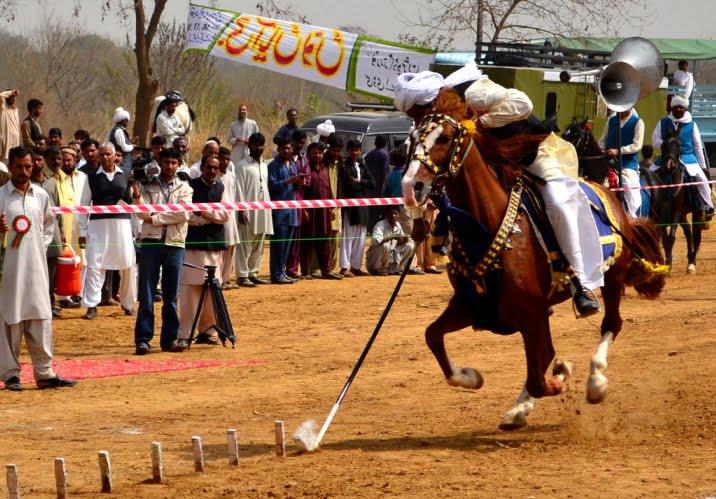
People usually find tent pegging when they’re weighing up a new equestrian discipline: what it involves, how it’s judged, and what’s needed to do it safely. It’s fast, it’s technical, and the difference between a clean run and a dangerous one is often decided well before the horse reaches the lane.
Tent pegging sits in the family of mounted skill-at-arms—horse and rider moving at speed, aiming a lance or sword at small ground targets. The basics are simple to describe, but the details matter: rule sets vary by discipline, equipment is tightly specified, and safety gear needs to meet recognised standards. That’s the terrain this guide covers.
What tent pegging is (in plain terms)
Tent pegging is a mounted sport where a rider approaches a marked lane at speed and uses a lance or sword to strike and lift a ground target (often a wooden peg), ideally carrying it away cleanly without breaking stride. It’s commonly run as individual and team events, with different disciplines (for example, lance, sword, and combined formats).1
Internationally, the sport is governed by the International Tent Pegging Federation (ITPF), which sets standardised rules used across many competitions and member nations.2
A brief history: from cavalry training to modern competition
Tent pegging is widely described as having roots in cavalry training, where riders practised weapon handling and control at speed. Over time, those drills were formalised into competitive events, now run across a range of countries with national bodies and international tournaments.1
Modern international coordination is relatively recent. The ITPF was declared in Muscat, Oman on 27 October 2013, and now oversees major international tournaments and standard-setting for the sport.2
Rules and scoring: what’s actually being judged
The scoring details depend on the discipline being run and the rule set adopted for that event, but the pattern is consistent: accuracy and control first, then speed. In most formats, riders are judged on whether they strike the target correctly and lift it cleanly, with time or time penalties also affecting results.3
Team formats vary. Some events run individuals; others run sections or teams with set riding orders. If you’re entering a competition, confirm the organiser’s rulebook and discipline list (lance, sword, skill-at-arms variants) before you train to a particular pattern.2
Quick checks before you enter
- Which rule set applies? Many organisations explicitly adopt ITPF rules, but local variations can exist.3
- Which disciplines are run? “Tent pegging” can mean a single ground-target run, or a broader program of skill-at-arms events.1
- How is time handled? Some formats use strict time, others apply time penalties alongside strike quality.3
Equipment and gear: what you need (and what matters most)
At speed, small details become loud. A slipping helmet, a loose stirrup leather, or an ill-balanced lance doesn’t just cost points—it changes how the horse moves through the lane.
The horse
Tent pegging asks for a horse that can travel forward willingly, hold a straight line, accept sudden shifts in the rider’s weight, and remain responsive under noise and movement. A quiet, well-schooled horse is often a better starting point than a flashy one, especially while the rider learns to manage speed and line without chasing the target.2
The rider’s protective gear (Australia)
If you’re riding or competing under Australian equestrian rules, helmet compliance is not a vague suggestion. Equestrian Australia publishes a list of approved helmet safety standards (including AS/NZS 3838 and several recognised international equivalents) and requires an approved helmet with the chin strap fastened at EA competitions (except where specific sport rules allow otherwise).4
Helmet standards are formal documents that set construction, testing and labelling requirements—for example, AS/NZS 3838:2006 covers helmets for horse riding and horse-related activities.5
Weapons and targets
The lance or sword must be fit for purpose, correctly weighted, and consistent in feel, because the rider’s hand and eye are working in a narrow window of time. Targets (pegs and other implements) are usually specified by the rule set, including dimensions and how they’re set into the ground or mounted.3
Training: building control before speed
Good tent pegging looks effortless because the real work happens earlier: repetition, calmness, and an unhurried approach to adding speed. Training should develop three layers—straightness, rhythm, then accuracy—rather than trying to win the target first and tidy up later.
For the horse
- Lane discipline: travelling straight between markers without drifting off the line.
- Rideability at pace: maintaining a steady canter or gallop without running through the rider’s aids.
- Desensitisation: gradually introducing the sight and movement of the lance/sword so the horse stays settled and responsive.
For the rider
- Body position: staying balanced while reaching down, without collapsing onto the horse’s neck or pulling the line sideways.
- Eyes first: learning to pick a point ahead so the horse stays straight, then letting the hand follow.
- Weapon handling: practising safe mounting, carrying, and lowering/raising of the weapon until it becomes routine.
Communication and teamwork
Tent pegging can be ridden as individual runs, but it often appears in team programs where consistency matters: keeping to the same lane approach, riding order, and agreed tactics around speed and risk. Even in a “solo” run, the horse-and-rider partnership functions like a small team—subtle aids, a steady rhythm, and clear preparation on the approach.2
Physical and mental demands
The horse is asked to gallop in a straight lane, stay adjustable, and accept a rider shifting weight and reaching down at speed. The rider is managing line, pace, balance, and accuracy in seconds. That workload makes sensible progression important: fatigue erodes straightness first, then timing, then safety.
Major competitions and the international scene
The ITPF oversees major international tournaments, including its World Cup program, and publishes news and updates about international events and member activity.2
If you’re trying to follow the sport, start with the ITPF for international fixtures and then look for the relevant national body in your country for domestic calendars and entry requirements.
The future of the sport
Tent pegging continues to expand through organised national federations and international coordination under the ITPF, with a growing emphasis on consistent rules, judged standards, and formal event pathways.2
Final thoughts
Tent pegging is precision at speed. It rewards riders who build straightness and calm control first, then add pace, and only then ask for the final clean lift. Start with the rule set you’ll compete under, match your equipment to those specifications, and treat safety gear—especially helmet compliance—as non-negotiable.3, 4
References
- Tent pegging (overview of the sport)
- International Tent Pegging Federation (ITPF): federation information and declaration date
- USTPF: Rules for Tent Pegging (adoption of ITPF rules and rule resources)
- Equestrian Australia: Current approved safety standards for helmets
- Standards Australia: AS/NZS 3838:2006 Helmets for horse riding and horse-related activities
- Equestrian Australia: Helmet regulations updated (rule history and standards list update)
- Horse Safety Australia: Helmet standards guidance
- Equestrian South Australia: Current approved safety standards for helmets (EA-aligned summary)

Veterinary Advisor, Veterinarian London Area, United Kingdom