
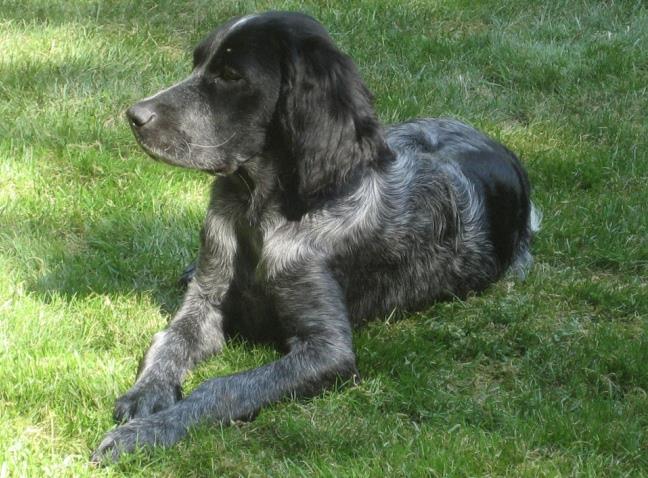
People usually look up the Epagneul Bleu de Picardie when they’re weighing up a rare gundog as a family companion: how big it really gets, what its coat is like to live with, and whether it will cope in a typical home when it’s not working in the field.
The details matter. Size affects housing and travel. Temperament affects kids, cats, and visitors. Health claims can be quietly misleading. What follows sticks to the breed standards and the lived-in realities: what the dog looks like, how it behaves when it’s well managed, and what care tends to keep it steady and sound.1, 2
At a glance
- Type: Continental pointing dog (spaniel type), traditionally a hunting gundog1
- Height: commonly around 56–60 cm at the withers (varies by sex and standard)
- Build: medium-sized, athletic, made for long days outdoors
- Coat: flat to slightly wavy with feathering; distinctive blue-grey “roan” effect with black patches2
- Exercise needs: high—best with daily vigorous activity plus training games
What the breed is, in plain terms
The Epagneul Bleu de Picardie (Blue Picardy Spaniel) is a French gundog developed for locating and working game birds in wet, rough country. In the home, that background shows up as stamina, a strong nose, and a dog that tends to settle best when it has something to do each day—walking, retrieving, scent work, obedience, or structured play.1
History and origin
The breed comes from the Picardy region of northern France and is closely related to the Epagneul Picard (Picardy Spaniel). The “blue” coat is part of what separates it as a distinct type, and modern descriptions commonly link that colouring to historic crosses with English Setters in the region.2
Physical characteristics and appearance
In silhouette, the Epagneul Bleu de Picardie is a practical athlete: deep enough through the chest for stamina, strong through the back, and built to keep moving rather than sprint in short bursts. The coat is flat or slightly wavy with feathering on the ears, legs, and tail.3
Colour is the signature: a grey-and-black speckling that reads as “blue” from a distance, usually with black patches.3
Height, weight, and the “medium-sized” reality
Most adults sit in the medium sporting range. Depending on sex and the reference used, you’ll see heights roughly in the 56–61 cm bracket, and weights often around 18–25 kg.3, 4
Tail: not typically docked in the breed standard
Some older online summaries mention docking, but the breed standard describes a natural tail reaching approximately to the hock and carried straight.3
Personality and temperament
Well-bred, well-exercised dogs are typically steady and people-focused: responsive to their handler, affectionate with family, and keen to participate. The breed’s working design favours cooperation at a distance, which often translates to a dog that checks in regularly outdoors once it has been trained and given enough running room.6
Like many gundogs, they can be sensitive to harsh handling. Calm, consistent training tends to produce a softer, more reliable dog than heavy correction—especially when you pair learning with movement and scent-based games.
Children and other animals
Many Epagneul Bleu de Picardie dogs live comfortably with children and other dogs when introduced thoughtfully and supervised, but they’re still sporting dogs with drive. Early socialisation and clear household routines matter more than optimism.5
Training and exercise needs
This is not a “short walk around the block” breed. The Epagneul Bleu de Picardie was shaped for hours of purposeful movement, often in damp paddocks and reed beds. Without enough daily activity, boredom behaviours can creep in: pacing, digging, chewing, and noisy scanning at fences.
What “enough exercise” usually looks like
- Daily aerobic movement: long walks at a real pace, off-lead runs where safe, or structured retrieving
- Brain work: scent games, obedience, retrieving to hand, place training, and recall practice
- Field safety basics: reliable recall, stop/steady cues, and polite lead manners before you trust freedom near roads or wildlife
Grooming and coat care
The coat is not extreme, but it is feathered and can hold burrs and grass seeds after a run. Weekly brushing is usually enough for day-to-day care, with extra attention after hikes—especially the ears, feet, armpits, and feathering along the legs and tail.
Long, drop ears can reduce airflow and trap moisture. Keeping ears clean and dry after swimming or wet weather is a simple habit that can reduce the chance of recurrent ear trouble.7
Health: what’s known, and what to be cautious about
Some write-ups claim the breed has “no major health concerns”. That’s too absolute for any dog. Like other medium-to-large sporting breeds, the Epagneul Bleu de Picardie can be affected by problems that show up across many lines worldwide, including hip dysplasia and certain eye conditions. Risk varies by breeding and by the care a dog receives across its life.6
More common issues to ask about
- Hip dysplasia: ask what hip screening has been done on the parents and how results are shared with buyers6
- Eye conditions: ask about eye examinations in the breeding dogs (and what the breeder has seen in their lines)6
- Ear infections: not inevitable, but more likely in many drop-eared breeds—especially dogs that swim often7
Choosing a puppy (or adult dog) responsibly
With a rare breed, patience is part of the process. The goal is a dog with a sound body and a workable temperament, not the fastest available litter.
- Prioritise health documentation: hip and eye screening evidence, plus a clear explanation of what the breeder does (and doesn’t) test for6
- Meet the dam if you can: look for steady handling, recovery from surprise noises, and comfort around visitors
- Ask about daily life: how pups are raised in the home, early exposure to surfaces/sounds, and how toileting and recall foundations start
- Be honest about your week: if the dog won’t get real exercise most days, a high-drive gundog may be a poor fit
Living with an Epagneul Bleu de Picardie
In the right home, the breed is quietly impressive. It moves through the day with purpose, watching scent and wind, then settles close once the work is done. The best outcomes come from matching that nature with a routine that includes movement, training, and time with people—not just a backyard.
How big does an Epagneul Bleu de Picardie get?
Most adults are medium-sized, commonly around 56–61 cm at the withers, with many dogs in the high-teens to mid-twenties kilograms depending on sex and build.3, 4
Is the Epagneul Bleu de Picardie easy to train?
Often, yes—especially when training is calm, consistent, and built around movement and scent-based rewards. They’re sporting dogs bred to work with a handler, but they still need practice and structure to be reliable off-lead.
Does the breed have known health problems?
No breed is “problem-free”. Reported concerns include hip dysplasia and some eye conditions, and drop ears can make ear care important—particularly for dogs that swim or live in humid areas.6, 7
References
- Fédération Cynologique Internationale (FCI): Epagneul Bleu de Picardie (Breed nomenclature entry)
- Fédération Cynologique Internationale (FCI): Épagneul Bleu de Picardie (Entrée de nomenclature, français)
- United Kennel Club (UKC): Epagneul Bleu de Picardie Breed Standard
- Wisdom Panel: Blue Picardy Spaniel (height, weight, lifespan overview)
- Dogs Australia (Australian National Kennel Council): Breed Standards index (general guidance on breed standards)
- Vetstreet: Blue Picardy Spaniel (health overview and potential issues)
- PetGuide: Blue Picardy Spaniel (care notes including ear infections and exercise needs)
- United Kennel Club (UKC): Epagneul Picard Breed Standard (related breed context)
- Fédération Cynologique Internationale (FCI): Epagneul Picard (related breed entry)

Veterinary Advisor, Veterinarian London Area, United Kingdom