
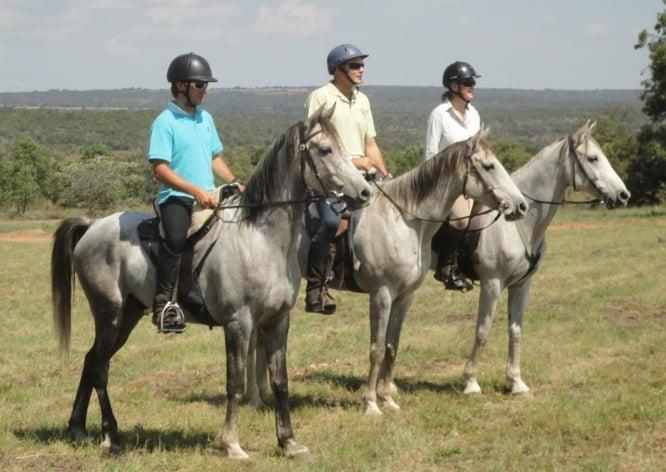
People usually find endurance riding when they’re weighing up whether their horse is suited to long-distance events, trying to understand how vet checks work, or deciding what sort of training and gear is actually needed before entering a ride. The stakes are simple: good preparation keeps horses sound and riders safe; poor planning can end a promising season early.
Endurance riding in Australia sits somewhere between a long bush ride and a tightly supervised athletic test. Distance matters, but the horse’s recovery and way of going matter more, and the rules are built around that.1, 2
What endurance riding is (in Australia)
Endurance riding is a sport of measured distance, managed pace, and repeated veterinary assessment. Horses and riders travel marked routes across trails, fire roads, station tracks and forest lines, returning to ride control for compulsory checks that decide whether the horse is fit to continue.1, 2
Rides run at many distances. In the Australian endurance system, events range from shorter introductory options through to the classic 160 km “one day” championship distance.1, 6
How endurance riding developed
From practical travel to organised sport
Long rides began as necessity: moving people, stock and messages across country. Modern endurance riding took shape as organised competition in the mid-20th century, with the Western States Trail Ride in California—better known as the Tevis Cup—running annually from 1955 and often cited as the oldest modern endurance ride.7
How the sport took root in Australia
Australian endurance, as an organised sport, traces back to 1966. Reports of the Tevis Cup reached local riders, and interest coalesced around the idea of a 100-mile ride conducted under veterinary supervision. The Tom Quilty Gold Cup emerged from that early period and remains the best-known Australian championship event.1
The iconic Australian rides
The Tom Quilty Gold Cup (160 km)
The Tom Quilty Gold Cup is Australia’s premier 160 km endurance ride. It began in 1966 and was modelled on the Tevis Cup concept, with the trophy funded by a donation from Tom Quilty after the idea was championed by R. M. Williams and other early organisers.1
The Shahzada Memorial Endurance Test (400 km over five days)
The Shahzada is widely regarded as Australia’s toughest endurance test: a 400 km multi-day marathon, typically run as 80 km per day for five days, based around St Albans in New South Wales.5, 6
Rules, vet checks, and what “fit to continue” means
Endurance is structured around ride control. Horses are assessed before the start and at designated points along the course. The aim is to detect fatigue, dehydration, heat stress, lameness and metabolic trouble early—before it becomes an emergency.2, 8
What gets checked
At Australian endurance rides, a typical examination includes the basics—temperature, pulse (heart rate) and respiration—alongside broader clinical observations. Heart rate limits vary by ride type and rules, and are used as a practical measure of recovery at vetting.2
For context, the Australian Endurance Riders Association’s vetting guidance describes maximum heart rate thresholds used in different settings (including 55 bpm and 60 bpm limits, with a 64 bpm limit in certain FEI dual-event circumstances when invoked).2
The demands on horse and rider
What the horse needs physically
Successful endurance horses tend to be efficient movers with strong hooves, sound limbs, and the ability to recover quickly after effort. Conditioning builds the cardiovascular system and strengthens bone and soft tissue gradually, so the horse can cope with repeated kilometres on mixed surfaces.
What the rider needs
Riders need steady balance, patient pacing, and the ability to read small changes—stride length, willingness to drink, a dullness in the eye, an unevenness that wasn’t there an hour ago. Endurance rewards the quiet decision: slow early, cool properly, and protect the finish.
Training and preparation
Conditioning principles that hold up
- Build time on the track, not hero kilometres. Increase distance or speed in small steps so tendons, ligaments and hooves adapt.
- Train on the surfaces you’ll compete on. Sand, gravel, hardpack and hills all load the body differently.
- Practise ride-control routines. Untacking, cooling, presenting for vetting, and getting the horse eating and drinking are skills, not afterthoughts.
Pre-ride logistics
Good endurance rides run on planning: transport that doesn’t leave the horse flat before the start, familiar feeds, enough water, and gear that has already done long hours without rubbing. It’s also worth practising how you’ll cool the horse and offer fluids, because heat management can decide the day as surely as fitness.9
Horse care: hydration, electrolytes, and common problems
Long-distance exercise shifts fluid and salts. Horses sweat heavily, and equine sweat contains electrolytes; over hours, losses can become significant, especially in hot conditions. Dehydration and electrolyte imbalance are among the major risks endurance vets watch for, because they can tip into metabolic trouble if missed.8
A veterinary review of endurance horses notes that substantial fluid losses can occur during endurance exercise in hot environments, and that prolonged work leads to large sodium, chloride and potassium losses in sweat—exactly the kind of imbalance vet checks are designed to pick up early.8
For everyday management, aim for a steady, familiar approach: consistent access to clean water, a balanced ration, and electrolyte use that matches the horse’s work and heat load. Sudden “loading” without a plan can backfire, especially if the horse is already short on fluids.9
Equipment and gear that matters
Endurance gear is mostly about preventing small problems from becoming ride-ending problems. The essentials are plain:
- Saddle fit and pad choice that stay stable for hours and don’t create pressure points.
- Simple, comfortable bridle set-up that suits the horse’s way of going.
- Rider helmet and sensible clothing for heat management and fatigue.
- Spare parts (girth, reins, boot straps) and a basic repair kit at ride control.
Technology can help—GPS for navigation and pace, and heart-rate monitoring for training—but it doesn’t replace the old skill of watching the horse’s breathing, sweat pattern and attitude as the day unfolds.
Safety and risk management
Endurance risks are rarely dramatic at first. They begin as small deviations: a horse that doesn’t drink, a recovery that’s slower than usual, a slight shortening on one fore. The safest riders treat those signals as information, not inconveniences.
- Know the conditions. Heat, humidity, wind and ground firmness change what is reasonable on the day.
- Cool early and properly. Effective cooling is an active skill, especially in warm weather.9
- Respect the vetting outcome. “Fit to continue” is the centre of the sport, not a hurdle to argue with.2
The endurance community in Australia
Australian endurance is club-driven and practical. New riders often start by volunteering at ride control, learning how the day runs: how horses present at vetting, what good recovery looks like, and how experienced crews keep everything calm and efficient.
If you’re new, look for shorter distances first, focus on safe completion, and treat each ride as fieldwork. The horse will tell you what the next step should be—usually in the first ten minutes after you untack.
References
- Australian Endurance Riders Association (AERA) – About the Tom Quilty Gold Cup
- Australian Endurance Riders Association (AERA) – Vetting guide: The Examination (TPR and heart rate limits)
- Tom Quilty Gold Cup official archive – About the Tom Quilty (history and background)
- Tevis Cup (Western States Trail Ride) – About the Ride
- Shahzada 400 – Official site (event details and dates)
- Endurance NSW (NSW Endurance Riders Association) – Overview including ride distances and the Shahzada
- Tevis Cup – The Ride (history and endurance ride context)
- Fluid and electrolyte balance in endurance horses (review) – PubMed
- Horses and People (Australia) – Tips for exercising horses safely in summer (cooling and electrolyte guidance)

Veterinary Advisor, Veterinarian London Area, United Kingdom