
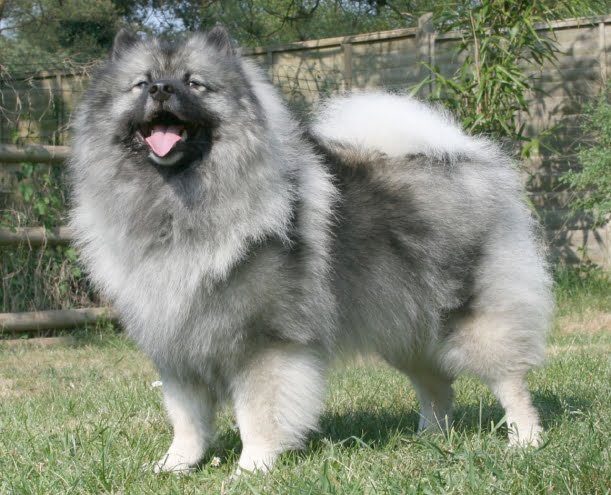
People usually start searching for a Keeshond when they’re weighing up a puppy, trying to match a breed to their household, or checking whether that dense “spectacles” face will come with heavy grooming and particular health risks. The details matter: coat care affects daily life, and inherited conditions can shape both costs and quality of life.
The Keeshond (often called the “Dutch Barge Dog”) is widely regarded as the national dog of the Netherlands, with a long history as a watchful companion on boats and in townhouses.1, 2 Below is a clear, practical portrait of the breed—what they look like, how they tend to behave, and what responsible owners and breeders keep an eye on.
Quick facts: Keeshond
- Breed name: Keeshond (also known as Wolfspitz in some systems; “Dutch Barge Dog”)1, 2
- Origin: Netherlands (closely tied to German Spitz varieties in international breed standards)3
- Typical height: around 43–46 cm (UK Kennel Club ideal) or 49 cm ± 6 cm (FCI Wolfspitz/Keeshond)3, 4
- Typical weight: about 16–20 kg (varies with sex and build)1
- Coat: thick double coat; harsh, straight outer coat over a dense undercoat; prominent ruff and plumed tail1, 2
- Colours/markings: shades of grey with black tipping and pale undercoat; distinctive facial shading often called “spectacles”2, 4
- Life expectancy: commonly 12–15 years1, 2
History and origin
Keeshonden were long kept on Dutch barges and waterfronts as steady watchdogs and companions—present in the working flow of canals and rivers, close enough to notice what changed overnight.2
The breed’s name is commonly linked to 18th-century Dutch political unrest. One explanation ties it to Cornelis (“Kees”) de Gyselaer and the Patriot movement, where the dog became a recognisable emblem; when the House of Orange returned to power, the breed’s popularity reportedly fell sharply before later revival.2, 5
Physical characteristics
A Keeshond is a medium-sized spitz: compact, squarely built, with a fox-like head, small triangular ears, and a tail carried tightly curled over the back. The coat stands off the body, with a thick neck ruff and a “trousers” effect on the hindquarters—more pronounced in many males.1, 4
Those “spectacles” aren’t a myth. The lighter shading around the eyes with darker lines and tipping creates a crisp, alert expression that’s strongly associated with the breed type in major standards and descriptions.2, 4
Height and weight: why you’ll see different numbers
Measurements depend on which registry’s standard you’re reading. The UK Kennel Club lists ideal heights of 46 cm for dogs and 43 cm for bitches, while the FCI standard for Wolfspitz/Keeshond gives 49 cm ± 6 cm (a wider range).3, 4 In real homes, you’ll see healthy adults that sit comfortably within those bands.
Temperament and behaviour
Keeshonden are typically attentive, people-oriented dogs—watchful without being built for confrontation. They tend to stay close to their household rhythms, tracking arrivals, new noises, and any shift in routine that might be worth announcing.2
They’re often described as lively and affectionate, and many do best when they’re included in day-to-day life rather than left to entertain themselves. As with any breed, temperament is shaped by early socialisation, training, and the individual dog in front of you.
Training and exercise needs
Keeshonden are commonly considered trainable and responsive, especially with calm, consistent handling and reward-based methods. Short sessions suit them well—enough repetition to build habits, not so much drilling that everyone loses interest.
Exercise needs are moderate. Most adults do well with daily walks plus a little structured play and mental work (sniffing games, basic obedience, simple agility-style tasks at home). Their thick coat can make hot weather feel heavier, so aim for cooler parts of the day and keep water available.
Grooming and coat care
The Keeshond coat looks extravagant, but it behaves predictably if you keep up with it. The undercoat sheds heavily, usually in seasonal waves, and the job is to stop loose undercoat from compacting into mats near the skin.
- Brush and comb to the skin at least twice a week; increase frequency during heavy shedding periods.2
- Avoid unnecessary clipping—breed standards expect a natural outline (light tidying on feet can be acceptable).4
- Bathe only when needed, rinse thoroughly, and dry properly; damp undercoat is where knots and skin irritation can start.
Health concerns to know about
Keeshonden are often described as generally healthy, but several inherited or breed-associated conditions are documented. The responsible approach is simple: know what exists, ask what’s been screened, and keep routine veterinary checks boring and regular.1
Orthopaedic issues
- Hip dysplasia: an abnormal development of the hip joint that can lead to pain and mobility problems. Screening of breeding dogs is commonly recommended in many breeds, including those where hip dysplasia is reported.1, 6
- Patellar luxation: the kneecap slips out of its normal groove, which can cause skipping gait and, over time, joint wear and discomfort.1, 7
Eye disease (progressive retinal atrophy)
Progressive retinal atrophy (PRA) is an inherited degeneration of the retina that causes gradual vision loss and can progress to blindness. It’s typically not painful, and many dogs adapt well once owners keep the home environment consistent and safe.8, 9
Other conditions sometimes reported
Breed references also mention issues such as epilepsy and endocrine conditions (for example hypothyroidism), though risk varies between lines and regions. Ask breeders for health testing results and family history rather than relying on reassurance alone.1
What to ask a breeder (or rescue) before committing
- What health screening has been done on the parents (hips, knees/patellas, eye exams or DNA tests where relevant)?
- Can you see documentation, not just verbal assurances?
- What are the most common issues they’ve seen in their lines, and at what ages?
- How are puppies raised and socialised (noise, surfaces, visitors, handling)?
Keeshond in society and popular culture
The Keeshond’s reputation as a Dutch emblem is part history and part public memory: a barge dog, a watchful town companion, and a political symbol that lingered long after the pamphlets faded. Even now, breed references continue to describe it as the national dog of the Netherlands and a symbol of Dutch patriotism.2
Choosing a Keeshond: who they suit
A Keeshond tends to suit people who like a dog that’s present—nearby, observant, and ready to join in—without needing marathon exercise. They’re less suited to households that want a low-shedding coat, or long stretches of solitude, or a dog that never comments on visitors.
References
- Encyclopaedia Britannica — Keeshond (size, lifespan, history and care)
- American Kennel Club — Keeshond (“Smiling Dutchman”, history and background)
- Fédération Cynologique Internationale (FCI) Standard No. 97 — German Spitz (includes Wolfspitz/Keeshond) size guidance
- The Kennel Club (UK) — Keeshond breed standard (size, colour, coat presentation)
- American Kennel Club Archives — Keeshond Club of America records (historical notes)
- Orthopedic Foundation for Animals (OFA) — Hip dysplasia overview
- Australian Shepherd Health & Genetics Institute — Patellar luxation (overview and implications)
- Cornell University College of Veterinary Medicine — Progressive retinal atrophy (PRA) overview
- UC Davis Veterinary Genetics Laboratory — PRA-prcd (inheritance and clinical description)

Veterinary Advisor, Veterinarian London Area, United Kingdom