
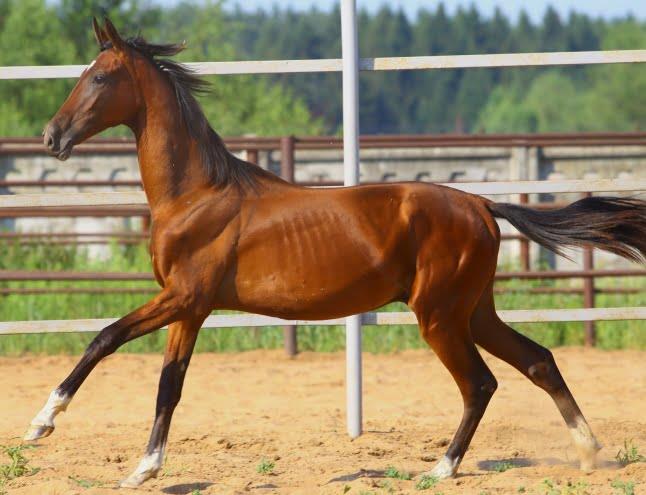
People usually look up the Don Horse when they’re trying to identify a solid, rideable Russian breed they’ve seen listed as “Russian Don”, “Don”, or “Donskaya” — or when they’re checking whether it’s the same thing as the Cleveland Bay (it isn’t). Getting the name wrong can lead you down the wrong track on temperament, size, and what sort of work the horse is actually suited to.
The Don is a steppe-bred riding and harness horse shaped by hard country, cavalry use, and long-distance endurance. What follows is a clear, practical portrait of the breed: where it came from, what it tends to look like, how it usually behaves under saddle, and what to consider if you’re caring for one.
Breed name: Don Horse (Russian Don / Donskaya)
Origin: Don River steppes, southern Russia1, 2
Typical height: about 155–163 cm (15.1–16 hh)3
Common coat colours: chestnut, bay, black, grey (many lines are noted for chestnut with a gold sheen)4
Temperament (general): even, trainable, hardy; often described as steady and willing3
Common uses: riding, driving/harness, endurance-style work; seen in general sport-horse disciplines depending on training and type3
Other names: Russian Don, Don, Donskaya
Don Horse vs Cleveland Bay: not the same breed
The Cleveland Bay is an English breed with a very specific “bay-only” identity and a different studbook tradition. The Don Horse is a Russian steppe breed that comes in several solid colours and was developed for cavalry, riding, and harness work in southern Russia.1, 3
Origins and history: a steppe horse made for distance
The Don breed developed in the steppes around the Don River and its tributaries, built from local south Russian steppe horses and shaped by crossing in “oriental” and other riding-horse blood over time.1
Intensive breeding in the region expanded in the late 18th century, with organised selection gathering pace through the 19th century; by the 20th century, the modern Don type had emerged and was widely used as a cavalry mount, particularly associated with Cossack forces.1, 2
One point worth correcting from the draft text you were given: the Don Horse did not originate on the Iberian Peninsula. Its cradle is southern Russia, around the Don River basin.1, 2
What a Don Horse looks like (and why)
The Don is usually a medium-sized, clean-limbed horse with a long, straight back and a long, sloping croup — a frame that tends to support steady, efficient travel over ground rather than explosive, short-burst power.4
Many descriptions note a refined head, a well-formed neck, and a wide, deep chest. Some sources also mention that the shoulder can be relatively straight in some individuals, which may shorten stride length compared with more modern warmblood types.4, 3
Size
Most Don horses stand around 15.1 to 16 hands (roughly 155–163 cm), though individuals can vary depending on bloodlines and management.3
Coat colours
Solid colours are typical. Chestnut, bay, black, and grey are all seen, and the breed is particularly associated in many references with chestnut coats that show a gold sheen in sunlight.4
Temperament and behaviour under saddle
Well-bred, well-handled Don horses are often described as even-tempered, hardy, and capable of staying mentally settled while working — a trait that fits their history as horses expected to travel, stand, and work in groups and in difficult conditions.3
Like any breed, the individual matters. Early handling, workload, pain, feed, and routine can shift behaviour more than a label ever will.
Common uses: riding and driving
Historically, the Don’s work sat between saddle and harness. That still shows today: the breed is commonly described as suitable for under-saddle work and for driving, including traditional multi-horse harness arrangements in its home region.3, 4
In modern settings, you’ll see Dons in general riding, pleasure work, and a spread of sport disciplines depending on training and individual ability. Their steadiness and durability can suit long, consistent work when conditioning is built carefully.
Breeding and training: what matters (and what to avoid)
Good Don horses are the product of selection for soundness, endurance, and adaptability — not quick fixes. The sensible approach to training is plain and incremental: clear cues, consistent repetition, and enough rest for muscle and tendons to catch up with the horse’s fitness.
- Start slow. Build base fitness first, especially if the horse is coming off pasture or has had time off.
- Protect the legs. Increase distance, speed, and jumping demands gradually to reduce avoidable strain injuries.
- Keep handling steady. Many horses learn fastest with calm repetition and predictable boundaries.
Care, health, and nutrition basics
The Don is known as a hardy breed, but “hardy” doesn’t mean “maintenance-free”. Like all horses, they still need routine dentistry, hoof care, parasite control appropriate to your region, and prompt assessment of lameness, weight loss, or recurrent colic signs.
Nutrition is best anchored in forage: consistent access to suitable pasture and/or hay, with concentrates used only when workload, body condition, and health status genuinely call for it. Clean water and salt access matter every day.
How long do Don Horses live?
There isn’t a single, universally published lifespan figure specific to the Don in major breed registries available online, but a healthy adult horse commonly lives into its mid-to-late 20s, and 25–30 years is a reasonable expectation with good care for many breeds and types.5
Setting the record straight on a few common claims
- “The Don Horse is Iberian.” No — it is a Russian breed developed in the Don River steppes.1, 2
- “The Don Horse is the Cleveland Bay.” No — different origins, different breed identity and typical colour range.1, 3
- “The Don Horse is an integral part of Australian culture.” The Don is best documented as a Russian breed; broad claims about cultural importance in Australia aren’t well supported in reputable breed references and should be treated cautiously unless tied to specific, verifiable Australian records.1, 3
Are Don Horses good for beginners?
Some can be, especially if they’re older, well-handled, and genuinely steady. The safer question is always about the individual horse’s training, soundness, and suitability for the rider’s skills.
Do Don Horses make good endurance horses?
The breed is strongly associated with stamina and distance ability in multiple references, reflecting its steppe background and cavalry history.3, 4
What colours do Don Horses come in?
Commonly chestnut, bay, black, and grey, with many lines known for chestnut with a gold sheen.4
References
- FAO – Animal Genetic Resources of the USSR: Don (Donskaya)
- MDPI Genes (2023) – The Genetic Diversity of Horse Native Breeds in Russia (Don breed background)
- Oklahoma State University – Breeds of Livestock: Russian Don Horses
- Wikipedia – Russian Don (overview of history, characteristics, and use)
- Chewy Education – How long do horses live? (general lifespan context)

Veterinary Advisor, Veterinarian London Area, United Kingdom