
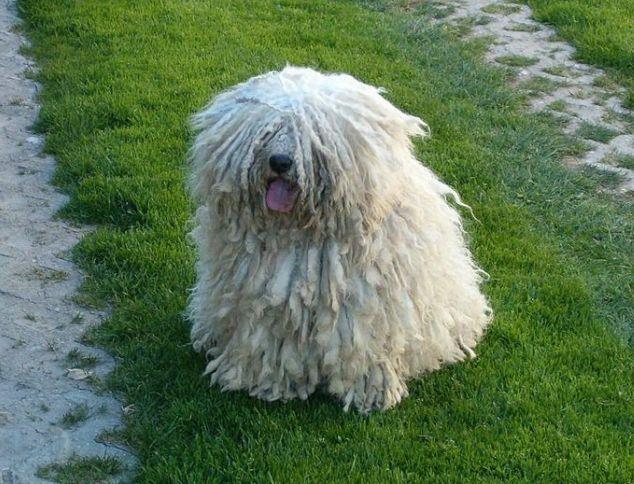
Most people land on the Puli because they’re weighing up a breed that looks like a walking mop: will that corded coat be manageable, and will the dog fit daily life?
The answer is that the Puli is a bright, athletic herding dog from Hungary, with a coat that can be kept corded or brushed out. It suits people who enjoy training and movement, and who don’t mind regular coat work—especially during the months when cords begin to form.1, 2
Puli at a glance
- Origin: Hungary4, 5
- Size (Dogs Australia/ANKC standard): Dogs 40–44 cm; bitches 37–41 cm1, 2
- Weight (Dogs Australia/ANKC standard): Dogs 13–15 kg; bitches 10–13 kg1, 2
- Coat: dense, weatherproof; naturally forms cords if left to develop1, 4
- Recognised colours (Dogs Australia/ANKC standard): black, grey (various shades), white, and fawn (“fako”) with details described in the standard1, 2
History and what the Puli was built to do
The Puli developed as a working herding dog in Hungary, valued for quick footwork, sharp attention to movement, and the ability to cope in rough weather.4, 5
That background still shows up in everyday life. Many Pulis keep a strong tendency to circle, chase, and control motion—sometimes aimed at children, cyclists, or other pets if the instinct isn’t given a safer outlet.3, 4
Appearance and physical characteristics
The corded coat (and why it exists)
The Puli’s coat is a double coat that can cord naturally, forming rope-like strands. On a mature dog, cords can become very long, even reaching the ground.1, 4
Cording doesn’t happen overnight. The texture shifts as the dog matures, and the cords develop over time rather than appearing fully formed in puppyhood.6
Size
Pulis are compact, squarely built dogs—medium-sized, but not delicate. In the Dogs Australia/ANKC standard, adult height is typically 40–44 cm for dogs and 37–41 cm for bitches, with weight commonly 13–15 kg for dogs and 10–13 kg for bitches.1, 2
Temperament and day-to-day behaviour
The Puli is known for intelligence, alertness, and high energy. In a home environment, this often looks like a dog that watches everything, learns routines quickly, and gets restless if life becomes repetitive.4, 5
They’re often devoted to their people and can be strong watchdogs. Early, steady socialisation helps the dog read new situations without defaulting to suspicion or overreaction.4, 7
Children and other animals
Many Pulis can live well with children and other pets, but supervision matters—especially with fast-moving kids—because herding behaviour can show up as chasing, circling, or heel-nipping. Good management and training usually reduce this to something safer and more appropriate.3, 4
Training and exercise needs
Pulis tend to thrive when they’re given both physical exercise and a job for the brain. Training isn’t just “nice to have” with this breed; it’s a practical way to turn reactivity, barking, or herding habits into something more controlled.
Training approach
Reward-based training (positive reinforcement) is widely recommended as an effective and humane approach. It builds reliability without leaning on techniques that can cause fear or pain, which can make behaviour problems harder to live with.7
Exercise and mental work
A Puli is typically happiest with daily movement plus something to think about: short training sessions, scent games, agility-style play, structured fetch, or herding/obedience sports if you enjoy that world.4, 5
Health and lifespan
Many sources describe the Puli as a generally robust breed, commonly living into the early-to-mid teens with appropriate care and sensible breeding practices.4
Like many medium breeds, issues sometimes discussed include hip and eye conditions. The most useful “prevention” step is practical rather than dramatic: choose breeders who health test, and keep regular vet checks so small problems are caught early.
Grooming and coat maintenance
The Puli’s coat is the headline feature—and also the main ongoing commitment.
Corded versus brushed
A Puli coat can be kept corded or brushed out, but either way it needs consistent attention to avoid matting. The most hands-on period is often when cords begin forming and need to be separated by hand rather than left to felt into a solid mass.3, 4
Bathing and drying
A heavily corded coat holds water and can take a long time to dry. If you bathe a Puli, plan for thorough drying to reduce skin irritation and odour that can develop when moisture stays trapped close to the skin.8
Diet and nutrition
Feed a complete and balanced diet suited to your dog’s life stage, size, and activity level, and adjust quantities based on body condition rather than the label alone. If you’re unsure, your vet is the best person to tailor amounts and monitor healthy weight over time.9
Treats add up quickly in a clever, highly trainable breed. Keep them small, count them as part of the day’s intake, and use play or praise as rewards when food isn’t needed.
Is a Puli right for you?
The Puli tends to fit best with people who enjoy active days and don’t mind a bit of daily maintenance—training, movement, and coat care. In return, you get a compact working dog with fast feet, a sharp mind, and an unmistakable silhouette in the park.4, 5
References
- Dogs Australia (ANKC) – Puli breed standard
- Dogs Victoria – Puli breed standard
- Hill’s Pet – Puli breed profile (behaviour, coat, size)
- Puli Club of America – Puli overview
- American Kennel Club (AKC) – Puli
- Purina – Puli (coat development notes)
- RSPCA Australia Knowledgebase – Reward-based dog training
- The Kennel Club (UK) – Puli (breed information and grooming considerations)
- WSAVA – Global Nutrition Guidelines

Veterinary Advisor, Veterinarian London Area, United Kingdom