
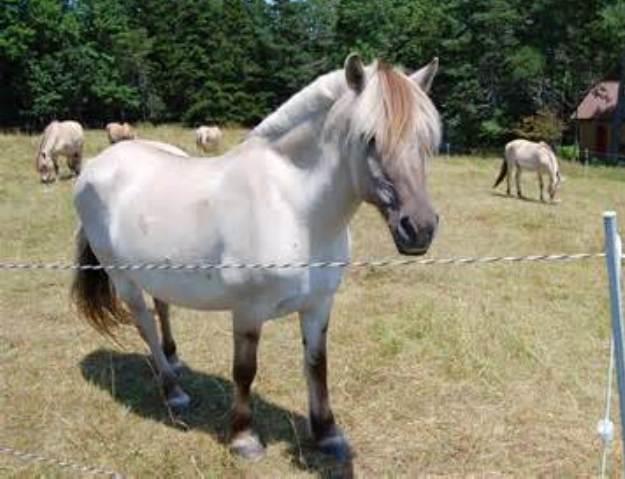
People usually look up the Norwegian Fjord Horse when they’re trying to identify a dun horse with that crisp dorsal stripe, or when they’re weighing up whether a Fjord will suit their riding, driving, or family set-up. Size, temperament and feeding are the sticking points—get them wrong, and you can end up with an overweight “easy keeper”, sore feet, and a horse that’s doing less than it could.
The Fjord is small, strong, and practical in the way mountain-bred horses often are. Below is a clear snapshot of what a Fjord typically looks like, how it moves, what it’s like to live with, and the care choices that tend to matter most.
Norwegian Fjord Horse at a glance
- Origin: Norway1
- Height: commonly around 135–150 cm at the withers (about 13.1–14.3 hands), with breeding recommendations often sitting in that band1, 2
- Weight: typically 400–500 kg1
- Colour: always dun, with recognised shade variations; primitive markings are expected (dorsal stripe, leg barring, darker mane centre)1, 2
- Temperament: generally calm, willing and steady; often chosen for novice riders and varied work2, 3
- Common uses: riding, driving/harness, farm and pleasure work; often seen in therapeutic and education settings because of their steadiness2, 4
- Typical lifespan: commonly around 20–30 years (many sources cite mid‑20s to around 30 with good care)4, 5
History and origin
The Fjord comes from western Norway’s fjord country, shaped by steep ground, wet cold winters, and the everyday demand for a horse that could pull, carry, and keep going on modest feed.1, 2
It’s widely described as one of the oldest and “purest” horse breeds, with a long record of use as a farm and utility horse in Norway. The romantic Viking stories circulate widely, but the practical truth is simpler and more useful: generations of selection favoured sure-footedness, toughness, and an even temperament.2, 3
Physical characteristics
Build
Fjords are compact and powerfully put together—short-coupled, broad through the body, and strong in the neck and hindquarter. They often look like they can “carry more horse than they measure”, which is why their height can surprise people when they meet one in person.2
Coat colour and markings
A Norwegian Fjord Horse is always dun. Within that, the shade can range from the common brown dun through to lighter and red or grey-toned dun variations, but the primitive markings stay: a dark dorsal stripe (continuing through the mane and tail), and often dark bars on the legs.1, 2
Mane and dorsal stripe
The upright, traditionally trimmed mane isn’t just a style choice. It exposes the darker central stripe of the mane (often described in breed material as the “midtstol”), which visually ties into the dorsal stripe along the back and into the tail.2
Gait and movement (and a quick correction)
Fjords are not a naturally gaited breed, and they do not have a special “four-beat trot”. A trot is a two-beat gait in horses. Fjords are typically described as straight, true and balanced at walk, trot and canter—comfortable to ride because they’re steady and well put together, not because they have an extra gait.3
Temperament and behaviour
The Fjord’s reputation is built on consistency: usually calm, people-oriented, and sensible in new places. That doesn’t mean they’re robots. Like any horse, they vary by individual, handling and training, but the breed is widely valued for being manageable and willing across a range of riders and jobs.2, 4
Family suitability
Many Fjords do well in family settings because they’re often steady and not overly reactive, and their size can feel less intimidating than taller breeds. Safe horses are made through good training and good routines, though—no breed replaces supervision, groundwork, and sensible riding practices.4
Training and exercise needs
Fjords usually respond best to calm, consistent training. Keep sessions short enough that the horse stays attentive, and varied enough that it doesn’t switch off. Their strength makes them capable, but it also means they benefit from correct schooling so they don’t learn to lean, pull, or use their body inefficiently.
Daily movement matters. A Fjord that only stands in a paddock can gain weight quickly, which then raises the risk of metabolic trouble and laminitis. Regular riding, driving, hill work, poles, and in-hand work all suit the breed well, provided the horse is sound and conditioned gradually.6
Health and lifespan
Many Fjords live well into their twenties, and it’s not unusual to see them working lightly later than that if they’ve been kept in good weight and good feet.4, 5
Weight management and “easy keeper” risks
Fjords are often easy keepers, which is a gift until it isn’t. Over-feeding and rich pasture can push some horses towards insulin dysregulation and equine metabolic syndrome (EMS), which is strongly associated with laminitis risk.6, 7
If your Fjord gains weight easily, discuss an EMS and laminitis risk plan with your vet. Management commonly focuses on lowering overall calories, restricting pasture access, and choosing low non-structural carbohydrate (NSC) forage (often aiming for <10% NSC on a dry-matter basis for EMS-affected horses).7, 8
Feeding: what tends to work for Fjords
Most Fjords do best on forage-first diets: good-quality hay and/or controlled grazing, plus a balancer or mineral supplement if needed to cover vitamins and minerals. Grain is often unnecessary unless the horse is in harder work or has a specific dietary need identified with your vet or equine nutritionist.7, 8
Practical feeding checks
- Weigh the feed. “Looks about right” is how easy keepers drift upwards.
- Be cautious with lush pasture. Pasture can drive sugar intake and weight gain quickly in at-risk horses.6, 9
- Consider forage testing. If EMS/ID is a concern, knowing the NSC of your hay is more useful than guessing.7
- Use slow-feeding tools where appropriate. They help mimic grazing and reduce binge eating, especially when total intake is restricted.8
Grooming and maintenance
Coat and mane care
Seasonal shedding can be heavy. A curry comb and steady, unhurried brushing does most of the work. The mane is often trimmed to stand upright and show the darker centre stripe, but it can also be left more natural if you prefer—just keep it clean, untangled, and comfortable under tack.2
Hoof care
Regular farrier work is non-negotiable. Many horses are trimmed or shod roughly every six to eight weeks, though the right interval depends on growth rate, season, workload and footing.10
Final thoughts
A Fjord is a small horse with a working-horse body and a quietly practical nature. If you feed with restraint, keep the feet on schedule, and give them steady work, they tend to repay it with years of sound, uncomplicated partnership—on the trail, in harness, and around the yard.
References
- NordGen — Norwegian Fjord Horse
- Norsk Fjordhestsenter — Description of the breed
- EquiSearch — Norwegian Fjord Horse Breed
- Cosley Zoo — Norwegian Fjord
- WebMD — Meet the Norwegian Fjord Horse: History and Traits
- UC Davis — Equine Metabolic Syndrome
- Utah State University Extension — Managing Equine Metabolic Syndrome
- Merck Veterinary Manual — Equine Metabolic Syndrome
- Rutgers NJAES — Non-structural Carbohydrates and Grazing Horses
- Wikipedia — Horse management (hoof care intervals)

Veterinary Advisor, Veterinarian London Area, United Kingdom