
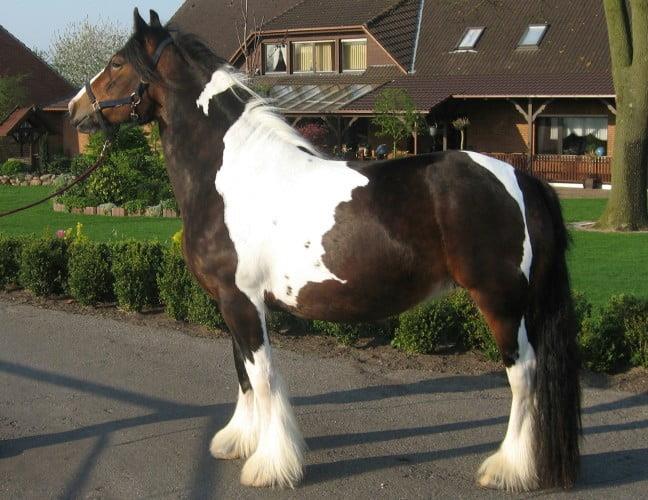
People usually search for Gypsy Vanner horses when they’re trying to identify a breed they’ve seen in photos, check what “normal” size and colours look like, or work out whether one would suit their home and riding plans. The details matter: a calm, compact cob with heavy feathering is delightful to live with, but it also comes with real commitments around skin care, weight management, and hoof maintenance.
Below is a clear, practical guide to the Gypsy Vanner (also widely called the Gypsy Cob or Irish Cob): where the type came from, what the breed standards usually describe, and how to care for the hair, skin and hooves that make these horses so distinctive.
Quick facts
Origin: British Isles (often associated with Romani/Traveller breeding traditions)
Height: commonly around 13.2–15.2 hands, with some horses outside this range1, 2
Weight: often around 450–770 kg (varies with height and build)2
Coat: abundant mane and tail; heavy leg “feather” (long hair over the lower legs and hooves)3
Colour: any colour/pattern occurs; piebald and skewbald are especially common and iconic4
Temperament (typical): docile, willing, people-oriented5
Common uses: riding, driving, showing, pleasure and family horses6
Typical lifespan: often into the 20s with good care (individual variation is normal)
History and origin
The modern “Gypsy Vanner” type was developed in the British Isles as a strong, compact horse suited to pulling a vardo (traditional wagon) while remaining manageable around a busy camp and family life. Many descriptions of the breed trace the type to Romani and Traveller horsemen selecting for substance, movement, abundant hair, and a steady nature over generations.4
Because the breed developed through practical selection rather than a single early stud book, you’ll see several names in use—Gypsy Vanner, Gypsy Cob, Irish Cob, Tinker—and more than one registry and “breed standard” worldwide. Height ranges and emphasis on feathering can vary slightly depending on the organisation and region.1, 4
Physical characteristics
Size and build
Most breed standards describe a medium-height, heavy-cob build: broad through the body, with solid bone and plenty of muscle. Many registries and breed groups place the typical height around 13.2–15.2 hands, while accepting smaller and larger individuals that still match the overall type.1, 6
Mane, tail and feather
The hallmark is hair: a long mane and tail, plus thick “feather” on the lower legs that can drape over the hooves. This isn’t just decoration. It also changes day-to-day care, because damp and debris can sit close to the skin if the hair is left unchecked after wet weather or muddy paddocks.3
Colours and markings
Piebald (black-and-white) and skewbald (brown-and-white) are common and strongly associated with the look, but they’re not the whole story. Breed groups note that Gypsy horses occur in many colours and patterns, and many registries don’t require a specific colour.1, 4
Temperament and behaviour
Well-bred, well-handled Gypsy Vanners are commonly described as docile and willing—steady horses with a sensible approach to people, noise and movement. In show settings, some standards explicitly value a tractable nature and penalise aggressive behaviour, reflecting the idea that these horses should be safe and manageable in close quarters.5
Temperament still varies by individual, training and environment. A quiet nature is not a substitute for education: early handling, consistent boundaries, and calm repetition tend to bring out the best in a heavy cob type.
Training and exercise needs
Early handling and socialisation
Start with the basics—leading, standing tied, picking up feet, washing legs, and accepting clippers or pulling combs—while the horse is still young. Feathered legs and abundant mane often mean the horse will be handled more (and in fiddlier places) than many other breeds, so practical training pays off early.
Exercise and enrichment
Most Gypsy Vanners thrive on steady, moderate work: hacks, arena schooling, driving, pole work, and regular turnout. Keep an eye on fitness and body condition. Many cob types do very well on simple routines, but can gain weight quickly if calories rise while work drops.
Health considerations
Skin problems in feathered legs (mites and dermatitis)
Heavy feathering creates a sheltered microclimate around the pastern and fetlock. One common issue in feathered and draft-type horses is chorioptic mange (mites), which can cause intense itch, crusting, hair loss and thickened skin on the lower limbs. If your horse stamps, rubs the legs raw, or develops recurring scurf and crusts, a vet check and a targeted treatment plan are worth doing early.7
Weight, pasture management, and laminitis risk
Gypsy Vanners are often easy keepers. If weight creeps up, the risk of metabolic problems and laminitis rises—especially when pasture sugars spike during certain seasons or after rain. For horses that are overweight or laminitis-prone, many Australian nutrition resources recommend focusing on low sugar/starch feeding, basing the diet on suitable roughage, and using controlled grazing strategies rather than simply “feeding less of everything”.8
Grooming and maintenance (what actually works)
Daily and weekly routine
- Pick out hooves daily and check for smell, heat, stones, thrush, and rubbed skin.
- Inspect the feather down to the skin, especially after wet paddock time. You’re looking for scurf, crusts, redness, weeping skin, or lice/mites signs.
- Detangle mane and tail gently. Breakage is common if you treat thick hair like a short coat. Use your fingers first, then a comb.
Bathing and drying
Feather looks best clean, but the skin underneath does best dry. If you wash legs, rinse thoroughly and dry as much as you can—especially through the pastern and fetlock creases—so damp doesn’t linger under the hair.
Hoof care basics
Soundness starts at the ground. Most horses need regular trimming or shoeing on a schedule that matches hoof growth and wear. University extension guidance commonly suggests shoeing cycles around 6–8 weeks for shod horses, with longer intervals sometimes possible for lightly used, unshod horses depending on season and growth rate.9
Even if a Gypsy Vanner is mostly a paddock horse, don’t let the calendar drift. Long toes and imbalance can quietly build strain in joints and tendons, and feather can hide early signs of swelling.
Final thoughts
A Gypsy Vanner is built for close work with people: compact strength, abundant hair, and a temperament many owners describe as steady and kind. The same traits that draw the eye—feather, mane, easy condition—also shape the care. Keep the legs clean and dry, manage weight with a careful eye on pasture and sugar, and stay ahead of feet and skin. Done well, the breed’s quiet reliability tends to show itself in small moments: a calm stand for the farrier, a patient pull in harness, an unhurried walk home.
References
- Gypsy Vanner Horse Society (GVHS) – FAQs (size and general breed information)
- Animal Kingdom – Gypsy Cobb (height and weight range overview)
- Stillwater Farm – Gypsy Vanner breed standard (feather, mane and tail description)
- Irish Rare Breeds Society – Irish Cob (colour notes, background, and height discussion)
- The Traditional Cob Registry – Gypsy Cob breed standard (temperament description)
- Gypsy Horse Association – Breed standard (general appearance, size range, and uses)
- Merck Veterinary Manual – Mange in horses (chorioptic mange affecting distal limbs; draft-type predisposition)
- CEN Nutrition (Australia) – Laminitis in horses (diet principles; avoiding higher sugar/starch feeds)
- Utah State University Extension – Proper basic hoof care (typical trimming and shoeing intervals)

Veterinary Advisor, Veterinarian London Area, United Kingdom