
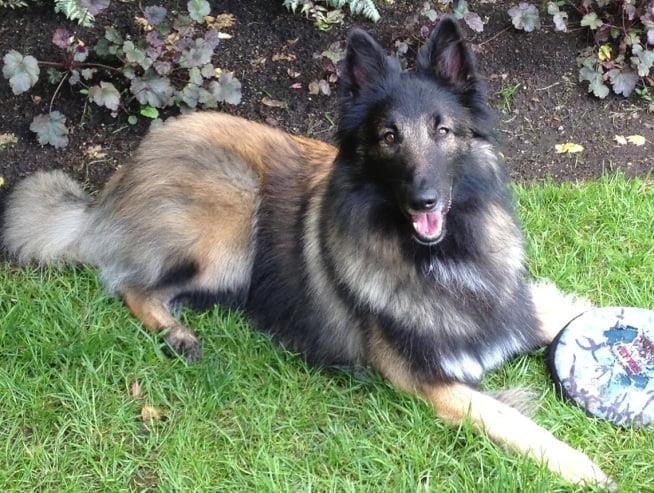
People usually start looking up the Belgian Shepherd Tervuren when they’re weighing up a high-drive dog for family life, sport, or serious work—and trying to work out what “high energy” looks like day to day. A Tervuren can be a steady, capable companion, but only when its needs are met with routine, training, and enough meaningful activity.
Below is a clear, practical picture of the breed: what it was built for, what it tends to be like to live with, and the care that matters most—exercise, grooming, training, and the health issues worth watching for.
At a glance
- Breed group: Herding (Belgian Shepherd Dog – Tervueren variety)
- Country of origin: Belgium
- Height: Ideal about 62 cm (males) and 58 cm (females), with accepted variation around that1
- Typical weight: About 25–30 kg (males) and 20–25 kg (females)1
- Life expectancy: Often around the low-to-mid teens; individual dogs vary with genetics, care, and luck
- Grooming: Regular brushing; heavier seasonal shedding6
- Exercise and enrichment: High—daily physical work plus training/mental tasks
What a Tervuren is, really
The Tervuren is one of the four recognised varieties of the Belgian Shepherd Dog. The varieties share the same underlying breed standard, differing mainly in coat type and colour.1
In motion, a good Tervuren looks built for long hours: square outline, athletic but not heavy, with an alert expression and a body that seems to hold tension lightly—ready to move, turn, and keep moving.
History and original work
Belgian Shepherds developed as versatile herding and guarding dogs in Belgium. The Tervuren variety takes its name from the region associated with early breeding and popularity, and the dogs’ traditional work demanded endurance, responsiveness, and the ability to switch between steady herding and active protection of stock.2
That heritage still shows up in modern dogs. Many Tervurens remain intensely observant, quick to learn patterns, and inclined to patrol boundaries—traits that can be brilliant in training and frustrating when under-stimulated.
Physical characteristics
Coat and colour
The Tervuren has a long, dense double coat. Colour is typically fawn to mahogany with a black overlay and a pronounced black mask; small amounts of white are tolerated on the forechest and toes under the standard.1
Build
They are medium-sized, balanced dogs: strong without being bulky, agile without looking fragile. Breed standards describe a square body profile (length close to height), built for efficient movement over distance.1
Temperament and behaviour
Tervurens are commonly described as intelligent, responsive, and highly trainable, with a tendency to be watchful and protective. These qualities can make them excellent sport and working dogs, but they’re not “self-entertaining” pets. Without enough structured activity, they may invent their own jobs—often involving barking, chasing movement, or patrolling the house and yard.
With children
Many do well with children in the home, especially when raised with them. Still, supervision matters. A herding breed may be inclined to chase, circle, or nip at moving heels, particularly during excited play. Calm routines, clear boundaries, and early training make a noticeable difference.
With other animals
Early, careful socialisation helps. Some individuals live peacefully with other pets; others may be intense around small running animals or unfamiliar dogs. Introductions should be deliberate, not rushed, and focused on calm behaviour rather than forced closeness.
Training and exercise needs
Training approach
Reward-based training suits this breed: clear cues, small steps, and consistent reinforcement. Harsh or punitive methods can create stress and reactivity, particularly in a sensitive, vigilant dog.7, 8
Early socialisation
Start early and keep it gentle: different surfaces, places, sounds, people, and friendly dogs—paired with rewards and plenty of distance when needed. The aim is a dog that can observe the world without needing to control it.
Daily activity (what “high exercise” looks like)
Most Tervurens need more than a stroll. Plan for a daily base of aerobic movement (brisk walking, running beside you, hiking) plus training or problem-solving work (obedience, scent games, agility foundations). A tired body helps, but a worked mind is what often settles them.
- Good outlets: obedience, agility, rally, tracking/scent work, structured fetch with rules, hiking
- Common pitfalls: repetitive high-arousal games with no off-switch; long days with no mental work; “backyard time” as the main exercise
Health and lifespan
No breed is free of risk. For Tervurens, it’s sensible to be alert for orthopaedic issues (including hip dysplasia), neurological conditions such as epilepsy, and inherited eye disease such as progressive retinal atrophy (PRA).6, 9
Practical health habits
- Keep your dog lean and well-muscled; excess weight adds avoidable load to joints.
- Ask your vet about screening relevant to your dog’s age and family history (hips, eyes, and any seizure history).
- See a vet early if you notice stiffness, “bunny hopping” gait, reluctance to jump, or persistent lameness—hip dysplasia can present in a range of ways and may progress to arthritis.9
Grooming and coat care
The Tervuren’s coat is beautiful, but it’s not ornamental—it’s a working double coat designed for weather protection. Weekly brushing is a sensible baseline, with more frequent brushing during heavier seasonal sheds.6
- Brush: weekly (more during spring/autumn shed)
- Bathing: occasional, as needed—over-bathing can dry the skin6
- Routine checks: ears, nails, and teeth as part of regular care
Feeding and nutrition
Choose a complete and balanced diet suited to an active, medium-large dog, and adjust amounts to keep a clear waist and easily felt ribs. Coat quality and energy levels often reflect long-term nutrition, but the simplest marker is body condition: steady, lean, and strong.
If you’re considering supplements (including joint products or omega-3 oils), ask your vet first—especially if your dog has a medical condition or is on medication.
Final thoughts
A Belgian Shepherd Tervuren is a dog with momentum. In the right hands—patient, consistent, and genuinely interested in training—it becomes a precise, athletic partner that seems to read the room before anyone speaks. In the wrong setting, it can become noisy, restless, and hard to live with, not from stubbornness, but from unmet needs.
If you want a dog that learns quickly, moves beautifully, and thrives on shared work, the Tervuren is worth serious consideration. If you want an easygoing companion that’s content with minimal daily structure, it’s kinder to choose a breed with a softer engine.
References
- Dogs NSW (ANKC). Belgian Shepherd Dog (Groenendael, Tervueren, Laekenois, Malinois) breed standard
- Fédération Cynologique Internationale (FCI). Belgian Shepherd Dog (breed information and standard access)
- American Belgian Tervuren Club. AKC Breed Standard (Belgian Tervuren)
- Dogs NSW (ANKC). Belgian Shepherd Dog (Tervueren) breed information
- The Kennel Club (UK). Belgian Shepherd Dog (Tervueren): breed information
- PetMD. Belgian Tervuren: health and care (grooming and common conditions overview)
- RSPCA Knowledgebase. Reward-based dog training and why the RSPCA supports it
- RSPCA Australia. Reward-based training is effective and humane (media release)
- Merck Veterinary Manual (Pet Owner Version). Hip dysplasia in dogs

Veterinary Advisor, Veterinarian London Area, United Kingdom