
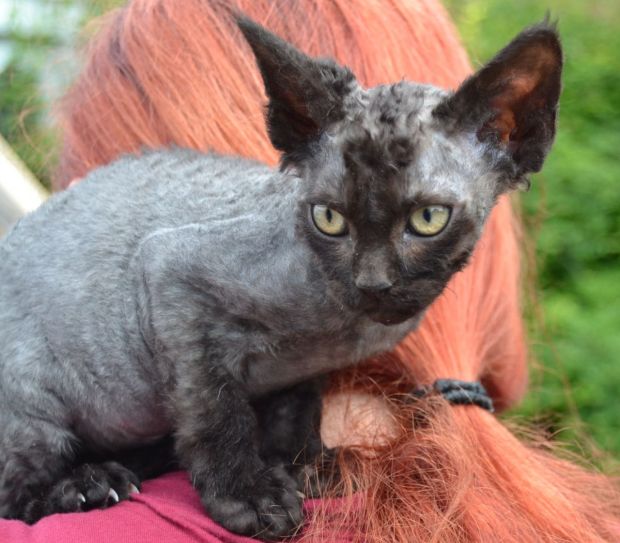
People usually land on the Devon Rex because they’ve seen one (or met one) and want to know what they’re really like to live with: how much grooming they need, whether they cope in cooler homes, and what health checks matter before committing.
The Devon Rex is a small-to-medium cat with a short, rippled coat and outsized ears. The look is striking, but the practical details are where the decisions sit: gentle grooming (often less than you’d expect), warmth-seeking behaviour because the coat insulates poorly, and a short list of breed-linked conditions worth screening for. 1, 2
Devon Rex at a glance
- Origin: Devon, England (curly-coated kitten “Kirlee” born in 1960). 2
- Build: Small to medium; typically around 2.7–4.1 kg (6–9 lb), with males often heavier. 2
- Coat: Short, soft, wavy/curly; little guard hair and delicate texture. 2
- Colours/patterns: All colours and patterns recognised. 2
- Temperament: Curious, active, people-oriented; often happiest with company and routine interaction. 1, 2
History and origin
The Devon Rex began with a single curly-coated kitten born in Buckfastleigh, Devon, in 1960. The kitten, named Kirlee, was first thought to carry the same “rex” coat mutation as the Cornish Rex. Breeding trials showed otherwise: the Devon and Cornish coat mutations were different, and the Devon Rex line was developed separately from Kirlee’s descendants. 2
Physical characteristics
A Devon Rex looks like it has been drawn with emphasis: very large, low-set ears, big oval eyes, high cheekbones, and a short muzzle. The body is compact and muscular, with a longish neck and a tapering tail. 2
The coat is where the breed earns its name. It’s short, soft and rippled, with little guard hair, which can make the coat feel like suede or velvet. The curl can be uneven, and some cats carry thinner patches, especially as kittens moult and the adult coat comes in. 2
Personality and day-to-day behaviour
Devon Rex cats tend to move through the house like small, warm-bodied scouts—perching high, investigating open doors, and inserting themselves into whatever’s happening. They’re commonly described as intelligent, playful and very people-focused, often preferring to stay close rather than drift off alone. 1, 2
Many are chatty in their own way (more chirps and commentary than constant yelling), and they generally do best with daily play and something to climb, chase, and puzzle over. Boredom can turn into mischief, especially in young cats. 1
Grooming and care
The Devon Rex is often easier to groom than long-haired breeds, but “low maintenance” doesn’t mean “no maintenance”. The coat hair is delicate, and heavy brushing can break it, so gentle handling matters. 2
Coat and skin
- Groom gently: In many cases, a light hand-stroke or very soft grooming is enough to remove loose hair and spread skin oils without damaging the coat. 1, 2
- Bathing: Some Devons can develop a greasy feel because the coat has fewer guard hairs. Occasional bathing with a cat-safe shampoo may help, but frequent bathing can irritate skin and damage the curls. If you’re unsure, ask your vet what’s appropriate for your cat’s skin. 3
Ears, nails, teeth
- Ears: Large ears can collect oily build-up; check regularly and clean only as needed, using a vet-recommended ear cleaner. 1
- Nails: Regular trims help prevent overgrowth and snagging. 1
- Teeth: Home dental care (toothbrushing with pet toothpaste) and routine vet checks help reduce dental disease risk, as with any cat. 1
Warmth and comfort
Devon Rex cats often feel warmer to the touch, not because their body temperature is higher, but because their coat provides less insulation. In cooler weather they’ll seek out heat: sunny windows, warm bedding, and human laps. Provide warm sleeping spots and avoid leaving them exposed to cold draughts. 1, 2
Health issues to be aware of
The Devon Rex is often described as generally healthy, but—like most pedigree breeds—there are known inherited conditions worth discussing with a veterinarian and a responsible breeder. 1
Key conditions and screening
- Hypertrophic cardiomyopathy (HCM): Some lines can be affected. Many breed bodies recommend screening breeding cats with cardiac ultrasound (echocardiography) performed by a suitably qualified veterinarian. 1
- Devon Rex congenital myasthenic syndrome (CMS) / hereditary myopathy: An inherited muscle-weakness condition has a DNA test available (autosomal recessive). Responsible breeding uses genetic testing to avoid producing affected kittens. 4
Other issues can occur in individual cats (as they can in any breed), so the practical baseline remains the same: routine check-ups, prompt investigation of breathing difficulty, exercise intolerance, weakness, or unexplained weight loss. 5
Training and exercise
Devon Rex cats are typically active jumpers and quick learners. Short daily play sessions suit them better than one long, exhausting burst: wand toys, chase games, and puzzle feeders help burn energy while keeping the mind busy. 1
Positive reinforcement (treats, pats, a favourite toy) tends to work well for simple behaviours like coming when called, tolerating nail trims, or stepping into a carrier without a wrestling match.
Finding a reputable Devon Rex breeder (or rescue)
If you’re set on a Devon Rex, start with adoption and breed-specific rescue where possible, then widen to registered breeders who can show clear health practices. 6, 7
Quick checks that protect you (and the cat)
- Never buy “sight unseen”: meet the kitten (and ideally the mother), and see the conditions they’re raised in. 6, 7
- Ask about screening: at minimum, discuss HCM screening of parents and genetic testing for Devon CMS/myopathy in the breeding lines. 1, 4
- Be wary of red flags in ads: pressure to pay deposits immediately, “delivery only”, vague medical history, or reluctance to let you visit. 6
Frequently asked questions
Are Devon Rex cats hypoallergenic?
No cat is truly hypoallergenic. Devon Rex cats may shed less noticeably, and some people with allergies find them easier to tolerate, but they still produce allergens. If allergies are a concern, spend time with the breed before committing. 1
Do Devon Rex cats need lots of grooming?
Usually not, but they do need gentle grooming. Their coat can be fragile, and ears may need more regular checking for oily build-up than you’d expect. 1, 2
Do Devon Rex cats get cold?
They can be more sensitive to cold because their coat insulates poorly. Most will seek warm places naturally, so warm bedding and a draught-free sleeping area make a noticeable difference. 1, 2
Final thoughts
A Devon Rex suits households that like an involved, active cat—one that follows the day rather than watching from a distance. Keep them warm, keep play interesting, groom softly, and take health screening seriously when choosing a breeder. In return, you get a small, bright-bodied companion with a coat that looks like wind over grass. 1, 2
References
- The International Cat Association (TICA) – Devon Rex
- Governing Council of the Cat Fancy (GCCF) – Devon Rex
- PetMD – Devon Rex Cat Breed Health and Care
- UC Davis Veterinary Genetics Laboratory – Sphynx and Devon Rex Congenital Myasthenic Syndrome (CMS) test
- VCA Animal Hospitals – Devon Rex
- RSPCA Australia Knowledgebase – Red flags when looking for a dog or cat online
- RSPCA Australia Knowledgebase – Safe ways to look for a new companion animal online
- Devon Rex (overview and history summary)
- Cat Fanciers’ Association (CFA) – Devon Rex

Veterinary Advisor, Veterinarian London Area, United Kingdom