
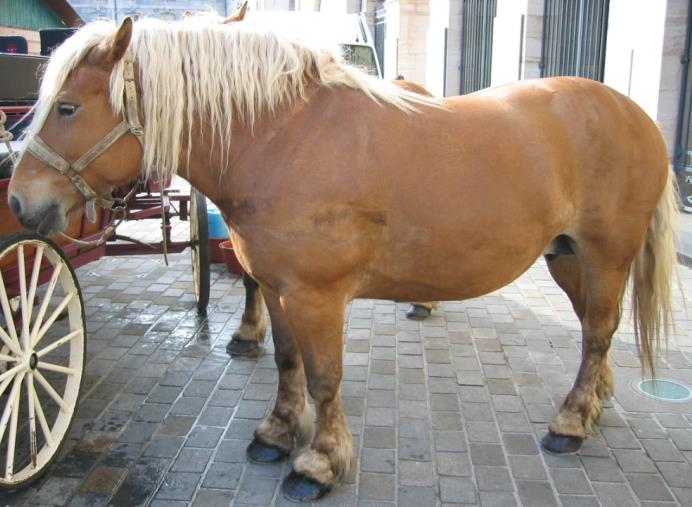
People usually look up the Comtois when they’re trying to identify a solid, mid-sized French draught horse—or decide whether one suits their work, driving, or family riding plans. Size, temperament, and what’s “normal” for the breed matter, because they affect everything from gear fit and handling to daily feeding and long-term soundness.
The Comtois is a compact, muscular horse from eastern France, best known for its coppery chestnut coat and pale “washed” mane and tail, and for steady, willing work in forests and vineyards.1 Below is a clean, realistic guide to what the breed is (and isn’t), with the key details kept consistent with current breed standards.
Comtois horse: quick facts
- Origin: Franche-Comté / Jura Mountains (eastern France)2
- Type: Light draught horse (compact, strong, not towering)2
- Height: About 1.50–1.65 m (roughly 14.3–16.1 hands)1
- Weight: Around 650–800 kg (varies with build and condition)1
- Typical coat: Dark or copper chestnut is most common, usually with light “crins lavés” (washed/flaxen mane and tail); bay is accepted but less common in the modern standard1
- Common uses: Draught work (forestry, vineyards), driving, leisure riding in the right hands3
History and origin
The Comtois comes from the Jura Mountains and the wider Franche-Comté region on the French–Swiss border, shaped by a landscape of wooded slopes, farm tracks, and hard winters.2 It developed as a working horse: compact enough to manoeuvre on narrow ground, but heavy through the shoulder and hindquarter where pulling power lives.
Modern, formal breed definition is much more recent than the horse itself. The Comtois stud-book was established in the early 20th century, and the breed is now managed by its national association in France, which publishes the current standard for size, type, and colour.1
Physical characteristics (what a Comtois looks like)
A Comtois is built like a short, strong engine: deep through the chest, broad over the back, and rounded through the hindquarters.1 The head is often described as expressive and fairly square, with a straight, muscled neck and a powerful front end designed to lean into a load.1
Limbs are expected to be solid, with strong joints and good alignment—more “dry and clean” than heavily feathered, especially compared with some heavier draught breeds.1
Coat colour and markings
Most Comtois you’ll see are dark or copper chestnut with pale mane and tail (the classic “washed” look). Bay is permitted but is less typical under the current standard, and excessive white markings are discouraged.1
Temperament: calm, forward, and workable
The Comtois is widely described as calm and tractable—an animal bred to stand, pull, and keep going when the work is slow and repetitive.4 Even so, it is still a large, strong horse; good handling matters more than any breed label, especially around feed, gates, and vehicles.
Where the breed often shines is in steady, consistent effort. In the right set-up, that makes the Comtois a sensible partner for driving, farm tasks, and pleasure riding where weight-carrying ability and a grounded way of going are valued.3
Care and maintenance (practical basics)
Comtois horses don’t require exotic care, but their draught build does make the basics non-negotiable: forage-first feeding, regular hoof care, and steady conditioning rather than sudden bursts of hard work.
Feeding
Base the diet on quality forage, then adjust concentrates only if the horse’s workload and body condition truly call for it. Heavy horses can gain weight easily, so keep an eye on condition rather than feeding by habit.
Hoof, skin, and day-to-day upkeep
- Hooves: Keep trims on schedule so balance stays correct and joints aren’t stressed.
- Skin and coat: Regular grooming helps you spot rubs, dermatitis, and small wounds early—especially under harness.
- Vet and dental care: Maintain routine vaccinations, parasite control, and dental checks appropriate to your region and management system.
Training and exercise needs
Comtois horses respond best to quiet, consistent handling and progressive loading: build fitness gradually, keep sessions clear, and avoid drilling. A fit Comtois tends to move more freely, stay sounder, and cope better with tasks like pulling, hill work, and longer days in harness.
For driving work in particular, invest time in voice cues, calm standing, and controlled transitions. With a horse built to move weight, “brakes” and straightness are safety features, not optional extras.
Uses: where the Comtois fits best
The Comtois remains strongly tied to practical draught work, especially forestry and vineyard tasks where traction, steadiness, and sure footing are valuable.3 It’s also used for driving and leisure riding, though it’s usually chosen for its reliability and strength rather than for high-speed sport.
- Forestry/logging: Controlled pulling in tight spaces and on soft ground3
- Vineyard and farm work: Slow, powerful draught at a walk3
- Carriage driving: A natural match for the breed’s build and temperament
- Leisure riding: Often comfortable and steady, especially for riders who prefer a broader, weight-carrying horse
Rarity, breeding, and what “rare” really means
The Comtois is not one of the world’s most common breeds, but it is also not a tiny population kept on the brink. In France it is widely bred compared with many heritage draught breeds, with the national breeding body reporting thousands of births in recent years.3 Outside France, however, it can be genuinely hard to find, which is why people sometimes describe it as “rare” in their local market.
If you’re trying to confirm whether a horse is truly Comtois, the most reliable path is paperwork through the stud-book and the breed organisation, not coat colour alone.1
Breed organisations
The breed’s defining authority is the French national association, which maintains the stud-book and publishes the official breed standard (including size range and preferred coat colours).1
Final thoughts
The Comtois is a compact French draught horse: thick through the shoulder, grounded on its feet, and typically chestnut with a pale mane and tail.1 It suits steady work—especially driving and draught tasks—when it’s managed with consistent handling, sensible conditioning, and everyday care done properly.
References
- Association Nationale du Cheval de Trait Comtois – Standards de la race
- Comtois (horse breed) – overview of origin and history
- Energie Cheval (France) – Comtois Draft: size, colour, uses, breeding figures
- PetMD – Comtois horse breed profile

Veterinary Advisor, Veterinarian London Area, United Kingdom