
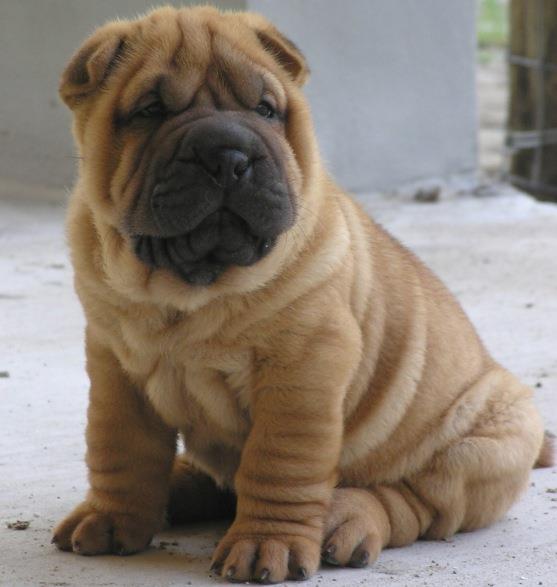
People usually start looking up the Chinese Shar-Pei when they’re weighing up whether the wrinkles and the quiet, watchful presence will fit their home—or when they’ve noticed itchy skin, sore ears, or watery eyes and want to know what’s “normal” for the breed.
The Shar-Pei can be a steady companion, but it’s also a dog with some very specific care needs. A little routine attention (especially to skin folds, ears and eyes) can prevent small irritations turning into long, expensive vet visits.
Breed type: Spitz / Molosser
Country of origin: China1
Size: Medium–large
Typical height: about 46–51 cm at the withers (breed standards vary by registry)2
Typical weight: often around 20–30 kg (varies by sex and build)2
Care requirements: Medium–high (skin folds, ears, eyes; and careful weight management)
Exercise requirements: Low–medium for many adults, with sensible heat management in warm weather
History and origin
The Chinese Shar-Pei is an old Chinese breed, developed for practical work in rural life—guarding, hunting, and general farm duties. Over time, regional dogs became a recognisable “type”, marked by a harsh coat and loose skin folds. The modern breed standard also preserves the distinctive dark tongue pigmentation seen in Shar-Pei and Chow Chow.2, 3
International recognition came later. Today, Shar-Pei are recognised by major kennel clubs, including in Australia through Dogs Australia (ANKC).6
Physical characteristics and appearance
Shar-Pei are compact, square-built dogs with a broad head, small triangular ears, and a short, wide muzzle. Puppies tend to be heavily wrinkled; many adults “grow into” their skin, keeping more folding around the head, neck and withers.2, 4
Coat type and texture
The coat should feel harsh—almost bristly. Breed standards describe two main coat lengths: very short “horse coat” and slightly longer “brush coat” (still short, and not meant to be soft or flowing).2
Colour and tongue pigment
Shar-Pei appear in a range of solid colours and sable. Breed standards also describe tongue and mouth pigment: a solid bluish-black is preferred (lavender in dilute colours), while a solid pink tongue is a disqualification in at least some registries.2
Temperament and personality
In the home, many Shar-Pei are calm and self-contained—dogs that don’t need constant fuss, but do tend to keep track of what’s happening. Breed descriptions commonly mention independence and devotion to their people, with a reserved manner around strangers.2, 4
This combination can look like “stubbornness” when training is rushed or inconsistent. The breed usually responds best to steady, reward-based work, started early and kept short enough to stay interesting.7
Health concerns to understand early
Shar-Pei can live long, comfortable lives, but the breed is over-represented in a few conditions that owners should recognise early—especially those linked to skin folds, eyes, and the breed’s unique inflammatory syndromes.
Skin and ears: folds, irritation, and infections
Wrinkles are not “dirty by default”, but warm, moist skin folds can trap sweat, debris and yeast. Regular gentle checks help you spot redness, odour, pimples, soreness, or a greasy feel—signs that a vet visit may be due.
Ears are another common trouble spot. Many vets recommend ear checks as part of routine grooming, and cleaning frequency should be guided by your vet—often around monthly for healthy dogs, and more often for dogs prone to ear problems.8
Eye problems (including entropion)
Shar-Pei can be prone to eyelid and skin-fold issues around the eyes. Some breed standards explicitly note that the eyes should be free of entropion and irritation, and that any disturbance caused by surrounding folds is undesirable.4
If you see squinting, excessive tearing, rubbing at the face, or a cloudy/blue look on the eye surface, treat it as urgent—eye pain is quiet, but it escalates fast.
Shar-Pei fever / autoinflammatory disease and amyloidosis
Shar-Pei have a known heritable fever syndrome (often referred to as Shar-Pei fever, Shar-Pei recurrent fever syndrome, or Shar-Pei autoinflammatory disease). Episodes typically involve high fever lasting around 12–48 hours, sometimes with swollen hocks and other signs of inflammation.5, 9
Repeated inflammatory episodes can drive amyloid deposition (amyloidosis), which may damage organs—especially the kidneys—over time.5, 9
If your Shar-Pei has unexplained fevers or recurrent lameness/swollen hocks, don’t “wait and see”. A vet can rule out other causes and advise on monitoring and treatment options.
Grooming and day-to-day care
Shar-Pei grooming is less about fancy trimming and more about small, regular checks—like a ranger’s walk along a boundary fence: quiet, consistent, and alert to changes.
Practical routine (most homes)
- Skin folds: check for redness, odour, dampness, or soreness. Keep folds dry after bathing or swimming.
- Ears: look and sniff weekly; clean only as needed and as advised by your vet (often around monthly for healthy dogs).8
- Eyes: watch for squinting, rubbing, discharge, or redness and seek veterinary advice early.4
- Coat: brush weekly to lift dead hair and check the skin. Bathe only when needed, using a gentle dog shampoo.
- Weight: keep your dog lean. Extra weight adds strain to joints and can worsen heat stress risk.
Training, socialisation, and exercise
Shar-Pei usually do best with calm, matter-of-fact training—clear boundaries, lots of reinforcement for the behaviour you want, and no harsh corrections. Reward-based methods are strongly recommended by major welfare organisations.7
Early socialisation matters. Puppies benefit from positive exposure to people, other dogs, surfaces, and everyday sounds during the early socialisation window, which is often described as roughly 3 to 12–14 weeks of age.7
Exercise and heat care
Many adult Shar-Pei are content with steady daily walks and a little play, rather than intense endurance exercise. Their shorter muzzle can make hot weather harder to cope with, so plan activity for cool parts of the day and learn the signs of heat stress. Australian welfare groups note that dogs with very short muzzles are at increased risk in high temperatures.10
Shar-Pei as family pets: strengths and watch-outs
A Shar-Pei can be a solid family companion in the right setting: usually loyal, often quiet indoors, and naturally watchful. But they’re not a “set-and-forget” breed.
Often suits households that want
- a calm dog with a steady routine
- a companion that doesn’t demand constant attention
- a dog whose exercise needs are moderate rather than intense
Think carefully if you need
- a highly social dog that welcomes every stranger without guidance
- a breed with minimal skin/ear/eye maintenance
- a dog that thrives on long runs in hot weather
Breed standards and kennel club recognition
Breed standards are used by kennel clubs to describe the ideal structure, coat, pigment and movement of the Shar-Pei. Standards differ slightly between registries, but commonly emphasise the harsh coat, small triangular ears, compact build, and correct pigmentation.2, 4
In Australia, the breed is recognised through Dogs Australia (ANKC) and its state bodies, which maintain breed information and guidance for prospective owners and breeders.6
Final thoughts
The Shar-Pei is not defined by its wrinkles alone. It’s a compact, observant dog—often calm, sometimes aloof, and usually deeply attached to its own people. When the day-to-day care is steady and uncomplicated, the breed’s most common problems are spotted early, when they’re easier to manage.
References
- Fédération Cynologique Internationale (FCI): Shar Pei (Breed No. 309) – country of origin and classification
- Chinese Shar-Pei Club of America: AKC Standard (Chinese Shar-Pei)
- American Kennel Club (AKC): Distinctive traits including blue-black tongue
- The Kennel Club (UK): Shar Pei breed standard
- Merck Veterinary Manual (Professional): Shar-Pei Fever
- Dogs Australia (Dogz Online): How to find the right dog breed for yourself
- RSPCA Knowledgebase: Dog training recommendations (reward-based; socialisation period)
- American Kennel Club (AKC): Eyes and ears of good grooming (ear check/cleaning guidance)
- VCA Animal Hospitals: Shar-Pei recurrent fever syndrome (SPAID/familial Shar-Pei fever) and amyloidosis
- RSPCA Australia: Heat stress risk in dogs with very short muzzles (brachycephalic types) during hot weather

Veterinary Advisor, Veterinarian London Area, United Kingdom