
People usually start searching “Chinese Crested breeders Australia” for one of two reasons: they’ve met a hairless little dog with a plume of hair and want to know if it’s a sensible match for their home, or they’re about to put down a deposit and need a quick way to check what “healthy, well-bred” should look like.
The stakes are practical. Chinese Cresteds can be wonderful companions, but they do best with thoughtful skin, dental and general care, and a breeder who prioritises health and temperament over novelty. What follows is a clear, Australia-relevant guide to the breed’s varieties, size, temperament, grooming and common health considerations, plus a grounded checklist for choosing a puppy responsibly.1, 2, 3
Chinese Crested at a glance
- Breed group: Toy (companion dog)1
- Varieties: Hairless and Powderpuff (both can occur in the same litter)4
- Height (ideal): Dogs 28–33 cm; bitches 23–30 cm1
- Weight: Varies, but should not be over 5.4 kg in the breed standard1
- Exercise needs: Modest—daily walks and a bit of play suit most individuals
- Life expectancy: Many live into the teens, though individuals vary4
History and origin
Despite the name, the Chinese Crested’s exact origin is uncertain. Many modern breed histories describe small hairless dogs travelling with traders and sailors, with the type refined in China over time. What’s steady is the role: a small companion suited to close living, warm laps, and life at human pace.5
Physical characteristics and varieties
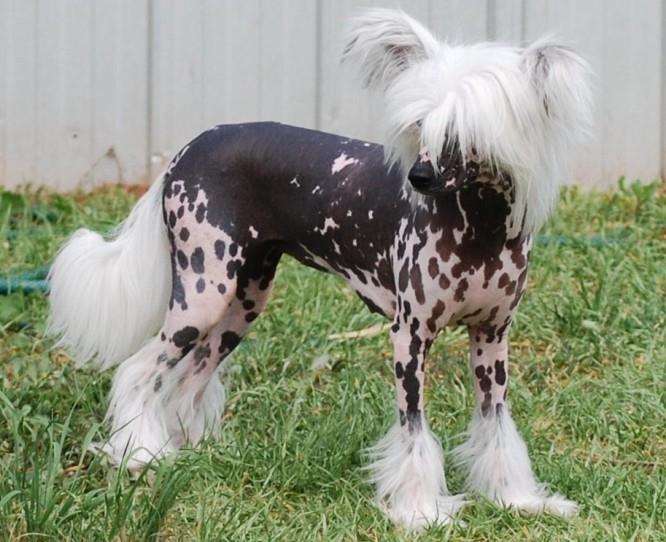
Chinese Cresteds are fine-boned, slender little dogs with a light, agile way of moving. The head is wedge-shaped with large, erect ears and almond-shaped eyes, giving them an alert, clean-lined look.1
Hairless
The hairless variety has smooth, fine-grained skin, with hair typically limited to the crest (head), plume (tail) and socks (feet/lower legs). Because so much skin is exposed, day-to-day care is less about brushing and more about protecting and maintaining the skin barrier.6
Powderpuff
The Powderpuff has a full coat: a soft undercoat with a longer “veil” of hair over the top. It’s still a small dog, but the grooming load can be real—especially if the coat is kept long.7
Temperament and everyday life
Chinese Cresteds are typically affectionate and people-oriented, often choosing one or two favourite humans and wanting to stay close. They tend to be sensitive to household tone and can become unsettled with harsh handling or chaotic routines, so calm, consistent training usually gets the best results.4
They can be alert and vocal, which makes them good “someone’s at the door” dogs, but they’re not built for roughhousing. In family homes they usually do best with gentle, respectful children and supervised interactions.4
Training and exercise
Think of the Chinese Crested as a small athlete with a short fuel tank. They often enjoy brisk walks, short play sessions, learning tricks, and simple agility-style games at home—then they’re ready to settle back into the warm part of the couch.
- Exercise: Aim for daily movement and sniff time; adjust to age and fitness.
- Training style: Reward-based methods suit the breed’s sensitivity and help prevent shut-down behaviour.
- Cold and sun: Hairless dogs may need extra protection in extremes (shade and sun-safe routines in summer; warmth in winter).8
Health considerations (and what to ask your breeder)
Like many toy breeds, Chinese Cresteds can be prone to dental disease and early tooth loss. Hairless dogs, in particular, may have missing teeth linked with the genes that influence hairlessness; missing teeth are not penalised in some standards for the hairless variety, but they can still create real-life management needs (brushing, vet dental checks, and appropriate chewing options).6, 9
They may also be affected by a range of other conditions seen across small breeds (including some orthopaedic and eye conditions). The practical approach is simple: choose a breeder who health-tests thoughtfully, can explain results in plain language, and welcomes veterinary follow-up questions rather than brushing them off.9
Quick health questions worth asking
- What health screening has been done on the sire and dam, and can I see documentation?
- What dental issues have you seen in your lines, and how do you manage them?
- Have any close relatives had eye disease, patella (kneecap) issues, or skin problems?
- What support do you provide if a puppy develops a hereditary condition?
Grooming and maintenance
Hairless: skin-first care
Hairless Cresteds are often described as “low shedding”, but they are not “no maintenance”. Their skin needs steady, gentle care: regular bathing with suitable products, moisturising as needed, and sensible sun and weather protection. Over-washing, harsh shampoos, or oily products can trigger irritation or blocked pores in some dogs, so it’s worth working with your vet if you’re troubleshooting a recurring skin pattern.9
Powderpuff: coat management
The Powderpuff’s coat can mat if neglected, particularly where friction happens (behind ears, under collar, armpits, groin). Regular brushing and combing is not optional if you want to keep the coat long; many pet owners choose a practical trim to make life easier.
Dental routine (both varieties)
Dental care is a core part of the breed’s routine. Home toothbrushing, early habituation to mouth handling, and timely veterinary dental checks can make a large difference over the dog’s life.9
Puppies and breeders in Australia: a practical safety checklist
If you’re buying a Chinese Crested puppy in Australia, the safest path is slow and visible: meet the puppy and breeder in person, see the conditions, and ask to meet the mother (and ideally see records for both parents). Be cautious of pressure to pay quickly, “delivery only” arrangements, and listings that don’t allow you to visit.2, 3
Green flags
- You can visit where the puppies are raised and see how the dogs live.2, 3
- The breeder talks openly about health testing, temperament, and why a Chinese Crested suits (or doesn’t suit) your household.
- The puppies look bright and clean, with comfortable movement and calm curiosity.
- There is a clear plan for early socialisation and transition support.
Red flags
- Being asked to buy “sight unseen” or pay a large sum before you’ve met the puppy.2, 3
- Puppies advertised as ready to leave too young, or with vague health claims but no paperwork.2
- Multiple litters always available, especially with “rare” colour/novelty marketing.
- The seller won’t answer questions about parent health, living conditions, or return policies.
Chinese Cresteds in popular culture
The Chinese Crested turns up regularly in media and dog shows because the look is so distinctive—especially the hairless variety. It’s fun trivia, but it’s not a buying reason. The day-to-day reality is a small companion dog with specific grooming and dental needs, and a temperament that tends to thrive on gentle company more than constant spectacle.
Final thoughts
A well-bred Chinese Crested is often quietly captivating: light on its feet, attentive, and happiest when it can orbit its people through the day. The deciding factors are rarely the dramatic ones. They’re the small, steady routines—skin care, coat care, dental care, and the sort of household where a sensitive toy dog isn’t left to cope alone for long stretches.
References
- Dogs Australia (ANKC) – Breed standard: Chinese Crested Dog
- RSPCA Australia Knowledgebase – Red flags when looking for a dog or cat online
- RSPCA Australia Knowledgebase – How do I avoid supporting puppy farms?
- Hill’s Pet Nutrition Australia – Chinese Crested breed information
- Pets Online – Chinese Crested dog breed information (history overview)
- United Kennel Club (UKC) – Chinese Crested breed standard (dentition notes and variety differences)
- The Kennel Club (UK) – Chinese Crested breed standard (coat and size details)
- Purina – Chinese Crested dog breed information (care considerations)
- PetMD – Chinese Crested: health and care (dental and other health considerations)

Veterinary Advisor, Veterinarian London Area, United Kingdom