
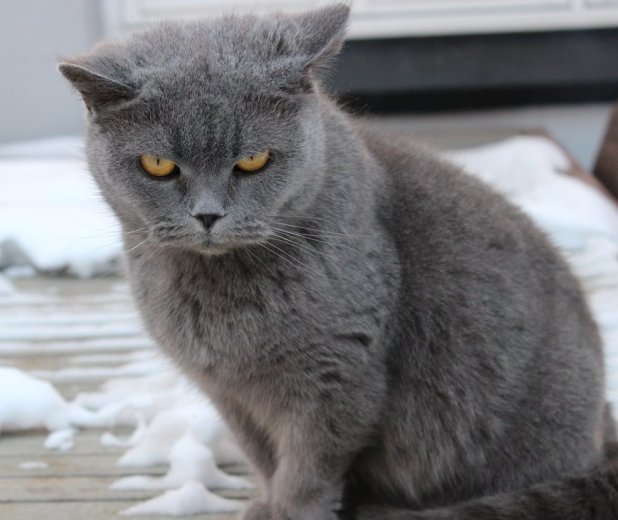
People usually start looking into the Chartreux when they want a calm, sturdy companion cat with a blue coat—and they want to know what’s real, what’s myth, and what daily life is actually like.
The stakes are simple but important: a breed that sounds “easy” on paper can still come with weight, dental, and routine-care needs that shape your next 10–15 years. The Chartreux has a quiet reputation for steadiness, plus a few distinctive traits that are worth checking before you commit.1, 2
Size: Medium to medium-large, typically around 5.5–7.3 kg (12–16 lb) for adults (males often larger).3
Coat: Dense, double coat; blue-grey only; slightly woolly texture with a water-repellent topcoat.1, 3
Temperament: Calm, gentle, devoted; often communicates quietly with soft sounds and body language.2, 4
Life span: Commonly cited around 8–13+ years (some may live longer with good care).1
Health watch-outs: Like many cats, dental disease is common; weight gain can be an issue if food intake isn’t managed.5, 6
Activity level: Moderately active; enjoys play and climbing but is not usually a constant high-speed cat.1, 2
Grooming: Low to moderate; regular combing helps during seasonal coat changes.1
Chartreux at a glance
The Chartreux is a French breed known for a solid, muscular body carried on relatively finer legs, a dense blue coat, and eyes that range through yellow, gold, amber and copper tones (not green). Many people notice the “smiling” expression created by the head and muzzle shape.3, 7, 8
History and origin: what’s known, what’s legend
References to blue cats in France go back centuries, but the tidy story about Carthusian monks “creating” the breed is best treated as legend rather than documented fact. Modern breed organisations tend to describe the monk connection as a traditional tale, not proof of origin.1, 7
What is well recorded is the breed’s development and preservation in the 20th century, including post-war efforts to rebuild numbers while keeping a consistent type. Some registries also note historical outcrossing decisions during periods of low genetic diversity.7
Physical characteristics and appearance
A Chartreux looks compact and substantial without being short-legged in a cartoonish way. The body is robust, the chest broad, and the musculature dense. The head is full-cheeked, with a gentle curve to the profile and a distinctive facial set that can read as a soft grin.3, 8
The coat is a defining feature: blue only, dense and plush, with a resilient undercoat and a slightly water-repellent topcoat. Texture matters as much as colour, and it can shift with age and sex (mature males often carry a heavier coat).3, 8
Eye colour is typically in the yellow-to-copper range (often described as orange, amber or “pumpkin”). Green eyes are considered a fault in at least some breed standards.1, 3, 7
Personality and temperament
In a settled home, many Chartreux move like quiet shadows—present, observant, and often close by, without demanding constant attention. Breed profiles commonly describe them as calm, gentle, and devoted, with a preference for routine and a low-drama household rhythm.2, 4, 7
They’re also frequently described as intelligent and responsive to interaction. Some learn games like retrieving toys or tolerate harness training, but temperament varies by individual cat and early socialisation.2
Vocalisation is often understated. Many have a small voice used sparingly, relying instead on chirps, murmurs, and clear body language to make requests known.2, 4
Care and grooming
Coat care
The coat is low-maintenance compared with many long-haired breeds, but it benefits from regular combing—especially when the undercoat is shedding seasonally. This helps remove loose hair and can reduce hairballs and matting in thicker areas.1
Nails, ears, and teeth
Routine basics still apply: keep nails trimmed, check ears, and take dental care seriously. Dental disease (including gingivitis and progression to periodontitis) is common in cats, can be painful, and is often preventable or manageable with regular care and veterinary guidance.5
Health concerns: what to watch for
No single dramatic illness defines the Chartreux, but two everyday problems deserve attention in almost any cat: dental disease and excess weight. Both tend to creep in quietly, then shape a cat’s comfort and mobility over time.5, 6
- Dental disease (including gingivitis): very common in adult cats, and associated with pain, bad breath, reduced appetite, and progression to more serious gum disease if unmanaged.5
- Weight gain/obesity: some breed descriptions note a tendency to put on weight (particularly after desexing), and obesity is widely recognised as a welfare and health problem that warrants active management with your vet.6, 9
If you’re choosing a kitten, ask the breeder for health history, vaccination and parasite-control records, and the plan for early socialisation. Once home, keep regular veterinary checks so weight, teeth, and overall condition are tracked before small issues turn into long ones.1
Training and exercise needs
Chartreux cats are often described as bright and engaged. The best “training” tends to look like gentle structure: short play sessions, simple puzzles, and consistent cues for handling (carrier, grooming, nail trims).1, 2
For exercise, think in bursts. Many do well with climbing opportunities and short interactive play that mimics hunting—wand toys, tossed toys, and food puzzles—rather than marathon sessions.1
Diet and nutrition: practical, not precious
A Chartreux doesn’t require a special diet because it’s a Chartreux. What matters is feeding a nutritionally complete, balanced cat food in portions that keep a healthy body condition, and adjusting as life stage and activity change.10
If weight is creeping up, the most reliable approach is boring and effective: measure food, limit calorie-dense treats, and ask your vet for a target weight and a safe weight-loss plan. Regular weigh-ins and body condition scoring turn guesswork into something you can actually steer.9, 10
Final thoughts
The Chartreux suits people who appreciate a steady, observant cat with a plush blue coat and a quiet way of communicating. Keep the myths in their place, keep the routine care consistent, and you’ll usually see the breed at its best: solid, gentle, and calmly present in the background of daily life.2, 7
References
- The International Cat Association (TICA) – Chartreux
- Cat Fanciers’ Association (CFA) – Chartreux breed profile
- CFA Chartreux Breed Council – Chartreux Standard of Points (summary)
- CFA Chartreux Breed Council – Living with Chartreux
- Cornell Feline Health Center – Feline dental disease
- Fédération Internationale Féline (FIFe) – Chartreux
- Governing Council of the Cat Fancy (GCCF) – Chartreux
- Wikipedia – Chartreux (overview and links to registry standards)
- RSPCA Pet Insurance (Australia) – Signs of pet obesity and why it matters
- WSAVA – Global Nutrition Guidelines

Veterinary Advisor, Veterinarian London Area, United Kingdom