
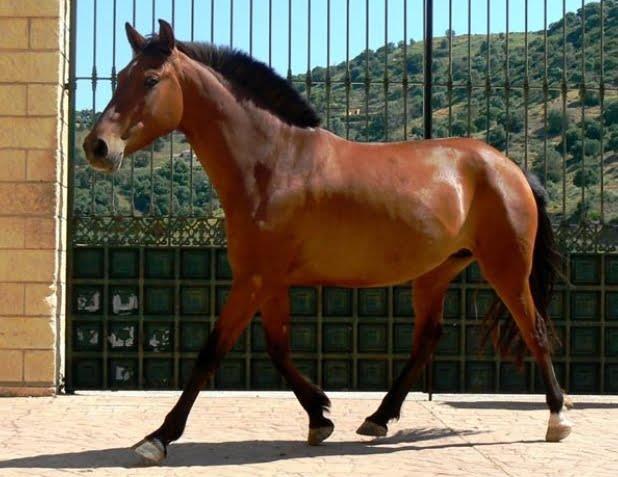
People usually start searching “Carthusian horse” when they’re trying to check whether it’s a true breed, a bloodline within the Andalusian (PRE), or simply a marketing label. That distinction matters: it affects paperwork, price, and what you can realistically expect from a horse advertised as “Cartujano”.
The Carthusian horse (Spanish: Cartujano) is best understood as a historically protected bloodline within the Purebred Spanish Horse (Pura Raza Española, PRE), linked to Carthusian monastic breeding around Jerez de la Frontera. It isn’t a separate modern breed with a wholly different type; it sits inside the wider Andalusian/PRE population, with its own reputation and a paper trail that serious breeders care about.1, 2
Quick profile (what a “Carthusian” actually is)
- Status: A bloodline/strain within the PRE (Andalusian), not a separate horse breed in the everyday sense.2
- Where it’s linked to: Andalusia (southern Spain), particularly the historical Carthusian monastery and breeding traditions around Jerez de la Frontera.1, 3
- Common uses: Classical dressage and ridden work that rewards collection; also seen in driving and exhibition work.2, 4
- Typical size (as PRE/Andalusian type): Often around 15–16 hands; weight commonly in the mid-hundreds of kilograms (varies by sex and individual build).4
- Coat colour: Grey is very common in modern Andalusians/PREs, and is also the predominant colour often reported for Carthusian-line horses (though other solid colours can occur).2, 4
History: monks, bloodlines, and what survived
The Carthusian story is woven into the broader story of the PRE. Carthusian monks became associated with maintaining a particular line of Spanish horses from the late 1400s in Andalusia, and later generations treated those horses as a protected reservoir of “old type” breeding in a changing world.1, 2
Modern summaries of the bloodline often trace the consolidation of the Carthusian strain to an influential 18th-century foundation sire and the careful management of descendants, with the line later threatened by war and upheaval before being carried forward by private and state-connected breeding efforts around Jerez de la Frontera and elsewhere in Spain.1, 2
Appearance and physical characteristics
Carthusian-line horses are still PREs in overall type: compact, powerful, and built for balance and collection rather than long-striding speed. Expect a strong back, substantial hindquarters, and a neck that rises cleanly into the shoulder, with the kind of body that makes sitting work look almost effortless when trained well.4
One common point of confusion is colour. Some online summaries claim Carthusians are “usually black” or “usually chestnut”. In reality, modern PREs are most commonly grey (with bay also very common), and Carthusian-line horses are frequently described as predominantly grey as well, even though other colours do occur.2, 4
Size and weight (realistic ranges)
Claims that Carthusian horses reach “up to 1,000 kg” don’t fit the PRE/Andalusian type. Adult Andalusians/PREs are more commonly in the roughly 400–500+ kg range depending on sex and condition, with many mature stallions and geldings around the low 500s kg.4
Temperament and trainability
Well-bred PREs are widely valued for being intelligent, sensitive to aids, and capable of close work with people—traits that suit dressage, working equitation-style handling, and exhibition riding. Individual temperament still varies with genetics, handling, and training, so it’s worth judging the horse in front of you rather than the label on the advert.4
Training and uses in equestrian sport
Carthusian-line horses are most often promoted for classical riding: work that asks for rhythm, balance, quickness of the hind leg, and the ability to collect without strain. That same build and mindset can also suit driving, demonstrations, and general riding for people who like a compact horse with presence and brakes.2, 4
Training tends to go best when it stays consistent and quiet. These horses often respond to small changes in pressure and position; rough riding can create tension that shows up as stiffness through the back and jaw. Good basics—forward, straight, and supple—matter more than clever tricks.
Health: what to watch, and what is not “breed-specific”
Some problems get repeated online as if they’re unique to Carthusians. Colic and laminitis, for example, aren’t “Carthusian diseases” so much as major health risks for horses in general, influenced by management, feeding, parasites, and underlying metabolic status.5, 6
- Colic: One of the most common equine emergencies, and widely reported as a leading cause of death in horses; take any signs seriously (pawing, rolling, no manure, persistent looking at the flank).5
- Laminitis: Often linked to insulin dysregulation and weight/condition in many horses; prevention leans heavily on sensible grazing, appropriate feed, and body condition management.6
Rarity, popularity, and the paperwork problem
“Rare” is a slippery word here. There are many PREs worldwide, but the Carthusian label is often used loosely in sales advertising, and genuine, well-documented Carthusian-line pedigrees can be a smaller subset within the broader PRE studbook population.2
In Spain, one of the best-known institutions associated with preserving and presenting Carthusian-line horses is Yeguada de la Cartuja – Hierro del Bocado, based near Jerez de la Frontera, which describes itself as a major genetic reservoir for the line.3, 7
How to sanity-check a horse advertised as “Cartujano”
- Ask what registry papers the horse has (PRE documentation matters more than a seller’s description).
- Request the pedigree and check it carefully, ideally with help from someone who knows PRE lines.
- Be cautious with “pure Carthusian” claims unless the seller can back them with traceable documentation from reputable registries or recognised breeding programs.2
Owning a Carthusian-line horse: practical considerations
Day-to-day care is standard good horsekeeping, but the details matter. PRE types can hold condition easily, and that’s a quiet risk: it’s easy to overfeed a horse that looks “well” on relatively little, especially on rich pasture. Work with a veterinarian and an experienced farrier, keep a close eye on body condition, and don’t treat turnout and grazing as “free” calories.6
Plan for the usual costs: quality forage, dental care, vaccination and worm control suited to your area, hoof care, and the kind of training that builds strength slowly through the back and hindquarters.
Final notes
A Carthusian horse is not a mythical separate breed, and it isn’t defined by a single coat colour or a romantic story. It’s a name attached to a PRE bloodline with deep roots in Andalusia, valued for type, tradition, and a pedigree that—when it’s genuine—can be followed and verified.1, 2
References
- Andalusian horse (overview including the Carthusian strain) — Wikipedia
- Carthusian Spanish horse (Cartujano) — Wikipedia
- About us — Yeguada de la Cartuja – Hierro del Bocado
- Andalusian Horse Breed Profile — The Spruce Pets
- Colic in Horses (updated 2023) — University of Florida IFAS Extension (EDIS)
- Equine metabolic syndrome (laminitis risk) — Merck Veterinary Manual
- Home / overview — Yeguada de la Cartuja – Hierro del Bocado
- Our horses / Carthusian lineage notes — Yeguada de la Cartuja – Hierro del Bocado
- Prospective study of equine colic incidence and mortality — PubMed

Veterinary Advisor, Veterinarian London Area, United Kingdom