
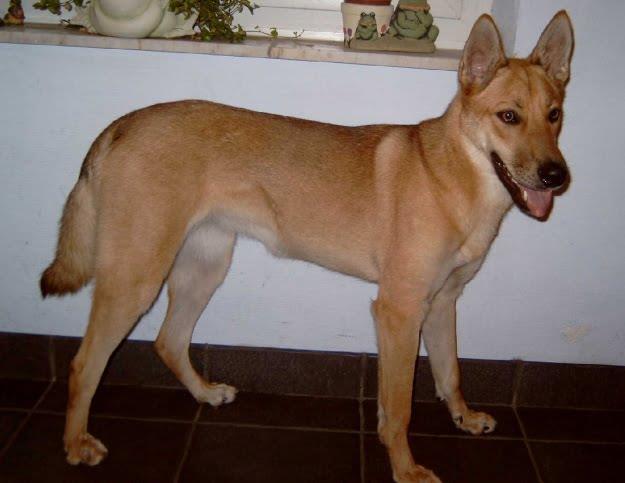
People usually search for the Carolina Dog when they’re trying to work out what this “American dingo” look-alike really is — a recognised breed or a local type — and whether it will settle into ordinary home life. The details matter, because Carolina Dogs tend to do best with owners who enjoy routine, space, and calm, consistent training.
Below is a clear snapshot of size and coat, where the breed story comes from, what everyday life looks like with one, and the health and care checks worth keeping in mind.
Height: 46–61 cm (at the withers)1
Weight: About 16–23 kg (varies by build; dogs should not look heavy-bodied)1
Coat: Short to medium, dense double coat (seasonal shedding is common)1
Colour: Commonly ginger/red, tan/yellow, fawn; may have white markings and some shading; other colours occur within the standard’s limits1
Life expectancy: Often around 12–15 years (varies with genetics, diet, and preventive care)
Temperament: Watchful, loyal, often reserved with strangers; typically forms a close bond with its household1
Energy level: Moderate to high; built for steady movement and alertness rather than couch-potato living1
Trainability: Intelligent and capable, but can be independent; responds best to calm, reward-based training and clear boundaries
Health issues: No single condition defines the breed, but (like many medium dogs) they can still be affected by common problems such as hip dysplasia and ear disease depending on the individual5
Grooming: Low to moderate; regular brushing helps during shed periods and keeps the coat and skin in good nick1
What is a Carolina Dog, really?
The Carolina Dog is a recognised breed in the United Kennel Club (UKC), grouped with sighthounds and “pariah”-type dogs, with a written breed standard that emphasises a lean, athletic outline and a distinctly natural look.1 In the United States, it is also recorded in the American Kennel Club’s Foundation Stock Service (FSS), which is an optional record-keeping program for breeds not yet fully registrable with the AKC.2
History and origin
Carolina Dogs are often described as a landrace-type dog that was noticed living free-roaming in parts of the south-eastern United States, then later developed into a standardised breed.4 You’ll sometimes see big, sweeping timelines attached to them; what can be said with more confidence is that free-roaming “Carolina dog” populations were studied and publicised in modern times (notably from the 1970s onwards), and that kennel-club recognition and standardisation came later.4
Physical characteristics
In silhouette, the Carolina Dog is meant to look light and efficient — more like a rangy runner than a compact, heavy pet dog. The UKC standard describes a medium-sized dog with a clear waist tuck, a flexible, athletic build, and a tail that may curve (sometimes carried in a loose “fish-hook” shape), rather than a tight, decorative curl.1
They carry a dense double coat suited to outdoor life. Expect seasonal shedding and a coat that looks simple but performs well in rough weather.1
Behaviour and temperament
Many Carolina Dogs are observant, quiet around new people, and closely tuned to their home territory. That can read as “protective”, but it’s often more accurately described as watchful and discerning. Good socialisation matters, especially early, because a naturally cautious dog can become overwhelmed if it’s pushed into busy situations too fast.
Within the household, they’re often strongly bonded and steady. Outdoors, a quick eye and a strong chase instinct are common — not because the dog is “being naughty”, but because the body and brain are built to notice movement and respond.
Training and exercise needs
A Carolina Dog usually does best with daily exercise that has shape to it: long walks, sniffing time, and a task to think about. They’re capable learners, but many are not the kind of dog that enjoys endless repetition. Short sessions, rewards that matter to the dog, and a calm, consistent routine tend to work better than heavy-handed methods.
- Exercise: Aim for a solid daily walk plus off-lead running only in secure areas.
- Mental work: Food puzzles, scent games, and simple training “jobs” help prevent restlessness.
- Socialisation: Introduce new places, surfaces, people, and dogs gradually, keeping the dog under threshold.
Health concerns and everyday care
No dog is “issue-free”. Carolina Dogs are not widely associated with a long list of breed-specific diseases, but they can still develop common canine problems and should be managed like any other medium, active dog.
Hips and joint health
Hip dysplasia is a developmental condition influenced by multiple factors (including heredity, growth, exercise, and nutrition). Signs can include stiffness, reduced range of motion, or lameness that’s often worse after exercise.5 Keeping a lean body condition and asking breeders about hip screening can help reduce risk.
Ears (especially if your dog swims)
Some dogs are prone to otitis (ear inflammation/infection). Regular “look and sniff” checks help you catch trouble early. Ear cleaning should be done only when needed, and over-cleaning can irritate the ear canal.6 Avoid cotton buds (they can push debris deeper and risk injury), and speak with your vet if there’s redness, pain, odour, or discharge before you clean anything.6
Feeding
Choose a diet that’s complete and balanced for your dog’s life stage, and adjust portions to keep a clear waist and easy-to-feel ribs. If you’re comparing foods, it helps to look beyond marketing and use practical label and manufacturer questions — the WSAVA Global Nutrition Guidelines include tools that vets commonly point owners to for making more informed choices.3
Carolina Dog as a family pet: practical pros and cons
Pros
- Often clean, low-odour, and relatively straightforward to groom (though shedding can be heavy in season).1
- Athletic and hardy for people who enjoy regular outdoor time.1
- Typically loyal and attentive to its household.
Cons
- Independence can be mistaken for disobedience; training needs patience and consistency.
- May be reserved with strangers and overwhelmed by chaotic handling without careful socialisation.
- Prey drive and roaming instincts mean secure fencing and safe lead habits are non-negotiable.
Carolina Dog “in the wild”: clearing up a common misconception
Carolina Dogs are sometimes described online as a “wild dog” that hunts large game like deer or wild boar. Free-roaming populations have existed, and individual dogs may scavenge or hunt small animals, but it’s misleading to present the breed as a specialised big-game hunter as a defining trait. The more reliable picture is a generalist, adaptable dog type that can live semi-feral in some settings and also live well as a domestic companion with the right management.1, 4
Final thoughts
The Carolina Dog is a lean, watchful, capable dog with a very natural way of moving through the world — ears up, nose working, quietly deciding what matters. In the right home, that steadiness feels easy. In the wrong one, it can look like stubbornness or anxiety.
If you’re choosing one, look for a dog with stable nerves, prioritise calm socialisation, and keep daily life predictable: exercise, training, rest, and a secure yard. That’s usually where this breed settles best.
References
- United Kennel Club (UKC) – Breed Standards: Carolina Dog
- American Kennel Club (AKC) – Foundation Stock Service (FSS) Program overview
- World Small Animal Veterinary Association (WSAVA) – Global Nutrition Guidelines
- Carolina Dog – summary of rediscovery, free-roaming populations, and recognition (overview)
- Merck Veterinary Manual (Pet Owner Version) – Hip dysplasia in dogs
- VCA Animal Hospitals – Instructions for ear cleaning in dogs

Veterinary Advisor, Veterinarian London Area, United Kingdom