
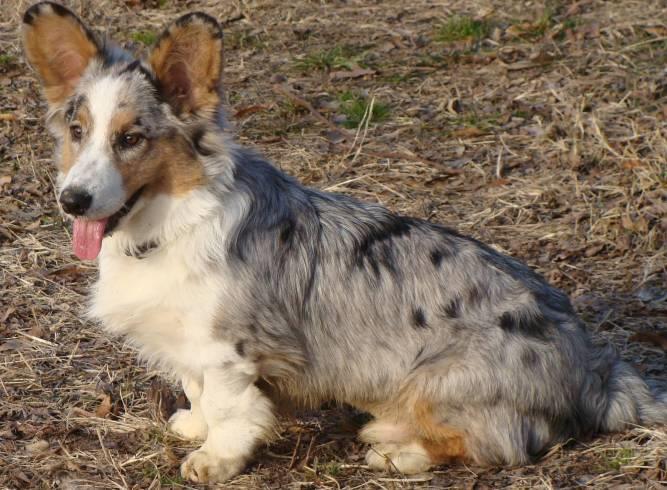
Most people start looking up Cardigan Welsh Corgis when they’re weighing up a puppy (or rescue) and trying to work out one practical thing: will this long-backed, short-legged herding dog fit daily life in their home. The answer depends less on the cute silhouette and more on routine—exercise, training, grooming, and a clear-eyed view of health risks.
Cardigans are steady, observant dogs bred to move stock, think for themselves, and stay close to their person. They can be brilliant companions in both city and country settings, as long as you’re prepared for a dog that notices everything, sheds seasonally, and benefits from calm structure and sensible handling of that long spine.
Breed category: Herding (pastoral) group
Country of origin: Wales (United Kingdom)
Typical size: about 30 cm at the shoulder (breed standard ideal)1, 2
Life span: often around 12–15 years (varies with genetics, weight, and care)7
Grooming: medium (double coat; seasonal shedding)1, 2
Exercise: moderate, with a strong need for mental work as well as walks6
History and origin
The Cardigan Welsh Corgi comes from Cardiganshire in Wales, shaped by farm work: moving cattle, patrolling boundaries, and staying responsive to the person walking behind. The breed’s low build wasn’t an accident—it helped the dog duck away from hooves while keeping close to stock.
Cardigans and Pembrokes are related but distinct breeds with different histories and breed standards. Cardigans are usually a touch heavier-boned, and one of the easiest tells is the tail: a Cardigan’s tail is long and brush-like, carried low when standing and lifted slightly when moving—never curled over the back.1, 2
Physical characteristics
A Cardigan is long in body, low to the ground, and sturdily built, with a weatherproof double coat and large, upright ears. The movement is meant to be free and active, with good reach and drive—not a shuffle.1, 2
Size and proportions
Breed standards focus on balance rather than a single “perfect” weight. In the Australian National Kennel Council (Dogs Queensland) standard, the ideal height is 30 cm at the shoulder, with weight “in proportion to size”.1
Coat and colour
The coat is short-to-medium length, harsh in texture, with an undercoat that helps the dog cope with wet weather. Common colours include red, sable, brindle, and blue merle, often with white markings (though white shouldn’t dominate).1, 2
Tail (and why “may be docked” is usually wrong here)
Cardigans are a natural long-tailed breed under major kennel club standards. If you see Cardigan puppies advertised as routinely docked, treat that as a serious cue to ask questions: in much of Australia, cosmetic tail docking is restricted or banned, and reputable breeders should be able to explain any medical procedure clearly and provide veterinary documentation.1, 8
Temperament and daily behaviour
Cardigans tend to be alert, biddable, and quietly watchful—dogs that track the household like a small, steady shadow. Many are affectionate with their people while still keeping a little independence, the way a working dog does when it’s making decisions in the paddock.
They often do well with children when introductions are calm and supervision is routine, especially in the puppy months when herding instincts can show up as circling or nipping at heels. Early training gives that instinct somewhere useful to go.6
Training and exercise needs
Cardigans are intelligent and responsive, but they’re not robots. Training works best when it’s consistent, reward-based, and woven into normal life—short sessions, clear cues, and enough repetition that the dog can relax into knowing what to do.
- Daily exercise: brisk walks plus sniffing time and a little off-lead running in a safe area (where appropriate).
- Mental work: food puzzles, scent games, basic obedience refreshers, and trick training.
- Dog sports: many enjoy obedience, rally, and agility-style foundations, with sensible jump heights and conditioning.
Because of the long back, it’s worth being conservative with repeated high-impact jumping (especially in puppies) and focusing on strength, coordination, and controlled movement instead.6
Health concerns to know about
No breed is “problem free”, and Cardigans are no exception. The most helpful approach is plain and preventative: know the conditions that occur in the breed, buy from someone who health tests, keep your dog lean, and treat pain or mobility changes as a reason to see a vet promptly.
Back problems (IVDD and spinal issues)
Intervertebral disc disease (IVDD) can occur in Cardigans and may present as pain, reluctance to jump, weakness, or sudden neurological changes. Any sudden wobbliness, dragging of feet, or yelping when lifted is an urgent veterinary matter.3
Hips and joints
Hip dysplasia and other orthopaedic issues can occur across many breeds. Responsible breeders typically screen breeding dogs (for example, via hip scoring schemes or equivalent orthopaedic assessment) and should be willing to show documentation.4
Eyes and inherited disease screening
Eye conditions (including inherited retinal disease) are recognised in the breed, and many breed clubs encourage routine eye examinations and relevant DNA testing where available. Ask what the breeder tests for, and ask to see the results rather than relying on verbal reassurance.5, 7
Weight management (the quiet risk)
Extra kilos make everything harder on a low, long-bodied dog—joints, discs, heat tolerance, and stamina. Keeping a Cardigan lean is one of the simplest, most powerful health choices you can make, and your vet can help you set a realistic target condition score.
Grooming and care
Cardigans have a double coat that does its own weatherproofing. Your job is to keep it clean, untangled, and moving through the seasons.
- Brushing: once or twice a week for most of the year; more often during seasonal sheds.1, 2
- Nails: short nails matter for posture and movement in a low-set dog—trim regularly.
- Ears and teeth: check weekly; maintain dental care as advised by your vet.
Cardigan Welsh Corgi as a family pet
In the right home, a Cardigan is a practical companion—small enough to travel easily, sturdy enough for daily walks, and sharp enough to notice when the routine changes. They do best with gentle boundaries: a place to settle, regular exercise, and training that makes the world predictable.
If your household is very busy, very noisy, or changes shape constantly, you’ll get the best result by putting extra effort into early socialisation and calm handling, so the dog learns to observe without escalating into barking or herding behaviour.
Finding a breeder or rescue
Start with your local veterinarian, reputable breed clubs, and established rescue groups. If you’re buying a puppy, make the process slow on purpose—the good breeders rarely need to rush you.
Practical checks before you commit
- Meet the puppy in person, and see where it was raised. Avoid “delivery only” arrangements.9
- Ask to meet the dam (and, if possible, the sire) and observe temperament and handling.10
- Ask what health screening has been done (hips/eyes/DNA as relevant) and request written proof.9
- Be cautious of ads offering very young puppies. The RSPCA notes reputable sellers do not rehome puppies under 8 weeks, and “buying blind” is a major red flag.9
Final thoughts
A Cardigan Welsh Corgi is not a “low-effort” dog, but it can be a calm, steady presence—bright-eyed, close to the ground, and always aware of what’s moving through the room. Choose carefully, train gently, keep the body lean and strong, and you’ll usually see the breed at its best: capable, companionable, and quietly game for whatever the day brings.
References
- Dogs Queensland (ANKC) – Welsh Corgi (Cardigan) breed standard
- The Kennel Club (UK) – Welsh Corgi (Cardigan) breed standard
- Cardigan Welsh Corgi Health Foundation – Intervertebral Disc Disease (IVDD) overview
- Australian Veterinary Association (AVA) – Policy on hip dysplasia
- Australian Veterinary Association (AVA) – Genetic testing in dogs
- RSPCA Knowledgebase – How much exercise does my dog need?
- American College of Veterinary Surgeons (ACVS) – Degenerative myelopathy
- Western Australian Government – State Government ban of cosmetic dog tail amputation (media statement)
- RSPCA Knowledgebase – Red flags when looking for a dog or cat online
- ABC News (Australia) – How to tell if a puppy is from a reputable breeder

Veterinary Advisor, Veterinarian London Area, United Kingdom