
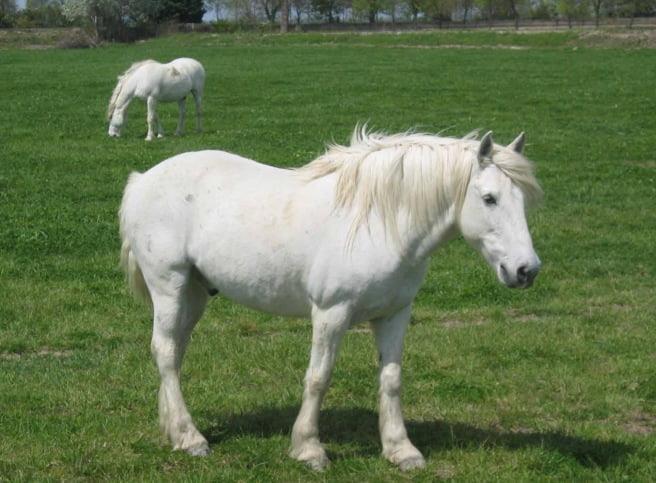
People usually look up the Camargue horse when they’re trying to identify the small white horses seen in the wetlands of southern France, or when they’re weighing up whether the breed suits trail riding, cattle work, or quiet, capable leisure riding. The details matter: size, temperament, and what “white” really means in horse coat genetics can change how you choose, train, and care for one.
The Camargue is an old working breed shaped by marshes, salt wind, and long days under saddle. What follows sticks to the practical facts—where the breed comes from, how it’s managed, what it’s like to handle, and which popular claims are shaky.
Camargue horse: quick facts
- Origin: Camargue (Rhône delta), southern France1, 2
- Height: commonly 135–150 cm (about 13.1–14.3 hands)1
- Weight: often reported around 350–500 kg (varies by individual and condition)1
- Coat colour: grey (born dark and lighten with age; adults can appear “white”)1, 8
- Built for: stamina, sound feet, sure-footed movement on wet, uneven ground1
- Traditional work: ridden by gardians for managing semi-free-ranging cattle and bulls in the Camargue2, 3
- Conservation status: listed as “not at risk” in FAO’s DAD-IS breed listing (recent editions)1
Where the Camargue horse comes from
The Camargue horse developed in the Rhône delta, a broad wetland of lagoons, reedbeds, salt marsh, and grazed flats. For generations, horses have been kept in herds (often managed in a semi-free-ranging way) and used as practical working mounts for the region’s livestock culture.2
Many sources repeat a neat origin story linking the breed to “Moorish” horses from the 8th century. The safer, evidence-based position is simpler: the breed’s precise origins are uncertain, but it has been present in the region for a very long time and shaped by local conditions and working use rather than by a single recorded foundation event.1
Life in the wetlands: what makes the breed different
The Camargue is often described as “wild”, but most horses are better understood as semi-feral: they live in groups on open land and are periodically handled, selected, and worked. That blend—freedom of movement with human management—has helped lock in a tough, economical type.2
One distinctive trait is how at home they are in waterlogged country. A Camargue horse can wade and swim when it needs to, and you’ll often see them moving through shallow water as if it’s just another track.1
Physical characteristics
Camargue horses are compact and muscular, built more like a strong pony than a tall sporthorse. Typical height is around 135–150 cm at the withers, with solid bone and a deep body that lets them carry an adult without looking strained.1
Common breed descriptions include a sturdy frame, a deep chest, strong limbs, and a full mane and tail—practical features in a harsh, windy, insect-heavy environment where a lighter, finer-skinned type would struggle long-term.1
Coat colour: “white” that’s actually grey
Adult Camargue horses usually look white. Genetically and descriptively, they’re grey: they’re born dark (often black or dark brown) and progressively lighten over the years until the coat can appear nearly white.1, 8
This matters for identification. A truly white horse (dominant white or other rare white patterning) is not the same as a grey horse that has lightened with age, even if they look similar at a distance.8
Temperament: what riders commonly report (and what it means in practice)
The Camargue is widely described as hardy, sensible, and capable—traits that fit a working horse expected to cover ground all day and stay upright in slippery country.1
“Independent” is a word you’ll hear, and it can be useful when a horse needs to think about its feet and keep moving in difficult terrain. In training, that can translate into a horse that responds best to clear boundaries, calm repetition, and fair handling rather than constant pressure.
Traditional role: the horse of the gardians
In the Camargue, horses are closely tied to the gardians—mounted herders who manage the region’s cattle and bulls. The work is real: long distances, shifting ground, and moments of quick turning and acceleration when stock moves unpredictably.3
This is why the breed’s reputation centres on stamina and sure-footedness rather than flashy movement or height.
Uses today (France and Australia)
Outside the Camargue, these horses are mostly kept as riding horses: trail riding, light sport, and general leisure. They can turn their hoof to a range of disciplines, but they’re not purpose-bred for modern high-level show jumping or big-moving dressage in the way warmbloods are.1
In Australia, the breed exists in small numbers and tends to appeal to riders who like compact, tough horses and don’t mind a type that sits outside mainstream competition breeding.
Cultural significance in France
The Camargue horse is woven into local identity—seen in parades and ceremonies, especially around Arles. A well-known example is the Fête des Gardians, held on 1 May each year, with mounted processions and events that spotlight the region’s horse-and-cattle tradition.3, 4
Conservation and “at risk” claims
You’ll often see the Camargue horse described online as “endangered” or “at risk”, sometimes with a fixed world population number. Those claims are frequently repeated without a clear primary source.
In recent listings, the FAO’s DAD-IS breed record for Camargue reports the breed as “not at risk”.1
That doesn’t mean the landscape is secure. The Camargue wetland is a managed environment under pressure from water management, agriculture, salt, tourism, and climate-driven change. The region is protected in part through the Parc naturel régional de Camargue, established on 25 September 1970, which supports protection and management of natural and cultural heritage alongside local activities.5, 6
Breeding and registration
Camargue horses are managed through a breed organisation and studbook in France. If you’re assessing a horse advertised as Camargue outside France, ask for registration details and provenance, not just a “type” description—especially because many grey, compact horses can resemble the breed at a glance.1
Where to see Camargue horses in France
The clearest place to see Camargue horses behaving as they were shaped to behave is the Camargue itself—among wetlands, open grazing, and working stock. Look for local operators with a conservation-minded approach, and remember that “wild” herds are commonly managed and periodically handled rather than fully unmanaged feral animals.2
References
- Camargue horse (breed overview; includes height range and DAD-IS/FAO status summary) — Wikipedia
- Camargue (region overview; manades and semi-feral livestock context) — Wikipedia
- Les gardians de Camargue — Office de Tourisme d’Arles
- Festival of the gardians (herdsmen) in Camargue — Camargue en Provence
- INPN (MNHN): Camargue, Parc naturel régional (creation date and legal basis) — Inventaire national du patrimoine naturel
- Son histoire (official history and creation date 25 September 1970) — Parc naturel régional de Camargue
- Parc naturel régional de Camargue (park profile and creation date) — Fédération des Parcs naturels régionaux de France
- Gray (horse coat colour genetics and progressive greying) — UC Davis Veterinary Genetics Laboratory
- Parc naturel régional de Camargue (protected area overview) — Wikipedia

Veterinary Advisor, Veterinarian London Area, United Kingdom