
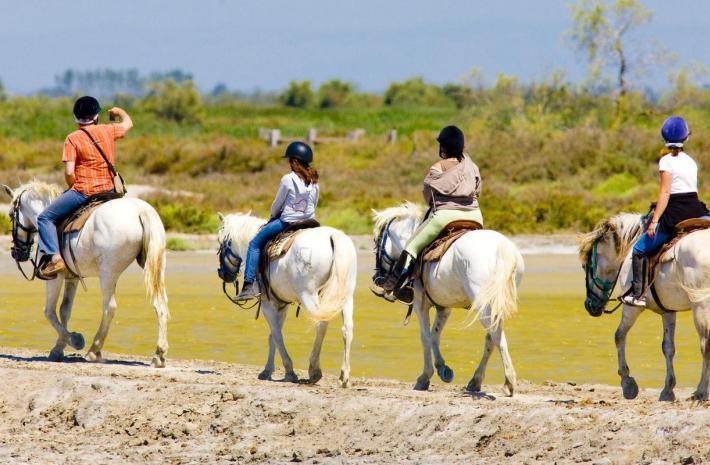
People usually look up Camargue equitation when they’ve seen riders in wide-brimmed hats moving cattle through shallow water and want to know what, exactly, they’re watching—and whether it’s a real riding discipline or just a holiday showpiece. It’s both heritage and working practice, shaped by a wet, windy river delta where a horse needs to turn fast, stand quietly, and keep its footing.
Camargue equitation is the traditional working riding of the gardians (cattle herders) in southern France’s Camargue. It sits alongside the region’s cattle culture and the Camargue horse itself, and it’s best understood as practical horsemanship first, style second.1, 2
What Camargue equitation is (and what it isn’t)
Camargue equitation is the working riding tradition of the gardians—horsemen who manage semi-free herds of cattle in the Camargue’s marshes and open flats.1, 2 You’ll often see it described as a form of “working equitation”, but it isn’t a single global rulebook with standard tests in the way dressage is. It’s a local, functional style: the horse goes where it’s pointed, quickly and without fuss, while the rider keeps a free hand for gates, ropes, or the gardian’s trident.
The feel is typically light in the contact. The horse is expected to respond to brief, clear aids rather than being held in constant rein pressure, because the rider’s attention is split between terrain, livestock, and other riders.3
Where it comes from: land, livestock, and the gardians
The Camargue is the Rhône River delta in southern France—a mosaic of marsh, reedbed, lagoons, and salt flats. Much of it is protected, including the Parc naturel régional de Camargue, but it is also a lived-in landscape with long-running agricultural and pastoral traditions.2
In that environment, horses and cattle are managed in groups (manades), and the Camargue horse became the traditional mount for moving and sorting stock in wet ground where machinery struggles.4
The Camargue horse: built for water, wind, and distance
The Camargue horse is a recognised French breed closely tied to the region’s cattle work and cultural events. Traditionally it lives in semi-feral conditions in the marshy country, and it is known for being hardy, agile, and sure-footed.4
A common misconception is that Camargue horses are “born white”. They aren’t. Like other grey horses, foals are born dark and lighten over the years, often becoming very pale as adults while keeping dark skin beneath the coat.5
Breed stewardship and the stud-book
In France, the Camargue breed is managed through an official stud-book overseen by the breed association (Association des Éleveurs de Chevaux de Race Camargue), with the Institut français du cheval et de l’équitation (IFCE) responsible for applying the stud-book rules. The regulations describe the breed’s cradle area and the traditional manade (free-living herd) management system that underpins registration categories.6
What the riding looks like on the ground
When you watch a skilled gardian ride, the signature is economy. The seat stays deep and stable, the horse stays ready to change direction, and the reins are used sparingly so one hand can work. In day-to-day cattle handling that can mean opening and closing gates, carrying equipment, or signalling around stock—tasks that don’t allow for two-handed, constant-contact riding.3
Because it grew out of work, Camargue equitation values:
- Sure-footed rhythm over perfect arena geometry
- Fast turns and clean stops without tension
- Responsiveness to small, brief aids
- Calmness in groups (horses, people, cattle, noise)
Training approach: keep it practical and kind
There isn’t a single “official” Camargue training syllabus used worldwide, so be wary of anyone selling a rigid, branded method. What is consistent is the goal: a horse that is confident in open spaces and clear about its job.
If you’re adapting the style for general riding, the building blocks are familiar to most good horsemanship:
- Solid groundwork (leading, yielding, standing quietly, accepting gear and touch)
- Clear stop-and-go cues so you don’t need constant rein or leg
- Balance first: forward, straight, and supple before “collection”
- Exposure training to water, reeds, wind, wildlife, and groups—introduced gradually and safely
Traditional Camargue riding attire (what you’ll actually see)
The classic image is the gardian in a broad-brimmed hat, practical boots, and hard-wearing clothing suited to sun, wind, and scrub. The details vary by place and occasion, but the intent is consistent: clothing that protects, doesn’t snag, and stays comfortable for long hours in the saddle. The look is cultural, but it’s also functional.
Culture and events: where the horses fit
Camargue horse culture is braided through local festivals and arena events. One of the best-known is the course camarguaise, a regional bull sport recognised in France, where athletes (raseteurs) aim to remove small items attached near the bull’s horns; the bull is not killed as part of the event.7 Horses are part of the broader “bouvino” world surrounding cattle breeding and celebration, including processions and traditional handling displays.1, 4
Camargue equitation as a visitor experience
In the Camargue itself, riding tourism is common: guided rides through wetlands, along tracks between lagoons, and sometimes near coastal stretches. The best operators keep groups small, match horses to riders honestly, and treat the landscape as the fragile place it is.8
If you’re choosing a ride in France, look for:
- Qualified, insured guides with clear safety briefings
- Horses that look fit, calm, and well shod/hoof-trimmed for the terrain
- A frank conversation about your experience level (and an easy “no” if the ride won’t suit)
Camargue equitation in Australia: what’s realistic
Camargue equitation isn’t widely standardised in Australia, and claims that it is “particularly popular” here are usually overstated. What is realistic is learning from the tradition: building a handy, balanced horse for open country, improving one-handed control, and practising calm precision around obstacles and livestock—all with your local coaches and appropriate safety standards.
Final thoughts
Camargue equitation is not a costume or a trick. It’s a working language between horse and rider, shaped by marshland and cattle, refined by repetition, and kept alive because it still does a job. If you approach it with respect for the horse, the land, and the limits of what you’re replicating outside France, it offers something quietly rare: riding that looks simple because it’s been made simple, one careful cue at a time.
References
- Camargue equitation (overview and associations)
- Camargue (region and regional park background)
- Riding style of the gardians in the Camargue (one-handed working style and light aids)
- Camargue horse (breed use and relationship to gardians and cattle work)
- A Bride Camargue: The Camargue horse (coat colour change and regional context)
- Association des Éleveurs de Chevaux de Race Camargue: Stud-book regulations (IFCE role, cradle area, manade definitions)
- Office de tourisme – Vauvert: Camargue traditions and course camarguaise (raseteurs and attributes)
- Les Bains Gardians: Horse rides in the Camargue (guided riding tourism example)

Veterinary Advisor, Veterinarian London Area, United Kingdom