
Most people land on a budgie care page because something practical needs sorting: a new bird has arrived, a cage setup feels too small, a seed-heavy diet has become a worry, or a once-bright little parrot is suddenly quiet and fluffed up. With budgerigars, small mistakes tend to show up quickly—often as weight loss, breathing trouble, or a bird that stops eating when stressed.
Below is a clear, grounded guide to keeping a budgie safe and steady at home: how they live in the wild, what that means for housing and diet, and the early warning signs that should push you towards an avian vet rather than “waiting it out”.
History and origin
Native habitat and natural history
Budgerigars (Melopsittacus undulatus) are native to mainland Australia. In the wild they are highly nomadic, moving across open country in response to rainfall and seeding grasses, and they’re usually seen in flocks rather than alone.1, 2
They feed mostly on grass and herb seeds gathered from the ground and, because dry seed provides very little moisture, wild birds depend on reliable daily access to fresh water.1, 2
Domestication and popularity as a pet
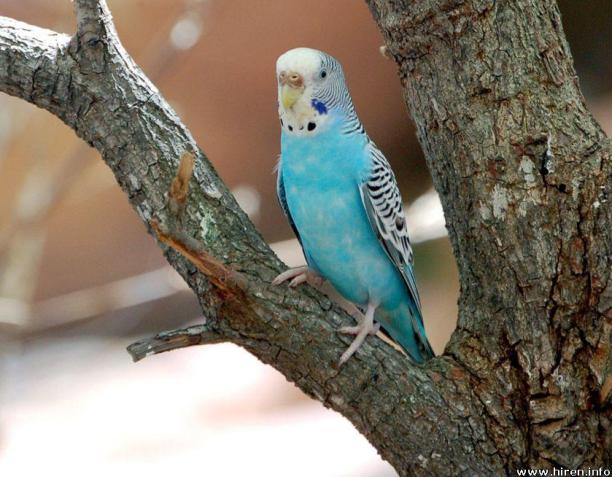
Budgies have been kept and bred in captivity since the 1800s, and selective breeding has produced many colour forms beyond the wild green-and-yellow pattern—blues, whites, yellows, mauves, greys, and more.1, 2
Physical characteristics
Appearance
Budgerigars are small parrots, about 18 cm long on average, with a long tail and fine black barring across the head and wings in wild-type birds.2
Unique traits (including vocal mimicry)
Like many parrots, budgies are vocal learners and some individuals can mimic human speech and household sounds. Not every budgie will “talk”, and speech is more likely with regular, gentle interaction in a low-stress environment.6
Temperament and behaviour
What budgies are like at home
Budgies are alert, social birds that spend much of the day climbing, chewing, foraging, calling to flock mates, and making short flights between perches. In a house, those same instincts show up as a need for daily movement, variety, and predictable social contact.
One budgie or two?
A single budgie can bond strongly with people, but it also relies heavily on human time and routine. A pair can provide company for each other, though they may be less motivated to focus on human speech training. Either way, aim for a calm home base, consistent handling, and a cage that allows real movement rather than just perching.
Budgies and other pets
Supervise closely around cats and dogs. Even a “gentle” pet can injure a budgie in a moment, and stress alone can be dangerous for small birds. If your budgie has out-of-cage time, treat it as a closed-door, fully supervised session.
Housing and environment
Choosing a cage: think width, not height
Budgies fly horizontally. A wider cage with room for short flights is more useful than a tall, narrow one. Use safe, easy-to-clean materials and avoid placing the cage in a thoroughfare where the bird is constantly startled.
Perches, toys, and daily enrichment
Set up perches so droppings don’t fall into food and water bowls. Offer a mix of perch diameters and textures (including natural branches from bird-safe species). Rotate toys to keep curiosity alive, and include items that encourage foraging and chewing.
Air quality and household hazards
Budgies are extremely sensitive to airborne contaminants. Keep them out of kitchens and away from cooking fumes; non-stick cookware fumes (including PTFE/Teflon) have been associated with severe, sometimes fatal, toxicosis in pet birds. Aerosol sprays, perfumes, smoke, self-cleaning ovens, and gas fumes are also high-risk around birds.3
Training and socialisation
Early trust-building
In the first weeks at home, focus on predictable, low-pressure contact: a steady voice, slow hands, and offering favourite foods. Let the bird choose to approach. Budgies learn quickly when they feel safe, and they shut down just as quickly when they feel cornered.
Short sessions, clear rewards
Keep training sessions brief and end while the bird is still interested. “Step up” onto a finger or perch is a practical foundation behaviour. Use tiny food rewards and calm praise, and avoid chasing the bird around the cage—fear is a fast way to undo trust.
Diet and nutrition
Base diet: avoid seed-only feeding
Wild budgies may live on seeds, but a captive seed-only diet is linked with nutritional imbalance and long-term health problems. For most pet budgies, a balanced pellet diet with measured seed and a daily selection of vegetables is a safer approach.4
Fresh foods: what to offer (and what to avoid)
Offer a range of vegetables and leafy greens in small chopped pieces. Fruits can be offered in smaller amounts. Avoid avocado entirely, and don’t offer chocolate, caffeine, or highly salty/sugary foods.4
- Good everyday options: dark leafy greens, carrot, capsicum, broccoli, herbs, pumpkin, beans (cooked and cooled).
- Use sparingly: fruit (higher sugar), very watery veg with low nutrition.
- Avoid: avocado (toxic), chocolate, caffeine, alcohol, salty snacks.4
Switching from seeds to pellets without starving your budgie
Many budgies raised on seed will pick around pellets at first. A gradual change is usually safer than suddenly removing familiar food. If your bird is refusing food, losing weight, or acting unwell during a diet change, pause and speak with an avian vet.4
- Mix a small amount of pellets into the usual seed and increase the pellet proportion slowly over days to weeks.4
- Offer vegetables daily, but remove fresh foods after a couple of hours so they don’t spoil.4
- Offer fresh, clean water at all times, and wash bowls daily.4
Health and lifespan
Common warning signs
Budgies hide illness well. Small changes matter. Seek veterinary advice promptly if you notice:
- Fluffed-up posture, sleepiness, sitting low on the perch
- Reduced appetite, or “eating” while dropping food
- Tail bobbing, wheezing, clicking, open-mouth breathing
- Marked change in droppings (volume, colour, or consistency)
- Weight loss (a kitchen scale and regular weigh-ins are useful)
How long do budgies live?
With good husbandry—steady diet, clean air, space to move, and prompt veterinary care—many pet budgies live for years. Lifespan varies widely with genetics and care, and it’s best discussed with an avian vet who can assess your bird’s condition and diet.
Preventative care
Plan on a relationship with an avian veterinarian, not just emergency visits. Routine checks help catch problems early, especially nutritional issues and respiratory disease.
Grooming and maintenance
Feathers and bathing
Most budgies enjoy bathing. Offer a shallow dish of water or a gentle mist, and let the bird choose. Clean water and a clean cage do more for feather quality than any product.
Beak and nails
Provide safe chewing options (such as cuttlebone or mineral blocks) and a variety of perches to help natural wear. If nails or beak become overgrown, have an avian vet or experienced bird groomer show you the safest approach—blood vessels are close, and trimming injuries are common.
Fun facts (kept in proportion)
Budgies are famous for vocal mimicry, and a few have become notable record-holders. These stories are outliers, but they do reflect the species’ capacity for learning when conditions are right.5, 6
Final thoughts
A healthy budgie looks busy: climbing, calling, preening, and eating with steady interest. Give them space to move, clean air, safe food, and a predictable rhythm of gentle contact. In return you get one of Australia’s most observant small parrots—bright-eyed, quick to learn, and always listening.
References
- Australian Museum — Budgerigar (Melopsittacus undulatus)
- BirdLife Australia — Budgerigar profile
- RSPCA Knowledgebase — Keeping birds safe from household hazards (including kitchen fumes and non-stick cookware)
- VCA Animal Hospitals — Feeding budgies (diet balance, pellets, fresh foods, water hygiene)
- Sparkie Williams — background and reported vocabulary (reference overview)
- Talking birds — overview of vocal mimicry and reported budgerigar records (reference overview)

Veterinary Advisor, Veterinarian London Area, United Kingdom