
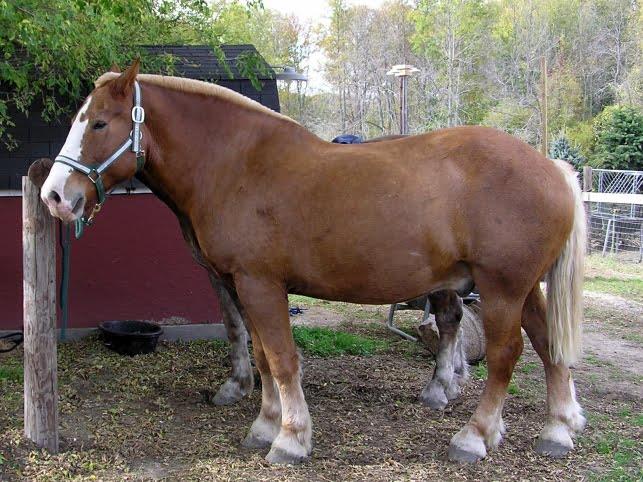
People usually search for the Brabant (Belgian Heavy Draught) when they’re checking whether a huge, calm-looking horse will suit real work—logging, farm pulls, carriage driving—or a quieter life as a steady riding and harness partner. Size matters here. So does temperament. A mismatch can mean costly gear, handling risks, and a horse that struggles under the wrong conditions.
Below is a clear, grounded guide to what the Brabant/Belgian heavy draught horse is, what it tends to look like, what it was bred to do, and what day-to-day care looks like when you’re living with a true heavyweight.
Brabant (Belgian Heavy Draught) at a glance
- Height: commonly around 16–17 hands (some lines taller)1, 2
- Weight: roughly 820–1,100 kg is typical for mature horses1, 2
- Colours: usually bay, chestnut/sorrel, and roan; other colours exist but are less common2, 3
- Temperament: generally docile, calm, patient, and cooperative when handled well2, 1
- Build: compact, heavily muscled body; broad chest; strong bone; feathering can vary by bloodline and management preferences3
- Origins: Belgium (historically linked with the Brabant region and the older Flemish “great horse” type)2
- Typical work: heavy draught, farm and forestry work, carriage and harness, shows and heritage demonstrations4
Names and types: Brabant vs Belgian Draft
In everyday use, “Brabant” and “Belgian heavy draught” are often used as if they’re the same animal. In practice, the name can also hint at type: European Brabant stock is typically compact and very heavily built, while “Belgian Draft” in North America often refers to a related population that has been selected somewhat differently over time.5
If papers matter—show rules, breeding, or import/export—work from the horse’s studbook and registration rather than the stable name.
History: a horse shaped by heavy work
The Belgian heavy horse descends from older Low Countries heavy-horse types, and the modern breed was refined in the late 19th century as formal breeding and recording took hold.2 Studbook publishing in Belgium dates back to the 1880s, which helped fix a recognisable type and track bloodlines more consistently.6
These horses were built for slow power: collar work, ploughing, hauling, and the steady, repetitive effort that kept farms and industry moving before engines became cheap and common. Even now, you can see the old job written into the body—wide chest, thick hindquarters, and a way of travelling that favours traction over speed.2
Physical characteristics: what to look for
A well-bred Brabant/Belgian heavy draught tends to look like it has been carved from dense timber—short-backed, deep through the girth, and filled with muscle over the quarters and shoulder.2, 3 The neck is typically thick, the head comparatively neat for the body, and the legs are strong-boned with substantial joints.
Feathering on the lower legs varies. Some breeding programmes have favoured heavier feather in recent decades, while others deliberately breed away from it because it increases grooming demands and can complicate skin management in wet, muddy conditions.3
Height and weight (and why it matters)
Most sources place mature Belgians around 16–17 hands and roughly 820–1,100 kg, with individuals outside that range.1, 2 That mass changes everything: floats and yards need to be sized for it, tack and harness must be genuinely heavy-duty, and fences that hold an ordinary riding horse may not hold a curious draught leaning a shoulder into the rails.
Temperament: calm, but never “harmless”
Brabants and Belgian drafts are widely described as docile, patient, and willing workers.2, 4 That reputation is often earned, but it shouldn’t be mistaken for guaranteed safety. A relaxed horse that weighs close to a tonne can still step sideways, spook, or barge through space simply because it doesn’t realise how much force it carries.
Quiet handling, clear boundaries, and consistent routines matter more than “dominance” or force. These horses learn patterns fast, and they notice what you do every day.
Common uses: where this breed still fits
The Brabant/Belgian heavy draught was built for traction and stamina rather than speed. In modern settings, you’ll most often see them in:
- Farm and smallholding work: cultivating, harrowing, hauling loads at a walking pace
- Forestry and logging: pulling timber in sensitive areas where machines would churn soil
- Carriage and harness: pleasure driving, events, and commercial carriage work (where permitted and well managed)
- Shows and heritage displays: heavy horse hitches, breed exhibitions, demonstrations of traditional farm work4
Training and care: the basics that keep a heavyweight sound
Good care for a Brabant is mostly ordinary horse care—just scaled up, and made more disciplined by the horse’s mass. Welfare guidance in Australia consistently points to the same foundations: reliable food and water, freedom of movement, shelter, regular checks, and timely attention to feet, teeth, parasites, injury and illness.7
Handling and training
- Start with calm repetition: leading, standing, picking up feet, loading, basic voice cues for harness work.
- Train for the job you actually do: a logging horse needs different skills and fitness than a parade carriage horse.
- Use equipment that fits: ill-fitting collars, harness, or bits can cause rubs and pressure injuries quickly on a heavy-working animal.
Hooves and legs
Routine farrier work is essential. Many horses need trimming or shoeing on a regular cycle (often measured in weeks, not seasons), and a farrier can also spot early changes in balance, cracks, or soreness before they become a lameness problem.8
If your horse carries heavier feathering, plan for extra time with washing, drying, and skin checks—especially through wet weather—because dermatitis can take hold unnoticed in dense hair.
Parasites, paddocks, and shelter
Parasite control is not just about dosing. It’s also manure management and pasture habits. Practical horse-care guidance emphasises strategies such as regular dropping removal, rotating paddocks, and choosing worming products with veterinary advice rather than guessing.9
Shelter matters year-round. Even horses with thick winter coats still need access to shade and protection from harsh weather.9
“Famous” Brabants and Belgian heavy horses
Many of the best-known Belgian-type horses are famous for size rather than battlefield legends: record-holding individuals have helped keep public attention on the breed, especially in North America.5 More quietly, the breed’s real history is written in ordinary places—fields, forests, and yards—where steady horses pulled until the day’s work was done.
Current status and conservation
Across the 20th century, mechanisation sharply reduced demand for heavy draught horses, and numbers fell in many places. In recent decades, interest has stabilised or grown in some regions through showing, heritage farming, and small-scale forestry, supported by breed organisations and studbooks that maintain pedigrees and type.1, 6
How the Brabant compares with other draught breeds
Draught breeds overlap in temperament and purpose, but they don’t feel identical in the hand. The Brabant/Belgian heavy draught is typically compact and immensely muscular, built for efficient pulling at a walk.2 Breeds like the Clydesdale are often recognised for more abundant leg feather and a taller, more “uphill” look, while Shires can be even taller again. Those differences are not just cosmetic—they affect harness fit, stable design, feed management, and the kind of work the horse finds easiest.
How tall is a Brabant/Belgian heavy draught horse?
Commonly around 16–17 hands, with some horses outside that range depending on bloodline and region.1, 2
How much do they weigh?
Often in the 820–1,100 kg range, with individuals heavier or lighter than that.1, 2
Are they good for beginners?
Many are calm, but their sheer size raises the consequences of ordinary mistakes. They can suit novice owners when there is experienced support on the ground, safe facilities, and handling habits that don’t rely on strength.2, 7
Do they need special care?
The principles are the same as any horse—feet, teeth, parasites, feed, water, shelter—but everything must be scaled appropriately: heavier-duty gear, careful weight management, and disciplined hoof and skin checks.7, 8
References
- Belgian Draft Horse Corporation of America — Fast Facts
- Encyclopaedia Britannica — Belgian horse
- European Brabant Association — Breed Description
- The Livestock Conservancy — Belgian Horse
- Wikipedia — American Belgian Draft
- La Bibliothèque mondiale du cheval — Stud Book des Chevaux de Trait Belges (history/record)
- Agriculture Victoria — Code of Practice for the Welfare of Horses (Revision 1)
- University of Minnesota Extension — Horse care and management (hoof care)
- RSPCA NSW — How to care for your horse

Veterinary Advisor, Veterinarian London Area, United Kingdom