
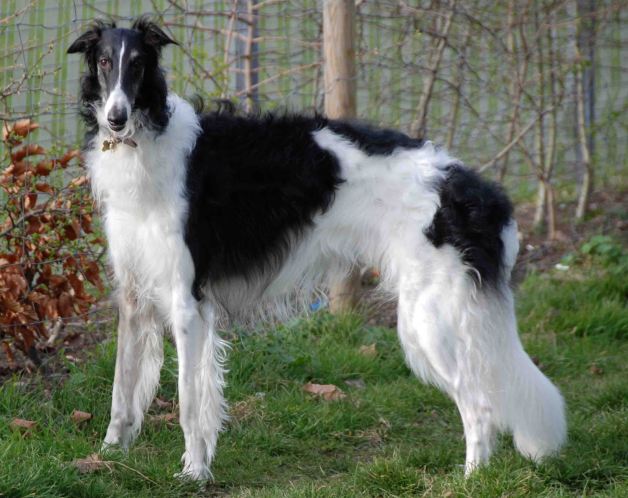
People usually start looking up Borzoi when they’re deciding whether this tall, quiet sighthound will fit their home — and whether they can meet the breed’s real needs for space, handling and safety. It’s a good moment to slow down, because the consequences of a rushed choice tend to show up later: escape accidents, chasing wildlife or cats, and preventable health emergencies like bloat (GDV).3
Below is a clear, practical guide to the Borzoi: what they’re like to live with, how to choose an ethical breeder or a rescue pathway in Australia, how to set up your home, and what health risks to take seriously from day one.
Borzoi at a glance
- Breed group: Hound (sighthound)
- Height (typical range): Dogs 75–85 cm; bitches 68–78 cm (often cited as a desirable range).2
- Minimum height in the ANKC/Dogs Australia standard: Dogs 74 cm; bitches 68 cm.1
- Coat: Silky; can be flat, wavy or rather curly (not woolly).1
- Colour: Any colour acceptable, except merle is not accepted in the breed standard.1
- Temperament (typical): Quiet, gentle, independent; sensitive to handling and harsh training
- Life expectancy: Commonly around 10–12 years (varies with genetics, injury risk and overall health)
History and origin
The Borzoi is a Russian sighthound, developed for coursing by sight across open country. The shape tells the story: long legs for stride, deep chest for lung capacity, and a narrow head built for speed rather than force. Modern Borzoi are mostly companions and show dogs, but the instinct to chase moving things is still part of the package, even in the gentlest individual.
Characteristics: appearance, temperament, and everyday behaviour
Appearance
Borzoi are tall, narrow and lightly built for their size, with a long, silky coat and a flexible outline that looks almost poured rather than assembled. The breed standard describes coat texture and pattern clearly: silky, flat to wavy (or rather curly), with heavier feathering on the body and tail; any colour is acceptable except merle.1
Temperament and personality (what it feels like to live with one)
Most Borzoi move through the house like a calm, long shadow: observant, not typically noisy, and often affectionate in a restrained way. They’re commonly described as independent and sensitive, which in practice means they respond better to quiet consistency than repetition, pressure or rough corrections.
They can be good family dogs in the right household, but they’re not built for constant physical jostling. With small children, management matters: supervise closely, teach gentle handling, and provide a resting space the dog can retreat to.
Prey drive and safety
Even a well-socialised Borzoi may chase wildlife, cats, or running small dogs. That’s not “bad behaviour”; it’s a sighthound brain doing what it was shaped to do. A secure fence and sensible lead rules do more for harmony than trying to train instinct out of them.
Finding a reputable Borzoi breeder in Australia
A reputable breeder is usually easy to recognise once you know what to look for: they’re transparent, patient, and far more interested in where the puppy is going than in making a quick sale.
Practical checks that matter
- See the puppy in a normal home setting (or a well-run kennel set-up) and, where possible, meet the dam. Walk away if you’re pushed into car-park handovers or rushed payments.4
- Ask for health records (vaccination, microchip details, parasite control) and make sure you understand what you’re being shown.4
- Expect questions. Responsible breeders typically screen buyers and will discuss lifestyle fit, fencing, other pets, and your plan for training and exercise.5
- Check local legal requirements where you live. In NSW, for example, you can verify breeder identification details (BIN/RON) via the NSW Pet Registry, which helps reduce scams and irresponsible sales.4
If you want one simple rule: it’s worth waiting for a well-bred, well-raised puppy. The early weeks shape the dog you’ll live with for the next decade.
Preparing for a Borzoi puppy: housing, training, and socialisation
Housing and fencing
Borzoi don’t need a farm, but they do need safe space. Think in terms of containment rather than acreage: secure fencing, closed gates, and routines that prevent door-dashing. If you have wildlife corridors nearby, assume your dog will notice them first and act fast.
Training: short sessions, gentle handling
Training tends to go best when it’s brief, calm and consistent. Many Borzoi are not “obedience-for-fun” dogs; they’re more likely to co-operate when the request makes sense and the reinforcement is clear. Prioritise:
- lead skills (loose lead, calm starts, no lunging)
- reliable recall as a safety habit (and still use a lead in unfenced areas)
- settle-on-mat and quiet handling for grooming and vet care
Socialisation: steady exposure, not overwhelm
Early socialisation is less about “meeting everyone” and more about learning the world is predictable. Aim for calm experiences: different surfaces, gentle visitors, quiet dogs, short car trips, and positive vet visits. Keep it controlled. A startled sighthound can be very quick to flee.
Health concerns and ongoing maintenance
Bloat (GDV): know the risk and the signs
Large, deep-chested dogs are at higher risk of gastric dilatation-volvulus (GDV), a life-threatening emergency where the stomach distends and may twist. Risk factors include large/deep-chested conformation, family history, eating quickly, feeding one large meal a day, and exercising soon after eating; raised food bowls may also increase risk in some dogs.3
Classic warning signs include non-productive retching, restlessness, drooling, abdominal distension, weakness or collapse. If you suspect GDV, treat it as urgent and go straight to an emergency vet.3
Discuss GDV prevention with your vet. In some at-risk dogs, a prophylactic gastropexy (often done at the time of desexing) can reduce the risk of a dangerous twist occurring later.3
Feeding and body condition
Keep your Borzoi lean and athletic rather than “well covered”. A consistent body condition check is more useful than the number on the scales, especially in a narrow, coated dog. WSAVA’s nutrition resources are a good reference point to discuss diet quality and body condition scoring with your vet team.6
Grooming and coat care
The Borzoi coat is long and silky and benefits from regular brushing to prevent matting, particularly behind the ears, in the feathering, and around the hindquarters. Occasional bathing is usually enough, provided you keep on top of tangles and check skin condition as you go.
Borzoi rescue and adoption: options and considerations
Adopting an adult Borzoi can suit people who prefer a dog with a known temperament and settled size. It can also be kinder on your schedule: fewer puppy demands, more predictability, and often some basic manners already installed.
Before you commit, be honest about prey drive management, fencing, and your capacity for gentle training. If you’re unsure, speak with your vet and the rescue organisation about what sort of home the dog has been thriving in.
Borzoi clubs and owner networks
Breed clubs and kennel council networks can be helpful for finding mentors, learning grooming and handling skills, and understanding what “normal” looks like in the breed. They can also help you interpret breed standards and terminology, which is useful when you’re assessing a breeder’s claims and paperwork.1, 2
Final thoughts
A Borzoi is not a dog that fills every space with noise and need. It watches, listens, and moves with sudden precision when something small and fast crosses its path. If you can offer secure boundaries, calm handling, and the sort of daily routine that suits an independent sighthound, a Borzoi can be a quietly devoted companion for many years.
References
- Dogs Australia (Dogs SA) – Borzoi breed standard
- The Borzoi Club of Queensland – FCI Borzoi standard (height range and breed details)
- Cornell University College of Veterinary Medicine – Gastric dilatation-volvulus (GDV) / bloat
- NSW Department of Primary Industries – Buying or adopting a dog (choosing a responsible breeder, avoiding scams)
- FOUR PAWS Australia – How to find a responsible breeder
- WSAVA – Global Nutrition Guidelines (resources including body condition scoring)
- The Kennel Club (UK) – Borzoi breed standard (coat/colour/size notes)
- American Kennel Club – Research update on genetic basis of bloat (includes Borzoi among studied breeds)

Veterinary Advisor, Veterinarian London Area, United Kingdom