
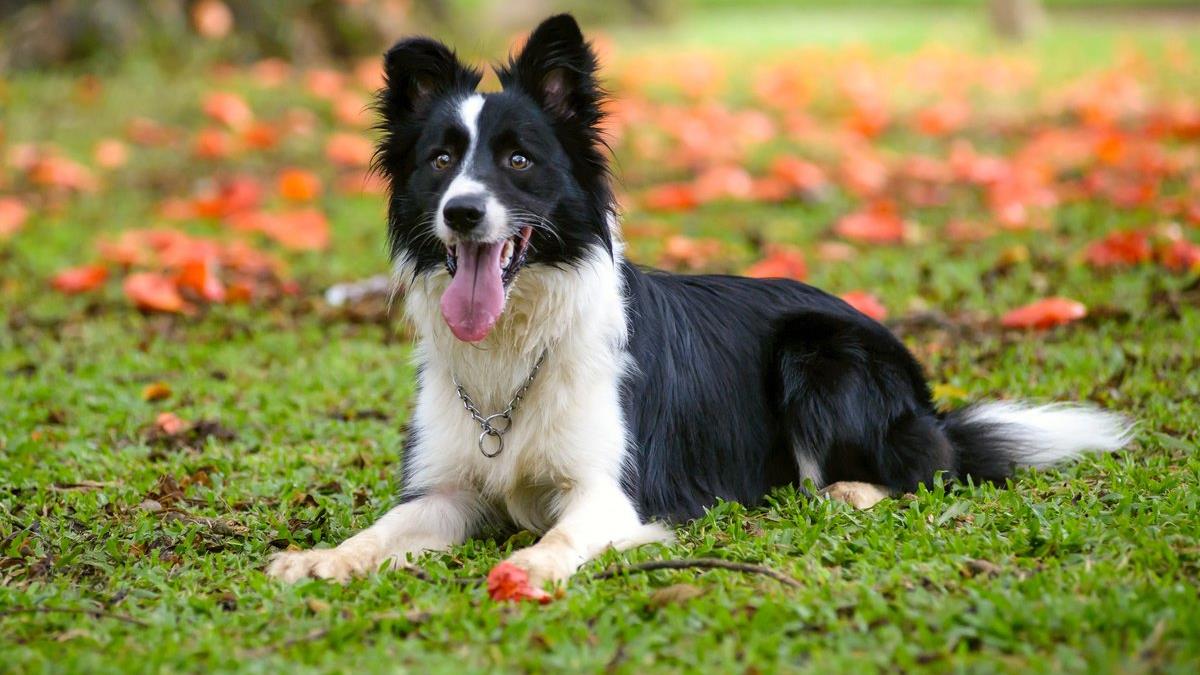
People usually look up Border Collies for one of two reasons: they’re considering one as a pet, or they already live with one and are trying to make sense of the pace—constant movement, quick learning, a mind that doesn’t switch off easily. When their needs are met, Border Collies can be steady, capable companions. When they aren’t, frustration tends to spill into nuisance behaviour.
Below is a grounded guide to what the breed is, where it came from, what daily life with one typically requires, and the health checks worth taking seriously—so you can decide whether a Border Collie fits your household, or adjust your care if one already shares your home.
Border Collie snapshot
- Breed type: Herding dog (pastoral working breed)1, 2
- Origins: Border country of Scotland and England (United Kingdom)2
- Size: Medium (typical adult height around the low–mid 50 cm range; bitches usually a little smaller)2, 3
- Life expectancy: Often around 12–15 years (individual variation is normal)3, 4
- Coat: Double coat; smooth or moderately long, weather-resistant2
Where the breed comes from
The Border Collie developed in the rugged borderlands between Scotland and England, shaped by sheep work and the practical demands of long days outdoors. The modern “type” is strongly tied to working ability: responsiveness at a distance, stamina, and the kind of attention that holds steady even when everything around them is moving.
One dog often mentioned in breed history is Old Hemp (born 1893), owned by Northumberland shepherd Adam Telfer. Old Hemp’s quiet, effective working style became influential, and he is widely regarded as a foundational sire in the breed’s development.5
Appearance and movement
Border Collies are built for quick changes of direction and long, efficient movement. They tend to look “ready” even at rest—alert eyes, a body held with balance, and an economy of motion that reads as effortless when they’re working.
Coat comes in two main varieties—smooth and moderately long—and both have a dense topcoat with a softer undercoat that provides weather resistance.2 Colour can vary widely; black-and-white is common, but many other colours and patterns occur. Breed standards note that white should not predominate.2
Temperament: bright, driven, easily under-stimulated
Border Collies are widely known for high trainability, fast learning, and intense focus. That focus is not just a party trick—it’s part of the herding toolkit. In day-to-day life, it means many Border Collies do best when their routine includes genuine mental work, not only physical exercise.
They often bond closely with their people, but they’re not a low-maintenance breed. Without enough structured activity, some will invent their own: shadow-chasing, barking, chewing, fence-running, and attempts to “herd” anything that moves.
The herding instinct (including “the eye”)
One hallmark of Border Collie herding is the use of a strong, steady gaze—often called “the eye”—to influence livestock movement. It’s a functional behaviour, not theatre, and it can show up at home as stalking, circling, and controlling motion (bikes, kids running, other pets).
Are Border Collies good family dogs?
They can be. The best fit is usually a household that enjoys training as a daily habit and can provide calm boundaries as well as activity. Many Border Collies are gentle with children they know, but supervision matters—especially with small kids—because instinctive nipping or circling can appear when children run and squeal.
Early socialisation, reward-based training, and clear routines tend to make the biggest difference to how a Border Collie settles into family life.
Training and exercise: what “enough” usually looks like
Border Collies respond well to training that is consistent, precise, and rewarding. Harsh handling often backfires, especially with dogs that are naturally sensitive to movement, voice, and pressure.
Early training and socialisation
Start early and keep it ordinary. Short, frequent exposures to people, friendly dogs, surfaces, noises, vehicles, and grooming routines helps a pup grow into an adult that can cope with the world without overreacting.
Practical ways to meet their needs
- Daily physical exercise: brisk walks, off-lead running where safe, structured fetch, hiking
- Daily mental work: obedience sessions, scent games, puzzle feeders, trick training
- Purposeful outlets: agility, flyball, disc, herding (where available), advanced obedience
Many Border Collies are described as “very active” dogs, and benefit from regular games and daily walks as a baseline—not a finish line.4
Health and lifespan
Border Collies are often robust, but like all breeds they have known inherited risks. A sensible approach is to assume you’ll need routine veterinary care plus targeted screening—particularly if you’re buying a puppy and can choose a breeder who tests.
Common concerns to discuss with your vet
- Hip dysplasia: a developmental joint problem; screening and selective breeding reduce risk, but don’t eliminate it6
- Inherited eye disease (including PRA): progressive retinal atrophy is an inherited group of conditions that can lead to gradual vision loss and blindness; there is no cure, but DNA testing exists for some forms and can guide breeding decisions7, 8
If you’re choosing a puppy, ask to see documentation of relevant health testing (not just verbal assurances), and discuss what screening is appropriate for the parents and the litter.
Grooming and coat care
That dense double coat is practical outdoors and messy indoors. Weekly brushing suits many dogs most of the year, with extra brushing during seasonal shedding. Pay attention behind the ears, along the breeches, and under collars or harnesses—areas where knots build quietly.
Keep nails trimmed, check ears regularly (especially in active dogs that swim or work outdoors), and use grooming as a low-stress handling lesson rather than an occasional wrestling match.
Feeding and nutrition
Border Collies tend to thrive on a balanced diet matched to their age and activity level. The main practical challenge is not “finding the perfect food”, but keeping weight steady—especially when training treats add up faster than people expect.
If you’re unsure, your vet can help you choose a diet and portion size that fits your dog’s workload, body condition, and any health concerns.
A note on intelligence (and the famous outliers)
Border Collies are often singled out in studies and stories about canine learning. One well-known example is Chaser, a Border Collie reported to have learned the names of 1,022 objects under structured training and testing.9 That kind of result reflects an exceptional dog and extraordinary time investment, but it does underline a broader truth: this breed tends to notice patterns quickly, and they remember what you practise.
Final thoughts
A Border Collie is rarely “just” a pet. It’s more like living alongside a working mind that constantly scans the environment for cues and tasks. If you can provide daily training, meaningful activity, and calm structure, the breed can be a steady presence—sharp-eyed, athletic, and deeply engaged with its people. If your household needs an easy-going companion that’s happy with a short stroll and a nap, another breed is usually kinder for everyone involved.
References
- Dogs NSW (ANKC affiliate) – Border Collie: appearance, height, health overview
- The Kennel Club (UK) – Border Collie breed standard
- PLOS ONE (via PubMed Central) – Morphological traits of popular purebred dogs in Australia (includes Border Collie height/weight ranges sourced from ANKC)
- RSPCA Pet Insurance Australia – Border Collie breed overview (size, lifespan, activity level)
- Old Hemp (1893–1901) – Overview of historical significance in Border Collie development
- Australian National Kennel Council / Australian Veterinary Association (ANKC/AVA) – Hip dysplasia information and scoring guidance
- Cornell University College of Veterinary Medicine – Progressive retinal atrophy (PRA) overview
- Merck Veterinary Manual (Dog Owners) – Progressive retinal atrophy and related retinal disorders
- ScienceDaily – Summary of research on Chaser learning 1,022 object names (Behavioural Processes)

Veterinary Advisor, Veterinarian London Area, United Kingdom