
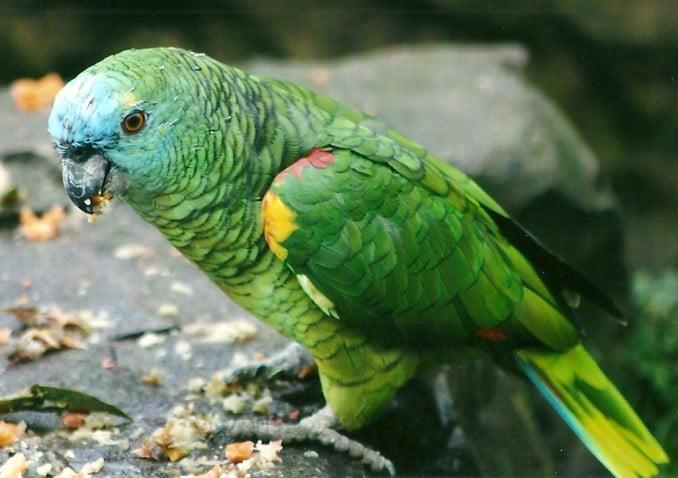
People usually look up blue-fronted Amazons when they’re weighing up a big decision: whether this striking South American parrot is the right fit for a home in Australia, and what “right care” actually looks like once the novelty wears off.
They can live for decades, and they don’t quietly fade into the background. Noise, mess, specialised vet care, and the daily need for attention and enrichment are the real costs. The details below focus on what’s reliable: how the species lives in the wild, what that means in captivity, and what Australians should know about keeping and importing pet birds.
Quick facts (blue-fronted Amazon / Amazona aestiva)
- Adult size: commonly ~35–38 cm long (varies by subspecies and individual)
- Weight: often ~300–500 g (varies by sex, diet, and body condition)
- Typical lifespan: often several decades; 50+ years is possible with excellent care
- Diet in the wild: largely seeds, fruits, blossoms and other plant material
- Conservation status: status depends on the authority used; check current listings before assuming “Least Concern”1
- Legal/import note (Australia): importing pet birds into Australia is tightly restricted and, for household pet birds, generally only possible from New Zealand under strict conditions6, 7
Identification and physical characteristics
Blue-fronted Amazons are compact, broad-chested parrots built for climbing and cracking hard foods. The name comes from the blue patch across the forehead, usually paired with yellow on the face. The body is mostly green; many birds show red on the “shoulder” area of the wing, visible as they shift and stretch.
Sexes look broadly similar. Some individuals show subtle differences in head shape or intensity of colour, but it isn’t dependable enough to sex a bird by eye alone; DNA testing or veterinary sexing is the practical path if it matters for breeding or medical decisions.
Range, habitat, and the “wild in Australia” claim
In the wild, Amazona aestiva occurs across parts of central and eastern South America, including Brazil, Bolivia, Paraguay and northern Argentina, using a mix of wooded habitats and more open country with trees.2
The earlier draft suggested blue-fronted Amazons are found in the wild across northern Queensland, the Northern Territory, and coastal New South Wales and Victoria. That’s not a reliable general description. In Australia they are best treated as an exotic pet species; if you hear of free-flying birds, assume escapes or localised, non-natural occurrences rather than an established native distribution.
Is a blue-fronted Amazon a good pet in Australia?
They can be deeply engaging companions: alert, observant, and often highly responsive to routine. They’re also intense. A blue-fronted Amazon tends to notice everything—changes in the room, changes in your schedule, changes in your attention—and that sensitivity can show up as noise, destructiveness, or feather-damaging behaviour if the day-to-day setup isn’t right.5, 9
Before committing, it helps to be honest about a few realities:
- Time: they do best with frequent, predictable interaction and structured activity across the week.
- Noise: loud calling can be normal parrot behaviour, and it can strain households and neighbours.
- Mess: food scattering, feather dust, and chewing debris are part of life with an Amazon.
- Longevity: this is often a decades-long responsibility. Plans change; parrots don’t.
- Avian vet access: you need a realistic plan for specialist care, not just emergencies.
Diet: what to feed (and what to avoid)
In the wild, blue-fronted Amazons feed heavily on plant foods—fruits, seeds and other seasonally available items.2 In captivity, a varied, well-balanced diet matters because obesity and nutrient imbalances are common problems in pet parrots when energy-dense foods dominate and activity is low.5
A sensible baseline for many companion parrots is a high-quality formulated pellet supported by a rotating mix of vegetables and other fresh foods, with high-fat seeds and nuts treated as training rewards rather than “the main meal”. Your avian veterinarian is the right person to tailor this to your bird’s age, weight, activity level and medical history.
Avoid: avocado, chocolate, caffeine, alcohol, and any mouldy or spoiled foods. Also be cautious with “parrot mixes” that are mostly sunflower seed—many birds will selectively eat the fattiest parts and drift into obesity.
Housing, enrichment, and daily rhythm
Captive parrots cope best when their environment gives them something to do that resembles their natural work: climbing, chewing, foraging, listening, calling, and moving between safe perches. Without that, frustration can settle into the body as repetitive behaviours, feather plucking, and chronic noise.8, 9
Practical enrichment that tends to hold attention:
- Foraging: hide part of the daily food in paper, cardboard, or purpose-made foraging toys so the bird has to search and manipulate to eat.8, 9
- Chewable materials: bird-safe branches and destructible toys rotated through the week.
- Movement: safe opportunities to climb and flap; supervised out-of-cage time where appropriate.
- Predictable routine: parrots often settle when the day has a steady shape—meals, active periods, quieter periods, and sleep.
Social contact is not optional for most parrots. Many species naturally live in pairs or groups, and welfare guidance in Australia emphasises appropriate companionship and enrichment to meet those needs.8, 9
Behaviour, training, and socialisation
Blue-fronted Amazons are capable mimics and quick learners, but they also test boundaries. Training works best when it’s calm and consistent—short sessions, clear cues, and rewards that don’t overload the diet.
Socialisation is less about “meeting everyone” and more about building comfort with normal life: towels, carriers, nail checks, different rooms, different trusted people, and the small disruptions that otherwise become flashpoints. Move in small steps. Watch body language. End sessions early while the bird is still coping.
Common health and welfare problems to watch for
Pet parrots often hide illness until they can’t. Subtle changes matter: sitting fluffed for long periods, reduced appetite, tail bobbing with breaths, a quieter-than-usual bird, or droppings that change markedly in volume or appearance.
In blue-fronted Amazons and other companion parrots, common welfare-linked issues include:
- Obesity (often from energy-dense diets and low activity)5
- Feather damaging behaviour (often linked to boredom, stress, or medical causes that need ruling out)8, 9
- Respiratory illness (husky voice, open-mouth breathing, tail bobbing—urgent vet assessment)5
If a behaviour problem appears “suddenly”, treat it as a health check first. Pain, infection, and nutritional problems can look like attitude.
Breeding and reproduction (a reality check)
In the wild, blue-fronted Amazons typically lay clutches of around 3–4 eggs, nesting in tree cavities, with breeding seasons varying by region.2 In captivity, breeding should be approached cautiously: it raises welfare risks (chronic egg laying, aggression, stress), demands specialist knowledge, and may involve licensing requirements depending on state/territory and the bird’s legal status.
Importing and legality in Australia
Australia’s biosecurity and wildlife trade rules are strict. For household pet birds, the Australian Government guidance is clear: you can import some pet psittacine birds into Australia from New Zealand under strict conditions, and you cannot import pet birds from other countries under the household-pet pathway.6, 7
If you’re considering acquiring a blue-fronted Amazon, focus on lawful, ethical options already in Australia (for example, reputable rescues or licensed aviculturists), and confirm any state/territory permit requirements before money changes hands.
A note on “Australian barking spiders”
The earlier draft wandered into keeping “Australian barking spiders” as pets. They’re real—Australian tarantulas are often called whistling or barking spiders, and the Australian Museum notes increasing concern about collection for the pet trade and the value of captive breeding over wild harvest.10
Still, it’s a different topic with different legal and welfare considerations. If you want that section expanded, it’s best handled as a separate article so it doesn’t distract from parrot care.
Final thoughts
A blue-fronted Amazon can be an extraordinary long-term companion: intelligent, physically powerful, and tuned to the small patterns of home life. The same traits make them demanding. When their needs are met—diet, movement, social contact, enrichment, and specialist veterinary care—the household tends to quieten into something steady, where the bird has work to do and a place to belong.8, 9
References
- World Parrot Trust – Blue-fronted Amazon (Amazona aestiva)
- World Parrot Trust – Range, habitat, diet, and breeding details for Blue-fronted Amazon
- Australian Government (DCCEEW) – Live Import List (EPBC Act)
- Australian Government (DAFF) – Unique or exotic pets (import restrictions overview)
- Merck Veterinary Manual – Companion bird health and common problems (overview resource)
- Australian Government (DAFF) – Importing your pet bird (psittacines from New Zealand only)
- Australian Border Force – Live animals and pets: what can be brought into Australia
- Agriculture Victoria (Animal Welfare Victoria) – Pet birds: social needs, foraging, enrichment
- RSPCA Australia – Helping pet birds have a good life (housing, enrichment, social needs)
- Australian Museum – Australian tarantulas (whistling/barking spiders) and pet-trade concerns

Veterinary Advisor, Veterinarian London Area, United Kingdom