
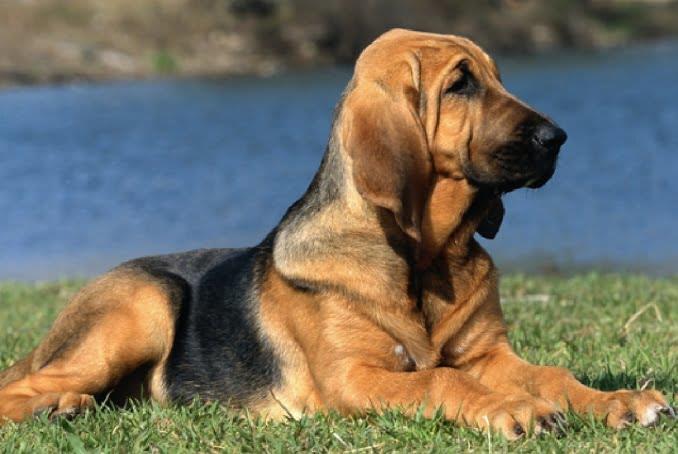
Most people search “Bloodhound” when they’re weighing up a big, slow-moving hound with a famously serious nose: is this breed suitable for my home, how much space and exercise do they really need, and what health problems should I plan for?
Bloodhounds can be gentle, steady companions, but they’re also powerful, scent-driven dogs who will follow a trail with quiet certainty. The difference between “charming hound” and “overwhelming housemate” usually comes down to training, secure fencing, and realistic expectations about drool, noise, and day-to-day care.
Bloodhound at a glance
- Height: Dogs usually 63–69 cm; bitches usually 58–63 cm at the shoulder (breed standard guide).1
- Weight: Around 41 kg (dogs) and 36 kg (bitches) “in fair condition”; some are heavier (breed standard guide).1
- Coat: Short, smooth, weatherproof.2
- Colours: Black and tan, liver and tan, or red; a small amount of white may be permitted on chest, feet and tail tip under the breed standard.1
- Lifespan: Often around 10–12 years (varies with genetics, body condition, and health care).3
- Temperament (typical): Affectionate, even-tempered, and independent; can be stubborn when the nose takes over.4
- Daily needs: Regular exercise, training that rewards attention, and plenty of scent work to keep the mind occupied.
What a Bloodhound is built to do
A Bloodhound is a specialist. The long ears, loose skin, and deep wrinkles are part of the breed’s working design: when the head drops to the ground, the ears and facial skin help hold scent close to the nose while the dog works steadily along a trail.4
That same design also shapes everyday life. Many Bloodhounds drool, some “bay” loudly, and most will investigate the world nose-first. They don’t need frantic activity, but they do need time and space to follow scent safely and legally—on a lead, in a secure yard, or in structured tracking work.
Personality and suitability
In the home, Bloodhounds are often gentle and affectionate. Outdoors, they can become intensely focused once they pick up a scent, which is why recall can be unreliable without careful training and management.4
Good match for you if…
- You enjoy a large, slow-burn dog who is content to potter, sniff, and nap between outings.
- You can commit to calm, consistent training and a securely fenced yard.
- You don’t mind drool, dog smell, and the occasional dramatic howl-bay.
Think twice if…
- You need a dog with rock-solid off-lead recall in unfenced areas.
- You live with close neighbours and noise is a serious concern.
- You’re not able to manage a strong dog on a lead when it decides the trail matters more than you do.
Training and exercise: what actually works
Bloodhounds learn well, but they’re not built for snappy obedience. They respond best to patient repetition, strong rewards, and short sessions that end before boredom sets in. Once a scent is more interesting than you are, punishment tends to backfire; calm management and better reinforcement usually win over time.
Practical exercise (and enrichment) ideas
- Long, slow walks on a sturdy lead: aim for an hour or more most days, adjusted for age and fitness.
- Scent games at home: scatter feeding, treat trails in the yard, hide-and-seek with a favourite toy.
- Tracking or mantrailing activities: structured scent work channels the breed’s natural strengths and gives their brain a proper job.5
Health: common concerns and smart prevention
Bloodhounds are a large, deep-chested breed, so it’s sensible to understand a few issues that turn up more often in big dogs and hounds.
Hip dysplasia (and other joint problems)
Hip dysplasia is a developmental condition of the hip joint that can lead to pain and arthritis over time. Body condition, growth rate, and exercise habits can influence how severely a dog is affected, even with similar x-ray findings.6
If you’re buying a puppy, ask what hip/elbow screening has been done in the pedigree, and discuss appropriate growth, feeding, and exercise with your vet—especially through the first year.
Ear infections
Long, heavy, drooping ears can reduce airflow and make ear problems more likely in some dogs. Ear infections (otitis externa) are common in dogs generally, and certain ear shapes can predispose them to trouble.7
Don’t “routine clean” a healthy ear just because it looks floppy. Watch for smell, redness, discharge, head-shaking, or pain, and get your vet to check what’s going on before you start treatments.8
Bloat (GDV): know the signs
Gastric dilatation-volvulus (GDV) is an emergency where the stomach distends and can twist, compromising blood flow and rapidly becoming life-threatening. Large, deep-chested dogs are at higher risk, and feeding practices matter.9
Risk-reducing habits include feeding two or more smaller meals a day rather than one large meal, slowing down fast eaters, and limiting vigorous activity straight after meals.9
Grooming and day-to-day care
The coat is straightforward: a weekly brush usually keeps it tidy. The more time-consuming work is around the head—ears, wrinkles, and the general dampness that comes with a big hound who drinks enthusiastically.
Simple routine
- Brush: weekly (more often during seasonal shedding).
- Wrinkles: wipe gently if food, dirt, or moisture collects; keep folds dry.
- Ears: monitor for smell, redness, discharge, or soreness; if your vet recommends cleaning, follow their method and product guidance.8
- Nails: trim regularly so the dog stands comfortably and moves freely.
Bloodhounds and “court-admissible” tracking: the reality
You’ll often hear that Bloodhound trails are “admissible in court” as a blanket statement. In reality, admissibility depends on the jurisdiction and on how the evidence was obtained and handled; different courts have applied different rules over time.10
Final thoughts
A Bloodhound is a study in patience and momentum: a heavy-boned dog built to keep going, nose down, with quiet persistence. If you can offer secure boundaries, steady training, and daily scent-driven time outdoors, they can be deeply companionable animals—calm in the house, purposeful in the paddock, and always alert to the stories written on the ground.
References
- Dogs Australia (ANKC) – Bloodhound breed standard (size and weight guide)
- The Kennel Club (UK) – Bloodhound breed standard (coat, colour, size)
- Purina – Bloodhound breed information (overview and lifespan)
- American Bloodhound Club – Breed history/standard notes (function and temperament)
- American Bloodhound Club – Mantrailing events (purpose and structure of trailing trials)
- Orthopedic Foundation for Animals (OFA) – Canine hip dysplasia overview
- VCA Animal Hospitals – Ear infections in dogs (otitis externa) and predisposition
- RSPCA Pet Insurance (Australia) – Dog grooming guide (ear-care cautions and when to see a vet)
- Cornell University College of Veterinary Medicine – Gastric dilatation-volvulus (GDV/bloat): risks and prevention
- Office of Justice Programs (NCJRS) – “Bloodhound trailing evidence, is it admissible?” (overview of differing court rules)

Veterinary Advisor, Veterinarian London Area, United Kingdom