
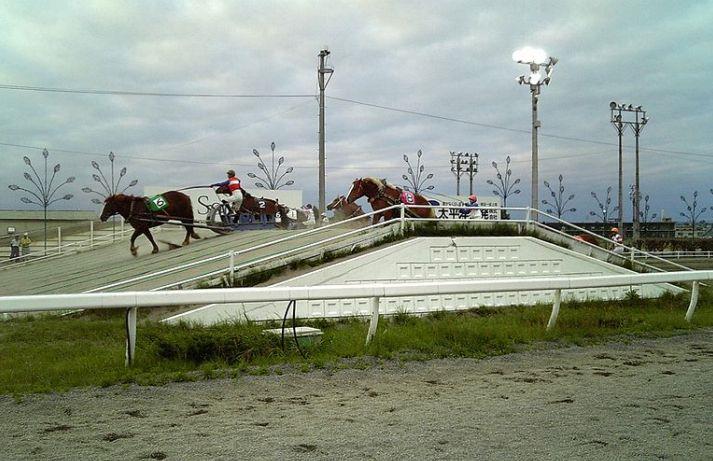
People usually look up Ban’ei racing for one of two reasons: they’ve seen footage of enormous horses hauling iron sleds up sand ramps, or they’re planning a trip to Hokkaidō and want to know what they’re actually watching. It helps to understand the basics, because Ban’ei looks like “horse racing” right up until the moment the race slows to a careful, grinding climb and tactics matter as much as raw strength.
Ban’ei is not a travelling show or a growing Australian circuit. It’s a very specific local tradition, now held as regular race meetings at a single venue in Obihiro, on the Tokachi Plain in Hokkaidō. The details below stick to what’s consistently documented: what the horses pull, how the finish is judged, what the jockey is doing on the sled, and where you can (and can’t) see it in the real world.1, 2, 3
What is Ban’ei racing?
Ban’ei is a form of Japanese horse racing where heavy draft horses pull a weighted iron sled along a straight 200-metre dirt track. The course includes two hill-shaped sand obstacles; the second is steeper and often decides the race.1, 2, 3
Unlike flat racing, the result isn’t about top speed. It’s about sustained pulling power, pacing, and how cleanly the horse can lift the sled over the ramps. The race only ends when the entire sled has crossed the finish line, not just the horse’s nose.1, 4
Where it happens (and a key correction)
Regular Ban’ei racing is held at Obihiro Racecourse (Ban’ei Tokachi) in Hokkaidō. While Ban’ei was once run at multiple venues in Hokkaidō, it is now staged as a regular racing programme at Obihiro as the ongoing home of the sport.1, 3
Claims that Ban’ei is “now gaining popularity in Australia” or that races are “held in cities across the country” don’t match the established record. Australians can certainly watch and bet online or travel to Japan to attend, but Ban’ei itself is not a touring format with a recognised Australian race circuit.1, 3
How a Ban’ei race works
A Ban’ei track is a straight, roped-lane course. Each lane runs 200 metres and includes two sand ramps (obstacles). Races can appear slow and stop-start because horses may pause to settle, gather themselves, and then attack the next climb in a single effort.1, 2
The essentials, in plain terms
- Distance: 200 metres, straight.1, 2
- Obstacles: two hill-shaped sand ramps; the second is steeper and is often described as the decisive point of the race.1, 2
- Load: a heavy iron sled with added weight (a handicap system), often hundreds of kilograms and up to around a tonne depending on race conditions and class.1, 3
- Finish: the sled must fully clear the finish line for the horse to be judged finished.1, 4
The horses: size, breeding, and what they’re built for
Ban’ei horses are large draft types, often around the 800–1,200 kg range, selected for strength and stamina rather than sprinting speed.2, 3
The breeds commonly mentioned in credible descriptions of Ban’ei stock include Percheron, Breton, and Belgian (often as crosses), reflecting the draft-horse imports used in Hokkaidō’s agricultural development. This is different from the mix stated in the original draft: Akhal-Teke horses are not a typical Ban’ei breed type.1, 2
The role of the jockey (and why it looks unusual)
In Ban’ei, the jockey rides on the sled rather than on the horse. Their job is to manage pace and line, and to time the effort for each obstacle, using reins and body weight to help keep the pull straight and efficient. In many races, you’ll see a deliberate pause after the first obstacle so the horse can recover before attempting the steeper ramp.1, 3
This is less like “steering a sprint” and more like guiding a slow, heavy haul where a small loss of traction can become a full stop. The horse does the pulling; the jockey manages the moment-by-moment decisions that let that power count.1, 3
History in brief: from farm work to formal racing
Ban’ei is closely tied to Hokkaidō’s farming history. Accounts commonly trace its origins to strength contests using working horses, later formalised into race events in the Tokachi region and, eventually, a regulated betting sport. Ban’ei has also been recognised as a local cultural heritage in Hokkaidō.1, 2
Ban’ei vs other horse racing
Most horse racing is designed to reward speed. Ban’ei is built to reward traction, pacing, and the ability to keep moving under load—especially on the ramps. Watching it feels different: the horses are huge, the course is short, and the key moments are the climbs where the sled digs in and the race can change in a few metres.2, 3
Seeing Ban’ei in person: what to expect in Obihiro
At Obihiro Racecourse, the atmosphere is closer to a local fairground than a grand metropolitan track: short races, frequent heats, and spectators able to watch the effort up close. Because the pace is slow, you can follow the race with your eyes the whole way—especially the decisive second obstacle, where horses may stall, recover, and then surge again.3
Race days and times vary by season, so it’s worth checking the official Ban’ei Tokachi site when you’re planning a visit.3
Challenges and welfare scrutiny
As with any sport involving animals and wagering, Ban’ei sits under ongoing scrutiny around welfare standards and public perception. The physical demands are obvious: heavy loads, deep footing, and steep ramps that require controlled, repeated exertion. When you’re researching, prioritise current information from official race organisers and recognised animal-welfare and veterinary authorities, and be wary of sweeping claims (positive or negative) that don’t cite evidence.3
Final thoughts
Ban’ei is best understood as Hokkaidō’s working-horse heritage made visible: a short track, two sand ramps, and a single, relentless task—pull the sled all the way home. If you’re visiting, go in expecting a test of power and patience rather than a burst of speed, and you’ll see the race clearly for what it is.2, 3
References
- Wikipedia — Ban’ei
- Nippon.com — The Ban’ei Horse Races of Hokkaidō (Oct 2, 2018)
- Ban’ei Tokachi (Obihiro Racecourse) — Official English information
- Visit Tokachi (Tokachi tourism) — Ban’ei guide (course basics and how finishing is judged)

Veterinary Advisor, Veterinarian London Area, United Kingdom